

Can Chronic Pain Be Cured, or Just Managed?

Can Chronic Pain Be “Cured,” or Is Management the More Realistic Goal?
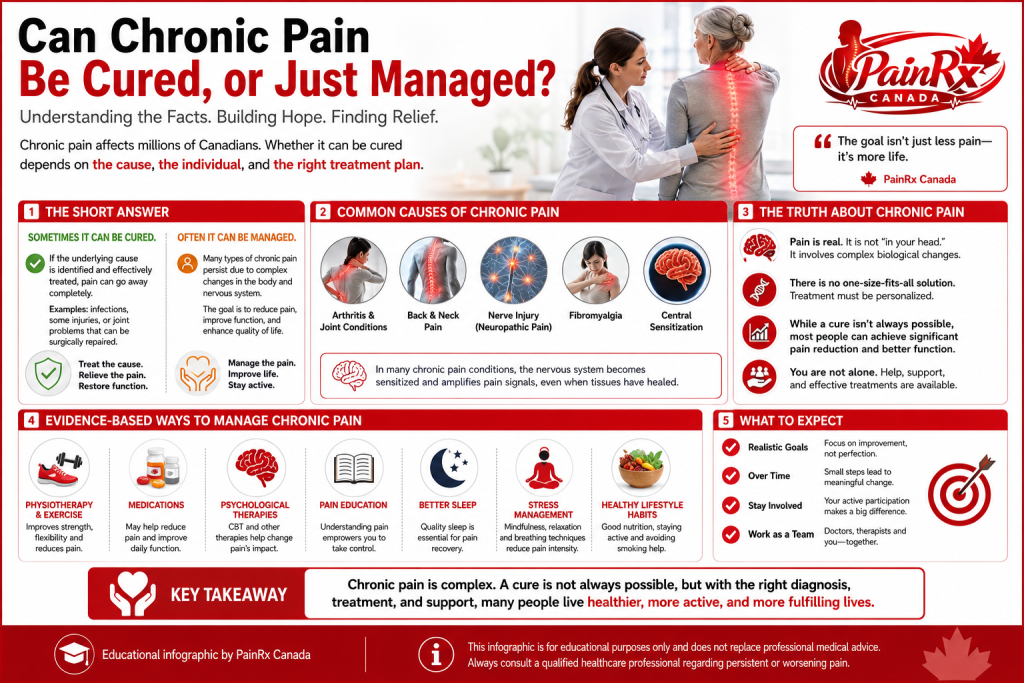
One of the first questions many people ask after a chronic pain diagnosis is simple: can this be cured? It’s a natural question, and an understandable one. The honest answer is more nuanced than a straightforward yes or no. For most chronic pain conditions, management rather than a complete cure tends to be the more realistic and useful goal. Understanding why can help Canadians set expectations that lead to better outcomes, rather than ongoing frustration.
Why “Cure” Isn’t the Right Framework for Most Chronic Pain
A cure implies removing the underlying cause entirely and returning to a pain-free baseline. This works well for many acute conditions, like an infection treated with antibiotics. Chronic pain, however, often doesn’t fit that model. In many cases, the original injury has already healed. The ongoing pain stems from changes in how the nervous system processes signals, not from active, ongoing damage.
This means there frequently isn’t a single “thing” to remove or fix. Central sensitization, for example, involves the nervous system itself becoming more reactive to pain. There’s no procedure that simply switches this back to its original state. Instead, treatment works by gradually retraining the nervous system over time.
Some Chronic Conditions Are More Manageable Than Others
It’s worth noting that chronic pain isn’t a single, uniform experience. Some conditions have more direct treatment options than others. Chronic pain caused by an active, ongoing disease process, like inflammatory arthritis, may improve significantly if the underlying disease is well controlled with medication.
Other conditions, like fibromyalgia or central sensitization-driven pain, typically don’t have a single treatable trigger. For these conditions, management approaches tend to offer the most realistic path toward meaningful improvement. This doesn’t mean less can be done. It means success looks different than eliminating pain entirely.
What “Management” Actually Means
Management doesn’t mean simply enduring pain with no active treatment. It means using a combination of approaches to reduce pain intensity, improve function, and support a better overall quality of life. This often includes physical therapy, structured exercise, psychological support, and sometimes medication.
The goal of management is to help someone live a full, active life despite the presence of some ongoing pain. This is a very different goal than eliminating pain completely, but it’s often the more achievable and sustainable one.
Many Canadians Do See Significant Improvement
While a complete cure may not always be realistic, that doesn’t mean chronic pain has to stay the same forever. Many people see substantial reductions in pain intensity and frequency through consistent treatment. Others find that pain remains present but no longer limits their daily activities the way it once did.
Improvement often happens gradually, through a combination of physical, psychological, and lifestyle changes working together. Pain neuroscience education, which teaches patients how pain actually works, has also been shown to reduce both pain intensity and pain-related fear in many patients.
Why Chasing a Cure Can Sometimes Backfire
Focusing exclusively on finding a cure can sometimes lead to frustration, repeated testing, and a cycle of disappointment. Patients may go from specialist to specialist searching for a single fix that doesn’t exist for their particular condition. This can delay starting treatments that could genuinely help manage symptoms in the meantime.
This doesn’t mean patients should stop advocating for a thorough diagnostic workup. It means balancing that process with active management strategies, rather than putting daily life on hold while waiting for a definitive answer.
The Multidisciplinary Approach to Management
Canadian pain clinics increasingly use a multidisciplinary model for chronic pain management. This typically involves physicians, physiotherapists, psychologists, and sometimes occupational therapists working together. Each provider addresses a different aspect of the condition, from physical function to emotional wellbeing.
This team-based approach tends to produce better outcomes than relying on a single treatment or provider alone. It also reflects the reality that chronic pain affects multiple systems in the body, not just the site where pain is felt.
Setting Realistic, Personal Goals
Rather than aiming for complete elimination of pain, many pain specialists encourage patients to set specific, personal functional goals. This might include being able to walk a certain distance, return to a hobby, or manage a full workday with less disruption. These goals give patients a concrete way to measure progress that isn’t solely dependent on pain scores.
This approach also helps shift the focus toward what a person can do, rather than solely on what hurts. Over time, many patients find this reframing genuinely improves their quality of life, even if some pain remains present.
When to Keep Pushing for Further Investigation
None of this means Canadians should stop seeking answers if something feels genuinely wrong. New or worsening symptoms, unexplained weight loss, or other red flag signs should always be discussed with a doctor. Management as a primary goal doesn’t mean ruling out further investigation when warranted.
It simply means recognizing that, for many chronic pain conditions, ongoing management alongside appropriate monitoring tends to offer a more realistic and sustainable path forward than searching indefinitely for a complete cure.
The Bottom Line
For most chronic pain conditions, management rather than a complete cure tends to be the more realistic and effective goal. This doesn’t mean less can be done, or that improvement isn’t possible. Many Canadians see significant reductions in pain and meaningful improvements in daily function through consistent, multidisciplinary treatment. Shifting the goal from “cure” to “manage well” often leads to better outcomes, less frustration, and a clearer path toward a fuller, more active life.