

How Chronic Pain Changes the Nervous System Over Time

How Does Chronic Pain Change the Nervous System Over Time?
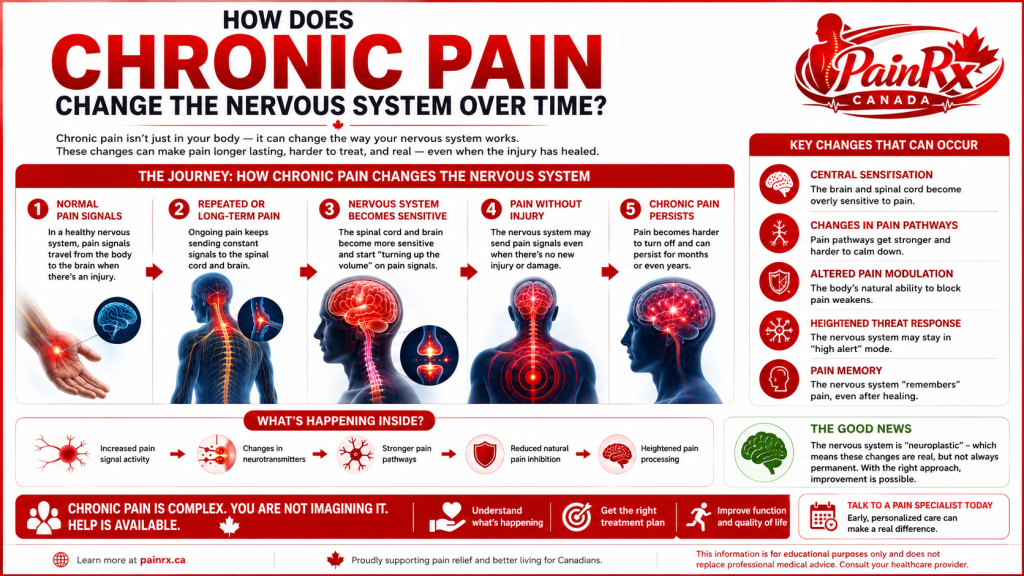
Chronic pain doesn’t just linger in one spot in the body. Over time, it can actually reshape how the nervous system works. This is one of the most important discoveries in modern pain science. It also helps explain why chronic pain can feel so different from the pain of a fresh injury. Understanding these changes can help Canadians make sense of symptoms that otherwise seem confusing or even alarming.
The Nervous System Isn’t Fixed
Many people assume the nervous system works the same way throughout life, like a fixed set of wires. In reality, nerve pathways can adapt and change based on experience. This ability is called neuroplasticity. It’s usually discussed in the context of learning or recovering from a brain injury.
The same principle applies to pain. Repeated or prolonged pain signals can physically alter how nerves communicate. Over time, the nervous system can become reorganized around producing pain. This happens even after the original injury has healed.
From Protective Signal to Persistent Problem
In the early stages of an injury, pain serves a clear purpose. It warns the body to protect the area and avoid further damage. As healing progresses, pain would normally fade along with it. In chronic pain conditions, though, this process can go differently.
Pain signals that repeat over weeks or months can strengthen certain neural pathways. Think of it like a hiking trail that gets more worn the more it’s used. The nerve pathways involved in pain signaling become more efficient at producing pain. Eventually, they may fire even without a new injury triggering them.
Central Sensitization: The Nervous System Turns Up the Volume
One of the clearest examples of this process is central sensitization. This occurs when the spinal cord and brain become increasingly responsive to pain signals. Nerve cells involved in pain processing essentially lower their threshold. They begin reacting to input that wouldn’t normally register as painful.
This can cause two specific changes. The first is allodynia, where normally non-painful stimuli, like light touch, become painful. The second is hyperalgesia, where mildly painful stimuli feel much more intense than they should. Both are signs that the nervous system has become sensitized rather than simply reflecting ongoing tissue damage.
Peripheral Sensitization Plays a Role Too
Central sensitization happens in the brain and spinal cord. A related process called peripheral sensitization happens at the site of injury itself. Nerve endings in the affected area can become more excitable after repeated injury or inflammation. This means they send pain signals more easily and more frequently than they normally would.
Over time, peripheral and central sensitization can reinforce each other. Sensitized nerve endings send frequent signals to the spinal cord. The spinal cord, already sensitized, amplifies those signals further. The result is a feedback loop that keeps pain going long after tissue has healed.
The Brain Physically Changes Too
Chronic pain doesn’t just affect nerve pathways. It can also change the structure and function of the brain itself. Brain imaging studies have shown that areas involved in pain processing can become more active in people with chronic pain. Some studies have even found changes in the volume of specific brain regions tied to emotion and pain regulation.
These changes help explain why chronic pain often overlaps with mood changes like anxiety and depression. The same brain regions involved in pain processing also play a role in emotional regulation. When one system changes, it can influence the other.
Why This Isn’t “All in Your Head”
Because these changes happen in the brain and nervous system rather than in damaged tissue, some people wrongly assume the pain isn’t real. Nothing could be further from the truth. Central sensitization and related changes are measurable, physical alterations in how the nervous system functions. They’re not a sign of weakness or imagination.
This distinction matters for how chronic pain gets treated. Since the problem often lies in nervous system processing rather than ongoing tissue damage, treatments that only target the original injury site may fall short. This is part of why comprehensive, brain-and-body approaches tend to work better for long-term chronic pain.
Can These Changes Be Reversed?
The nervous system’s ability to change works in both directions. Just as chronic pain patterns can develop through repeated signaling, they can sometimes be reduced through consistent, targeted treatment. This is one reason multidisciplinary pain programs often combine several approaches at once.
Physiotherapy and graded exercise can help retrain how the nervous system responds to movement and activity. Cognitive behavioural therapy can help address the brain’s role in amplifying or interpreting pain signals. Some patients also benefit from pain neuroscience education, which teaches them how pain actually works. Understanding these mechanisms can itself reduce fear and anxiety around pain, which may help calm an overactive nervous system.
What This Means for Canadians Managing Chronic Pain
For Canadians living with chronic pain, understanding these nervous system changes can shift how they think about treatment. Recovery doesn’t always mean eliminating pain completely. It often means gradually retraining an overactive system through consistent, evidence-based approaches. This can take time, patience, and support from multiple types of providers.
Canadians working with a pain clinic or family doctor can ask specifically about central sensitization and nervous system retraining approaches. These conversations can help set realistic expectations. They can also open the door to treatment options beyond medication alone.
The Bottom Line
Chronic pain can physically change how the nervous system works, from the nerve endings at the site of injury to the brain itself. Central and peripheral sensitization help explain why pain can persist and even intensify over time, independent of ongoing tissue damage. These changes are real, measurable, and not a sign of exaggeration or imagination. They also aren’t necessarily permanent. With the right combination of treatments, many Canadians can help retrain an overactive nervous system and meaningfully improve their quality of life.