

What Is Central Sensitization? How It Affects Pain Perception

What Is Central Sensitization and How Does It Affect Pain Perception?
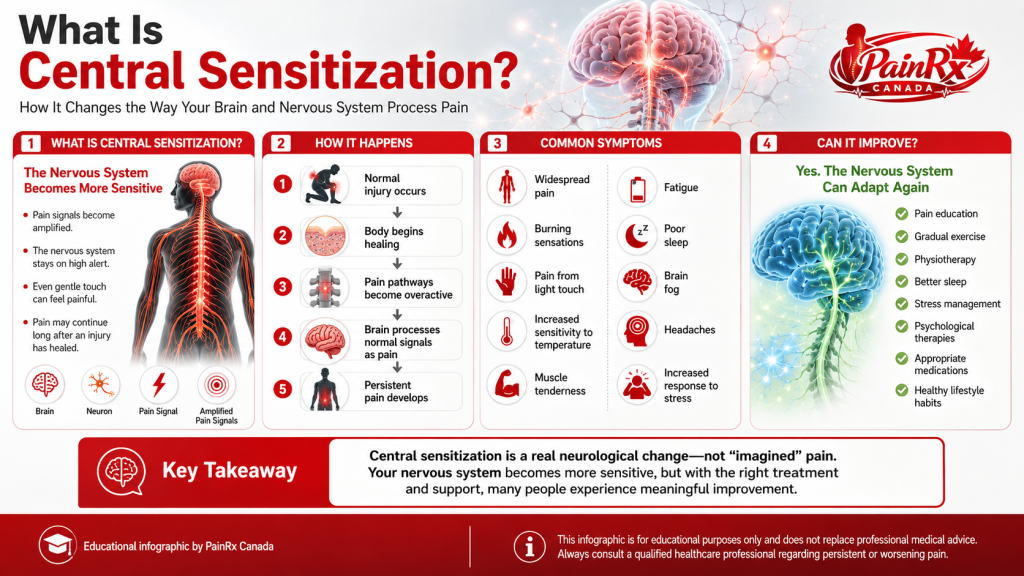
Central sensitization is one of the most important concepts in modern pain science, yet many patients never hear the term from their doctor. It helps explain why some people continue to feel significant pain long after an injury has healed. It also explains why certain chronic pain conditions don’t show up clearly on scans or bloodwork. Understanding central sensitization can change how Canadians think about their own pain, and what kind of treatment is likely to help.
What Is Central Sensitization?
Central sensitization is a state in which the central nervous system becomes overly reactive to pain signals. The term “central” refers to the brain and spinal cord, as opposed to nerves in the rest of the body. Under normal conditions, pain signals travel from an injury site to the spinal cord, then up to the brain for processing. In central sensitization, this system becomes more sensitive than it should be.
Essentially, the volume on pain signaling gets turned up. Nerve cells in the spinal cord and brain lower their threshold for what counts as painful. They also become more efficient at amplifying pain signals once they occur. The result is pain that feels more intense, spreads more widely, or lasts longer than the original cause would explain.
How Central Sensitization Develops
Central sensitization often starts with a real injury or ongoing painful condition. Repeated pain signals, sent over weeks or months, can gradually change how the nervous system processes those signals. This is related to neuroplasticity, the nervous system’s general ability to adapt based on repeated experience.
Over time, nerve pathways involved in pain become reinforced, similar to how a frequently used walking path becomes worn and easier to follow. Eventually, these pathways can become active even without a new injury triggering them. This is why central sensitization can persist well after tissue has fully healed.
Not everyone who experiences pain develops central sensitization. Genetics, stress levels, sleep quality, and prior pain history can all influence individual risk. This helps explain why two people with similar injuries can end up with very different long-term outcomes.
Two Key Signs of Central Sensitization
Doctors and researchers often look for two specific signs when assessing central sensitization. The first is allodynia, a condition where normally painless sensations become painful. Light touch, mild pressure, or even clothing against the skin can trigger discomfort in someone with allodynia.
The second sign is hyperalgesia, where things that are mildly painful feel far more intense than expected. A small bump or minor scrape might cause pain disproportionate to the injury itself. Both allodynia and hyperalgesia point toward a nervous system that has become sensitized, rather than pain caused directly by tissue damage.
Conditions Linked to Central Sensitization
Central sensitization plays a role in a number of chronic pain conditions. Fibromyalgia is one of the clearest examples, since widespread pain often exists without obvious tissue damage. Chronic lower back pain, irritable bowel syndrome, and temporomandibular joint disorders are also frequently linked to this process.
Migraine and tension headache disorders can involve central sensitization as well. So can complex regional pain syndrome, a condition that often develops after a relatively minor injury. In each case, the nervous system itself becomes part of the problem, rather than an ongoing injury or disease process alone.
Why This Isn’t “Just in Your Head”
Because central sensitization involves the brain and nervous system rather than visible tissue damage, some patients are told their pain is psychological or exaggerated. This is inaccurate. Central sensitization involves measurable, physical changes in how nerve cells function and communicate.
Brain imaging studies have shown real differences in pain processing regions among people with central sensitization. These changes are not something a person can simply choose to switch off. Understanding this distinction matters, since it affects how patients are treated by healthcare providers and how seriously their symptoms are taken.
How Central Sensitization Affects Pain Perception
Central sensitization changes several aspects of how pain is perceived on a daily basis. Pain may spread beyond the original site of injury to nearby or even distant areas of the body. Pain intensity may also fluctuate without any clear external trigger, which can feel confusing and unpredictable.
Fatigue, brain fog, and sleep disturbances often accompany central sensitization as well. This happens because the same nervous system pathways involved in pain also influence energy regulation and cognitive function. Emotional sensitivity can increase too, since stress and pain processing share overlapping brain regions.
Diagnosing Central Sensitization
There isn’t a single definitive test for central sensitization. Instead, doctors typically rely on a combination of patient history, symptom patterns, and ruling out other specific causes. Widespread pain, disproportionate pain responses, and the presence of allodynia or hyperalgesia all point toward this diagnosis.
Some clinics use structured questionnaires designed to screen for central sensitization symptoms. These tools can help guide treatment decisions, even without a definitive lab test to confirm the diagnosis. For Canadians navigating this process, a referral to a multidisciplinary pain clinic often provides the most thorough assessment.
Treatment Approaches for Central Sensitization
Because central sensitization involves the nervous system rather than a single injury site, treatment usually requires a broader approach. Pain neuroscience education is often a starting point, since understanding how pain actually works can reduce fear and anxiety around symptoms.
Graded exercise programs help retrain the nervous system’s response to movement, gradually increasing activity without triggering flare-ups. Cognitive behavioural therapy addresses the brain’s role in processing and interpreting pain signals. Some patients also benefit from medications that specifically target nervous system sensitivity, rather than general pain relievers alone.
Consistency tends to matter more than any single treatment in isolation. Central sensitization developed gradually, and improvement usually happens gradually as well. Canadians working with a multidisciplinary pain clinic often see better outcomes than those relying on a single treatment approach.
The Bottom Line
Central sensitization is a real, measurable change in how the nervous system processes pain signals. It helps explain why pain can persist, spread, and intensify even after an original injury has healed. Recognizing the signs, such as allodynia and hyperalgesia, can help Canadians get a more accurate diagnosis and access appropriate care. While central sensitization can’t always be fully reversed, evidence-based treatment approaches can meaningfully reduce its impact on daily life.