

What Is Normal Pain After Hip Replacement Surgery?

What Is Normal Pain After Hip Replacement Surgery?
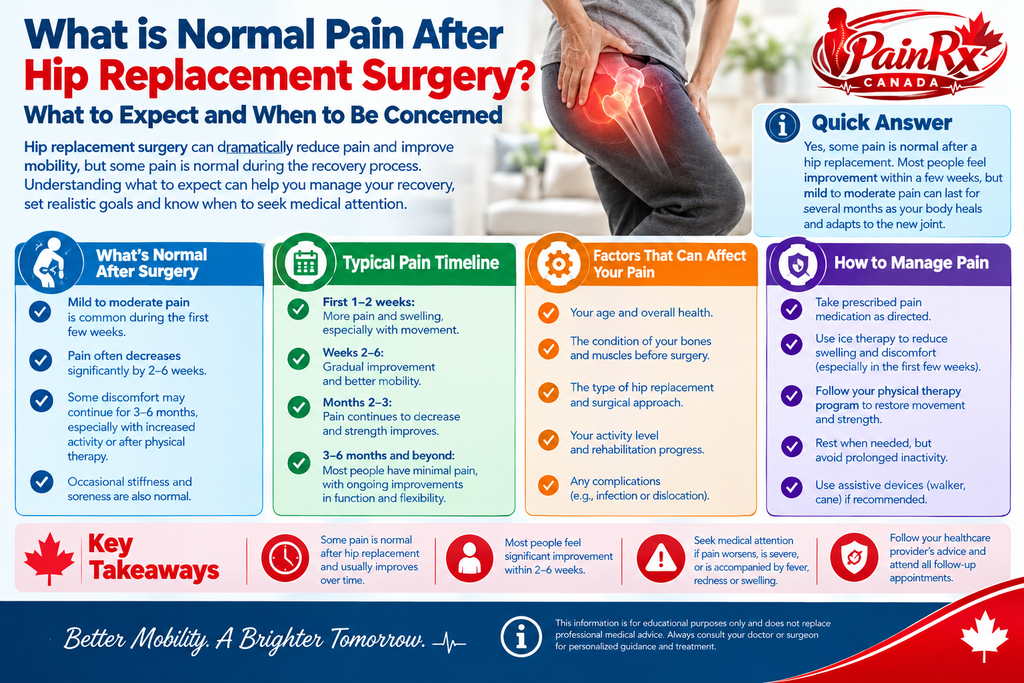
Hip replacement surgery relieves chronic joint pain for most patients, but the recovery itself involves a genuine, if temporary, period of post-surgical discomfort. Knowing what counts as normal, and what doesn’t, helps patients feel confident during recovery rather than second-guessing every ache. This guide covers typical pain levels by recovery stage, what shapes the experience, and when pain signals something worth calling a doctor about.
Some Pain Is a Normal, Expected Part of Recovery
Hip replacement involves removing damaged joint tissue and implanting artificial components, and the surrounding muscles, tissue, and incision all need time to heal. Mild to moderate pain during this healing process is expected and normal, not a sign that something has gone wrong.
Pain generally starts at its most noticeable in the initial days after surgery and gradually decreases over the following weeks and months as healing progresses.
The General Pain Timeline
The first few days. Pain typically peaks during this window, and many patients report feeling more discomfort on the second day than the first, once initial surgical anesthesia and early pain control start wearing off. Hospital staff closely monitor and manage pain during this period.
The first one to two weeks. Discomfort remains noticeable but generally starts trending downward, particularly with consistent use of prescribed pain management, ice, and rest between physical therapy sessions.
Two to six weeks. Pain generally eases noticeably during this stretch for most patients, alongside continued physical therapy and increasing activity. Many patients also transition off stronger prescribed pain medication somewhere within this window, moving to over-the-counter options as needed.
Around twelve weeks. By this point, many patients report quite low pain levels, often in the range of one or two out of ten on a standard pain scale, according to guidance from Johns Hopkins Medicine. Some residual soreness or stiffness, especially with certain movements, can still be normal at this stage.
Beyond three months. Most patients continue improving gradually over the following months, with some describing intermittent mild discomfort for up to about six months as muscles and tissue fully adapt to the new joint. Full recovery, including a return to unrestricted normal activity, often falls somewhere in this broader window.
What “Normal” Pain Generally Feels Like
Normal post-surgical pain after hip replacement tends to concentrate around the incision site and surrounding hip muscles, and it generally responds at least partially to prescribed pain management and rest. Thigh pain, related to how the surgery interacts with the femur, is also a commonly reported and generally expected symptom during recovery. Morning stiffness or stiffness after sitting for a while is common as well, particularly in the earlier weeks.
Pain during specific movements or when putting weight on the operated leg, especially in the initial recovery phase, also falls within a normal range for many patients, though it should gradually lessen rather than persist unchanged.
Factors That Influence Pain Levels and Recovery Speed
Individual recovery experiences vary based on several factors.
Surgical approach. Minimally invasive techniques, which limit disruption to surrounding muscle and tissue, often produce somewhat less initial pain and a faster early recovery than more traditional approaches.
Overall health and age. General health, activity level before surgery, and age can all influence how quickly pain resolves and function returns.
Adherence to rehabilitation. Following prescribed physical therapy, activity guidelines, and pain management instructions consistently plays a significant role in both comfort and the pace of recovery.
Individual pain sensitivity and healing. Just as with any surgery, individual variation in pain perception and tissue healing means two patients with similar procedures can have somewhat different recovery experiences.
Common Approaches to Managing Pain During Recovery
Care teams typically combine several strategies, adjusting them as recovery progresses.
Prescribed pain medication. Patients typically go home with a specific pain management plan, sometimes including a short course of stronger medication early on, transitioning to anti-inflammatory or over-the-counter options as pain decreases.
Ice therapy. Applying ice to the hip and incision area helps reduce both pain and swelling, particularly in the earlier weeks of recovery.
Elevation and rest. Keeping the leg elevated above heart level while resting can help reduce swelling, and spacing activity with adequate rest between physical therapy sessions supports comfort.
Physical therapy. Though therapy can feel uncomfortable at times, particularly early on, following the prescribed program consistently supports both long-term pain reduction and full functional recovery.
Staying ahead of pain. Many care teams recommend taking pain medication proactively, rather than waiting until pain becomes severe, particularly in the first days after surgery.
When Pain Signals a Possible Complication
While some pain is expected, certain patterns fall outside normal recovery and warrant medical attention.
Johns Hopkins guidance suggests that consistently experiencing pain at a level of six or higher on a standard one-to-ten pain scale is worth mentioning to a doctor, since this can sometimes indicate infection or another complication rather than typical post-surgical discomfort. Fever, warmth, redness, or drainage around the incision site also warrants prompt evaluation. Pain that suddenly worsens after a period of steady improvement, rather than continuing its gradual decline, differs from the typical pattern and should prompt a call to the surgical team.
Frequently Asked Questions
Is it normal to feel more pain on the second day after hip replacement than the first? Yes, this is a commonly reported pattern, often related to the initial effects of surgical anesthesia wearing off and increased activity as patients begin walking and moving more.
How long should I expect to need prescription pain medication? Many patients discontinue stronger prescribed pain medication somewhere between one and four weeks after surgery, transitioning to other pain management strategies, though this varies based on individual recovery and the surgical team’s specific guidance.
Is thigh pain normal after a hip replacement, or does it mean something is wrong? Thigh pain is a commonly reported and generally expected symptom during recovery, related to the surgical approach and the body’s adjustment to the new implant, though persistent or severe thigh pain should still be discussed with your surgeon.
When should I be concerned that my pain isn’t normal? Pain consistently rated six or higher on a ten-point scale, pain that worsens rather than improves, or pain accompanied by fever, redness, warmth, or drainage at the incision site all warrant contacting your surgical team.
How long until I can expect to be mostly pain-free after hip replacement? Many patients reach low pain levels by around twelve weeks, with continued gradual improvement over the following months. Full comfort and function can take up to about six months for some patients, depending on individual factors.
The Bottom Line
Mild to moderate pain is a normal, expected part of hip replacement recovery, typically peaking in the first few days and gradually easing over the following weeks and months. Many patients reach quite low pain levels by around twelve weeks, with continued improvement extending toward six months for some.
Pain that stays persistently high, worsens rather than improves, or comes with signs of infection differs from typical recovery and deserves prompt attention from your surgical team. Following your care team’s specific pain management and rehabilitation plan supports both comfort and a smoother overall recovery.
This article is for general informational purposes only and is not a substitute for professional medical advice. Recovery experiences vary significantly between individuals. Always follow your surgeon’s specific post-operative instructions, and contact your surgical team promptly with any concerns about pain, healing, or possible complications.