

What Helps Nerve Pain in Legs After Back Surgery?

What Helps Nerve Pain in Legs After Back Surgery?
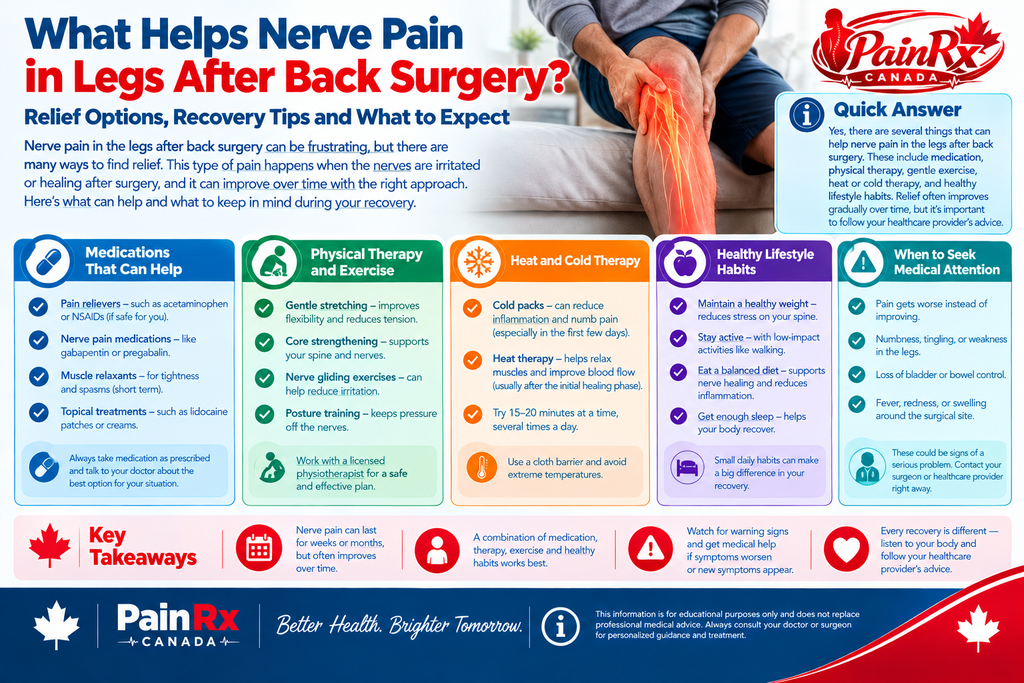
Leg pain after back surgery, sometimes burning, shooting, or accompanied by numbness or tingling, catches many patients off guard, especially if the surgery was meant to relieve exactly this kind of pain. This experience has a name in medicine, several likely explanations, and a genuine range of treatment options. This guide walks through what causes it and what tends to help.
Why Nerve Pain Can Persist or Return After Back Surgery
When leg pain continues, returns, or develops after spinal surgery meant to address it, doctors sometimes use the term failed back surgery syndrome, or persistent spinal pain after surgery, to describe the situation. This doesn’t necessarily mean the surgery was performed incorrectly. It reflects a genuinely complex, multi-factor problem that spine specialists actively study and treat.
Symptoms can appear immediately after surgery, or develop gradually over the following weeks, months, or even years. The pain may feel similar to the original pre-surgical pain or noticeably different, and it can affect the back, the leg, or both.
Common Causes Behind Ongoing Leg Nerve Pain
Several distinct issues can produce this kind of pain, and identifying the specific cause matters for choosing the right treatment.
Scar tissue around a nerve root. As the body heals after surgery, scar tissue can form around and sometimes compress a nerve root, producing pain similar to nerve compression from the original condition.
Incomplete decompression or a missed problem. In some cases, a nerve remains compressed to some degree even after surgery, or a related issue wasn’t fully addressed during the original procedure.
A new or recurrent disc problem. A disc can herniate again at the same level, or a new problem can develop at a different spinal level, sometimes related to added stress on adjacent segments after surgery.
Nerve damage from the surgery itself. Though uncommon, a nerve can sustain injury during surgery, producing new or different pain than what existed before the procedure.
Spinal instability or hardware-related issues. For surgeries involving fusion or hardware, instability or irritation related to the hardware can sometimes contribute to ongoing symptoms.
Nonsurgical Approaches That Often Help First
Doctors generally start with less invasive treatments, often trying several approaches in combination over an extended period before considering anything more invasive.
Physical therapy. A carefully designed physical therapy program can strengthen the muscles supporting the spine, improve posture, and in some cases create more space within the spinal canal, all of which can reduce pressure on affected nerves.
Medications for nerve pain specifically. Certain medications work differently than typical pain relievers, targeting nerve-related pain signals rather than general inflammation. A doctor can determine whether this type of medication fits a specific case, since dosing and choice depend heavily on individual health factors.
Anti-inflammatory medications. Over-the-counter or prescription anti-inflammatory medications can help with pain connected to inflammation around a nerve root or spinal joint, particularly as a starting approach.
Epidural steroid injections. These injections deliver anti-inflammatory medication directly into the epidural space near the affected nerve, aiming to reduce swelling and compression-related pain, sometimes providing meaningful relief for weeks or months.
Nerve blocks. A targeted nerve block can both help diagnose which specific nerve is contributing to the pain and, in some cases, provide therapeutic relief.
Interventional and Advanced Options
When conservative treatments don’t provide adequate relief, several more advanced options exist, generally considered after other approaches have been tried.
Radiofrequency ablation. For pain traced to specific spinal joints, this procedure uses heat generated by radio waves to interrupt pain signals from a targeted nerve, sometimes providing longer-lasting relief than injections alone.
Spinal cord stimulation. This treatment involves implanting a small device that delivers mild electrical pulses to the spinal cord, which can interrupt pain signals before they reach the brain. Research on this approach for leg-predominant pain after failed back surgery has shown a meaningful proportion of patients experience substantial, sustained pain reduction. Patients typically undergo a trial period with an external device before committing to a permanent implant, allowing them to assess whether it helps before proceeding further.
Revision surgery. In select cases where a clear, correctable cause is identified, such as a specific area of ongoing nerve compression, additional surgery may help. Doctors generally approach repeat surgery cautiously, though, since outcomes for revision procedures don’t always match those of a first surgery, and providers weigh this carefully against nonsurgical options.
Why a Multidisciplinary Approach Tends to Work Best
Because nerve pain after back surgery can stem from several different underlying issues, sometimes more than one at once, doctors increasingly favour a combined approach involving physical therapy, targeted medication, and interventional procedures rather than relying on a single treatment alone. Pain specialists, physical therapists, and spine surgeons often collaborate on these cases, adjusting the plan based on how a patient responds over time.
When to Seek Prompt Medical Attention
While ongoing nerve pain after back surgery is a recognized and often manageable problem, certain symptoms warrant urgent evaluation rather than waiting for a scheduled follow-up.
New or worsening weakness in the leg or foot, difficulty controlling bladder or bowel function, or numbness in the groin or inner thighs can indicate a more serious nerve issue requiring prompt attention. Any of these symptoms should prompt immediate contact with a doctor or a visit to an emergency department.
Frequently Asked Questions
Why do I have leg pain now when the surgery was supposed to fix it? This can happen for several reasons, including scar tissue forming around a nerve, incomplete resolution of the original compression, or a new issue developing at the same or a nearby spinal level. A doctor can help identify the specific cause through examination and imaging.
How long should I try nonsurgical treatments before considering something more invasive? This varies by individual case, but doctors generally recommend trying combinations of physical therapy, medication, and injections over an extended period, often several months, before considering more invasive interventional or surgical options.
Does spinal cord stimulation mean I’ll never need pain medication again? Not necessarily. Research suggests spinal cord stimulation can meaningfully reduce pain and sometimes reduce reliance on other pain treatments for many patients, but it doesn’t guarantee complete elimination of all pain or medication needs for everyone.
Is repeat back surgery usually the answer for ongoing leg nerve pain? Not typically as a first step. Doctors generally favour nonsurgical and less invasive interventional treatments first, since revision surgery carries its own risks and doesn’t always produce the same success rate as an initial procedure.
What symptoms after back surgery should send me to the emergency room rather than waiting for an appointment? New or worsening leg weakness, loss of bladder or bowel control, or numbness in the groin or inner thighs are all symptoms that need immediate medical attention rather than waiting.
The Bottom Line
Nerve pain in the legs after back surgery is a recognized, well-studied problem with several possible underlying causes, including scar tissue, incomplete decompression, or a new spinal issue. A range of treatments exists, generally starting with physical therapy, targeted medication, and injections, and progressing to options like radiofrequency ablation or spinal cord stimulation if needed.
A multidisciplinary approach, combining several treatment types and adjusting based on individual response, tends to produce the best outcomes. Any new or worsening weakness, or changes in bladder or bowel function, needs prompt medical attention rather than a wait-and-see approach.
This article is for general informational purposes only and is not a substitute for professional medical advice. Nerve pain after back surgery has many possible causes, and treatment should be guided by a doctor or spine specialist familiar with your specific surgical history and symptoms.