

What Does Dilaudid Feel Like?

What Does Dilaudid Feel Like? A Canadian Patient Guide
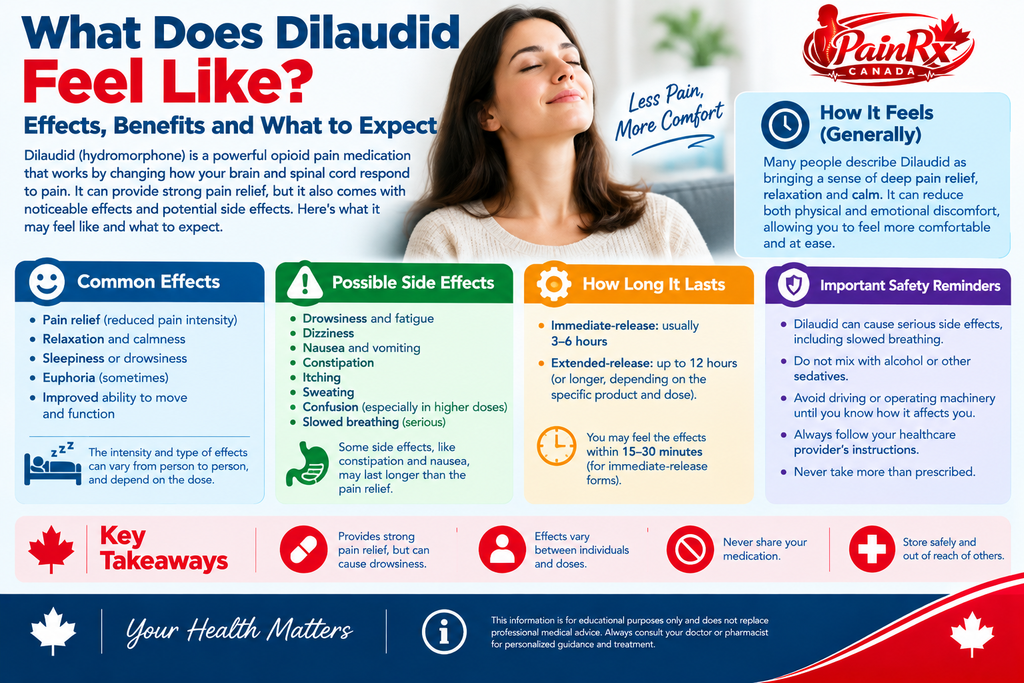
A first-time patient often feels nervous before taking a strong opioid like Dilaudid. Knowing what to actually expect helps separate normal, expected effects from something that needs a call to the doctor. This guide describes the effects patients commonly report at prescribed doses, why the experience varies from person to person, and how to tell ordinary side effects apart from warning signs.
The Primary Effect: Pain Relief
The main effect patients notice is a gradual easing of pain, rather than a sudden switch flipping off. Hydromorphone works by binding to opioid receptors in the brain and spinal cord, which changes how the nervous system processes pain signals.
Most patients describe this as pain becoming more manageable rather than disappearing completely, especially with severe pain. Movement or breathing that previously triggered sharp pain often becomes noticeably more tolerable once the medication takes effect.
Common Accompanying Sensations
Beyond pain relief, Dilaudid commonly produces a cluster of related sensations, since it affects the central nervous system broadly rather than targeting pain signals alone.
Drowsiness or sedation. Many patients feel noticeably sleepier than usual, particularly after a first dose or a dose increase.
A sense of calm or relaxation. Patients often describe feeling more at ease, sometimes alongside a mild, pleasant floating sensation.
Warmth. Some patients report a warm feeling spreading through the body shortly after taking a dose.
Mild euphoria. A subtle lift in mood sometimes accompanies pain relief, though this varies significantly between patients and often lessens with continued regular use.
Itching. Opioids, including hydromorphone, can trigger mild itching in some patients, related to how the medication interacts with certain receptors rather than a true allergic reaction in most cases.
Nausea. Especially with a first dose, some patients feel queasy until their body adjusts.
Constipation. This effect tends to persist throughout treatment rather than fading with continued use, unlike some other side effects.
Why the Experience Differs So Much Between Patients
Two patients taking an identical dose can describe noticeably different experiences. Several factors explain this variation.
Opioid tolerance. A patient who takes opioids regularly typically feels a milder version of these effects than someone taking an opioid for the first time, since the body adapts to repeated exposure over time.
Pain level. A patient in severe pain often experiences the medication primarily as relief, with sedation and other effects registering as secondary. A patient with milder pain may notice the sedating and mood-related effects more prominently.
Route of administration. An IV dose produces a faster, more pronounced initial sensation than an oral tablet, since it reaches the bloodstream immediately rather than gradually through digestion.
Individual body chemistry. Metabolism, body composition, age, and genetic differences in how the body processes opioids all shape the intensity and character of the experience.
Other medications. Sedatives, certain antidepressants, and other central nervous system-affecting drugs can intensify or otherwise change how Dilaudid feels.
What Changes With Continued Use
The experience of taking Dilaudid regularly often shifts over the course of treatment.
Sedation and euphoria typically diminish noticeably within the first several days or weeks as the body develops some tolerance to these particular effects. Pain relief, by contrast, tends to remain more stable, though tolerance can eventually affect this too, sometimes prompting a doctor to reassess the dose. Constipation generally doesn’t improve with continued use the way other side effects do, which is why doctors often recommend ongoing management strategies for it throughout treatment.
When Sensations Cross From Normal to Concerning
Distinguishing expected effects from warning signs matters for safety, and a few signals should prompt immediate action rather than a wait-and-see approach.
Extreme drowsiness that’s hard to rouse someone from goes well beyond typical sedation. Confusion, unusual disorientation, or difficulty staying awake during normal activity also signal something beyond an expected reaction. Slow, shallow, or laboured breathing represents the most serious warning sign of all, since it indicates the medication is suppressing the body’s natural drive to breathe.
Call 911 immediately if breathing becomes dangerously slow or shallow, if lips or fingertips take on a blue tinge, or if a person becomes unresponsive. Use naloxone if it’s available while waiting for emergency help to arrive.
Why Patients Shouldn’t Chase a Stronger Sensation
Because Dilaudid produces noticeable mood and sensation effects beyond pain relief, some patients feel tempted to take more than prescribed to intensify those effects. This significantly raises the risk of dangerous respiratory depression and can accelerate the development of dependence.
A prescribed dose reflects a careful balance between adequate pain control and safety, calculated by a doctor based on an individual patient’s needs. Chasing a stronger sensation by increasing the dose independently, taking it more often than prescribed, or combining it with alcohol or other sedatives moves well outside that carefully calculated safety margin.
What to Do If the Sensation Feels Wrong or Unexpected
Some patients feel effects that seem disproportionate, unpleasant, or simply different from what they expected, even at a correctly taken prescribed dose. This is worth raising with a doctor or pharmacist rather than adjusting the dose independently or stopping the medication abruptly.
A doctor can determine whether the dose needs adjustment, whether a different opioid might suit the patient better, or whether another medication is contributing to an unexpected interaction.
Frequently Asked Questions
Is it normal to feel high on Dilaudid even when taking it exactly as prescribed? Mild euphoria can occur alongside pain relief, particularly with a new prescription or a dose increase, and doesn’t necessarily indicate misuse. A doctor can help distinguish an expected reaction from something worth adjusting.
Why do I feel more sedated on Dilaudid than I did on a different pain medication? Different opioids and different patients produce different intensities of sedation. Individual metabolism, tolerance, and the specific medication all play a role, and a doctor can help compare options if sedation becomes disruptive.
Will the drowsy feeling from Dilaudid go away over time? For many patients, yes. Sedation and euphoria often lessen as the body develops tolerance to those specific effects over days to weeks, while pain relief tends to remain more consistent.
Is it dangerous if Dilaudid makes me feel unusually calm or relaxed? A mild sense of calm is a common and generally expected effect. Extreme sedation that’s hard to rouse from, or any sign of slowed breathing, differs from this and requires immediate medical attention.
Should I tell my doctor if Dilaudid feels different than I expected? Yes. Any unexpected, disproportionate, or concerning sensation deserves a conversation with a doctor or pharmacist rather than an independent decision to change how the medication gets taken.
The Bottom Line
Dilaudid typically produces gradual pain relief alongside drowsiness, calm, and sometimes mild euphoria, though the exact experience varies significantly based on tolerance, pain severity, dose, and individual body chemistry. Many of these accompanying sensations lessen with continued use, while pain relief tends to remain more stable.
Knowing the difference between an expected effect and a genuine warning sign, particularly slowed or shallow breathing, matters for safety. Any concern about how Dilaudid feels, whether it seems too strong, too weak, or simply unexpected, belongs in a conversation with a doctor or pharmacist rather than a decision made alone.
This article is for general informational purposes only and is not a substitute for professional medical advice. Dilaudid and hydromorphone are prescription-only controlled substances in Canada. Always consult a doctor or pharmacist with questions about your specific medication, dosing, or symptoms, and seek emergency medical help immediately for any signs of an opioid overdose.