

How Long Does Dilaudid Withdrawal Last?

How Long Does Dilaudid Withdrawal Last? A Canadian Patient Guide
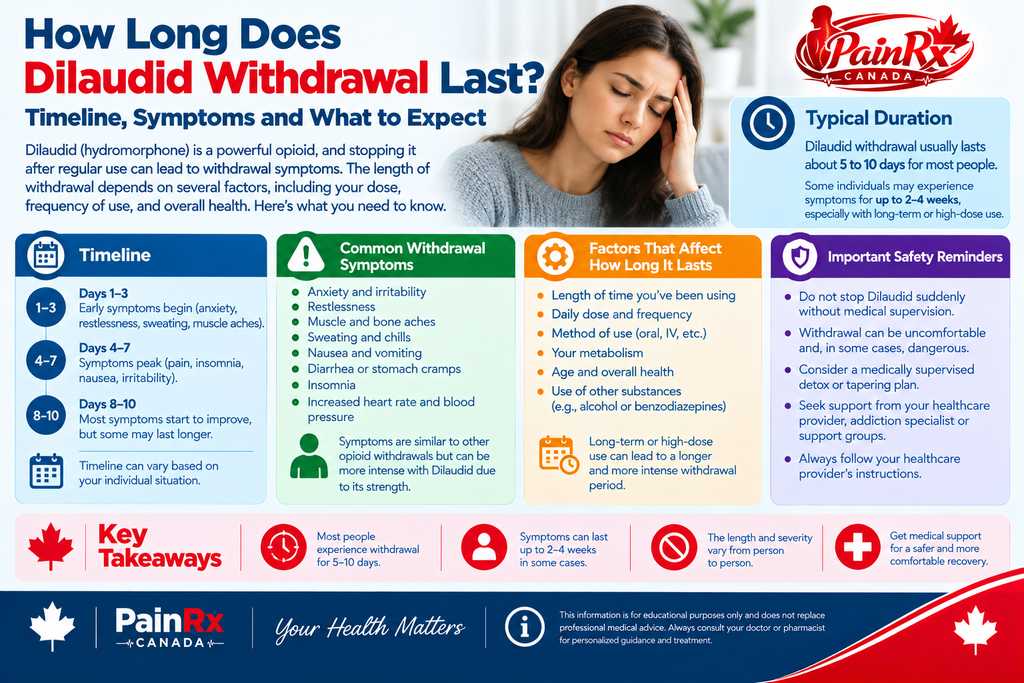
Stopping Dilaudid after regular use, whether by choice, by running out of a prescription, or as part of a planned taper, can bring on withdrawal symptoms that feel alarming if a patient doesn’t know what to expect. This guide covers the general withdrawal timeline, what shapes how long it lasts, and why medical support matters throughout the process.
Why Withdrawal Happens
Regular opioid use leads the body to adapt to the medication’s presence over time. Physical dependence develops as the nervous system adjusts its normal functioning around the drug’s effects. When hydromorphone use stops or drops significantly, the body needs time to readjust, and withdrawal symptoms emerge during that adjustment period.
Physical dependence can develop even in patients taking Dilaudid exactly as prescribed for legitimate pain management. It differs from addiction, which involves compulsive drug-seeking behaviour despite harm, though the two can occur together.
The General Withdrawal Timeline
Dilaudid is considered a short-to-intermediate-acting opioid, and its withdrawal pattern generally follows the timeline typical of that category.
Symptoms typically begin within six to twelve hours after the last dose for immediate-release formulations. Symptoms usually peak somewhere between roughly one and three days after onset, when discomfort tends to feel most intense. Most acute physical symptoms then gradually ease over the following days, with the most intense phase typically resolving within about a week for many patients.
This timeline describes the acute physical phase specifically. Some patients experience lingering symptoms, sometimes called post-acute withdrawal, that can continue in a milder form for weeks. These often include sleep disturbances, low mood, and reduced tolerance for stress, gradually improving over time.
Common Withdrawal Symptoms by Stage
Withdrawal symptoms tend to follow a rough progression, though not every patient experiences every symptom.
Early symptoms often include anxiety, restlessness, yawning, watery eyes, and a runny nose, appearing within the first several hours.
Peak symptoms commonly include muscle aches, sweating, chills, nausea, vomiting, diarrhea, dilated pupils, and difficulty sleeping, generally emerging as the withdrawal reaches its most intense point.
Later symptoms as the acute phase eases often include fatigue, low mood, and gradually improving sleep and appetite, though some psychological symptoms can persist longer than the physical ones.
Factors That Affect How Long Withdrawal Lasts
Individual withdrawal experiences vary considerably based on several factors.
Dose and duration of use. Higher doses and longer periods of regular use generally produce more intense and sometimes longer withdrawal than shorter-term or lower-dose use.
Formulation. Extended-release Dilaudid can produce a somewhat delayed and sometimes prolonged withdrawal pattern compared to immediate-release forms, related to its slower release and longer half-life.
How the medication is stopped. A gradual, medically supervised taper generally produces milder symptoms spread over a longer period, while abrupt discontinuation tends to produce more intense symptoms over a shorter window.
Individual physiology. Metabolism, overall health, and individual variation in how the body adapts to and recovers from opioid exposure all influence the specific experience.
Co-occurring substance use. Using other substances, particularly alcohol or benzodiazepines, alongside opioids can complicate withdrawal and its timeline, and combined withdrawal from multiple substances requires careful medical management.
Why Medical Supervision Matters
Opioid withdrawal itself isn’t usually life-threatening on its own, but it can become dangerous in certain situations, and it’s always uncomfortable enough that support meaningfully helps.
Severe vomiting and diarrhea can lead to dehydration and electrolyte imbalances that do require medical attention. Patients with underlying health conditions, including heart or respiratory issues, face added risk during withdrawal. Stopping a high-dose or long-term prescription abruptly, without medical guidance, also raises the risk of returning to opioid use at a higher, more dangerous dose than the body can safely tolerate, since tolerance drops quickly once regular use stops.
A doctor can plan a gradual taper schedule individualized to a patient’s specific dose and duration of use, which generally makes withdrawal considerably more manageable than stopping abruptly. In some cases, doctors also prescribe medications that ease withdrawal symptoms or support longer-term recovery, and a healthcare provider is the right person to determine whether this approach fits a specific situation.
When to Seek Immediate Help
Certain withdrawal symptoms warrant prompt medical attention rather than waiting them out at home.
Signs of severe dehydration, including an inability to keep fluids down, extreme weakness, or confusion, need medical evaluation. Any chest pain, severe shortness of breath, or irregular heartbeat during withdrawal also requires immediate medical attention, since these symptoms can signal a more serious underlying issue. Thoughts of self-harm or overwhelming hopelessness during withdrawal deserve immediate support from a crisis line or emergency service, since withdrawal can intensify difficult emotions for some people.
Frequently Asked Questions
Is Dilaudid withdrawal dangerous? Withdrawal itself usually isn’t life-threatening, but severe dehydration, underlying health conditions, or a return to use at a reduced tolerance level can create real danger. Medical support reduces these risks significantly.
How long does psychological withdrawal last compared to physical symptoms? Physical symptoms generally ease within about a week for many patients, while psychological symptoms like low mood, sleep changes, or reduced stress tolerance can persist in a milder form for several weeks longer in some cases.
Can a doctor help make withdrawal easier? Yes. A supervised taper, medications to ease specific symptoms, and in some cases opioid agonist treatment can all make withdrawal considerably more manageable than stopping abruptly without support.
Will withdrawal be worse if I’ve been taking Dilaudid for a long time? Generally, longer duration of use and higher doses tend to produce more intense withdrawal, though individual experience varies considerably.
Where can I get help if I’m struggling to stop taking Dilaudid safely? A family doctor, pharmacist, or addiction medicine service can help plan a safe approach. Canada also offers province-specific helplines and treatment access lines for people who need faster support.
The Bottom Line
Dilaudid withdrawal for short-acting formulations generally begins within six to twelve hours of the last dose, peaks over the following one to three days, and eases substantially within about a week for many patients, though milder symptoms can linger longer. Dose, duration of use, formulation, and how the medication is stopped all shape the specific timeline.
Withdrawal is genuinely uncomfortable, and medical support makes a real difference in both safety and comfort throughout the process. Anyone considering stopping Dilaudid after regular use should talk to a doctor about a safe, individualized approach rather than stopping abruptly on their own.
This article is for general informational purposes only and is not a substitute for professional medical advice. If you’re struggling with substance use, help is available, and a doctor, pharmacist, or addiction medicine service can support you in finding a safe path forward. Always consult a doctor or pharmacist with questions about your specific medication, dosing, or symptoms, and seek emergency medical help immediately for any signs of an opioid overdose.