

How Long Does Dilaudid Stay in Breast Milk?

How Long Does Dilaudid Stay in Breast Milk? A Canadian Patient Guide
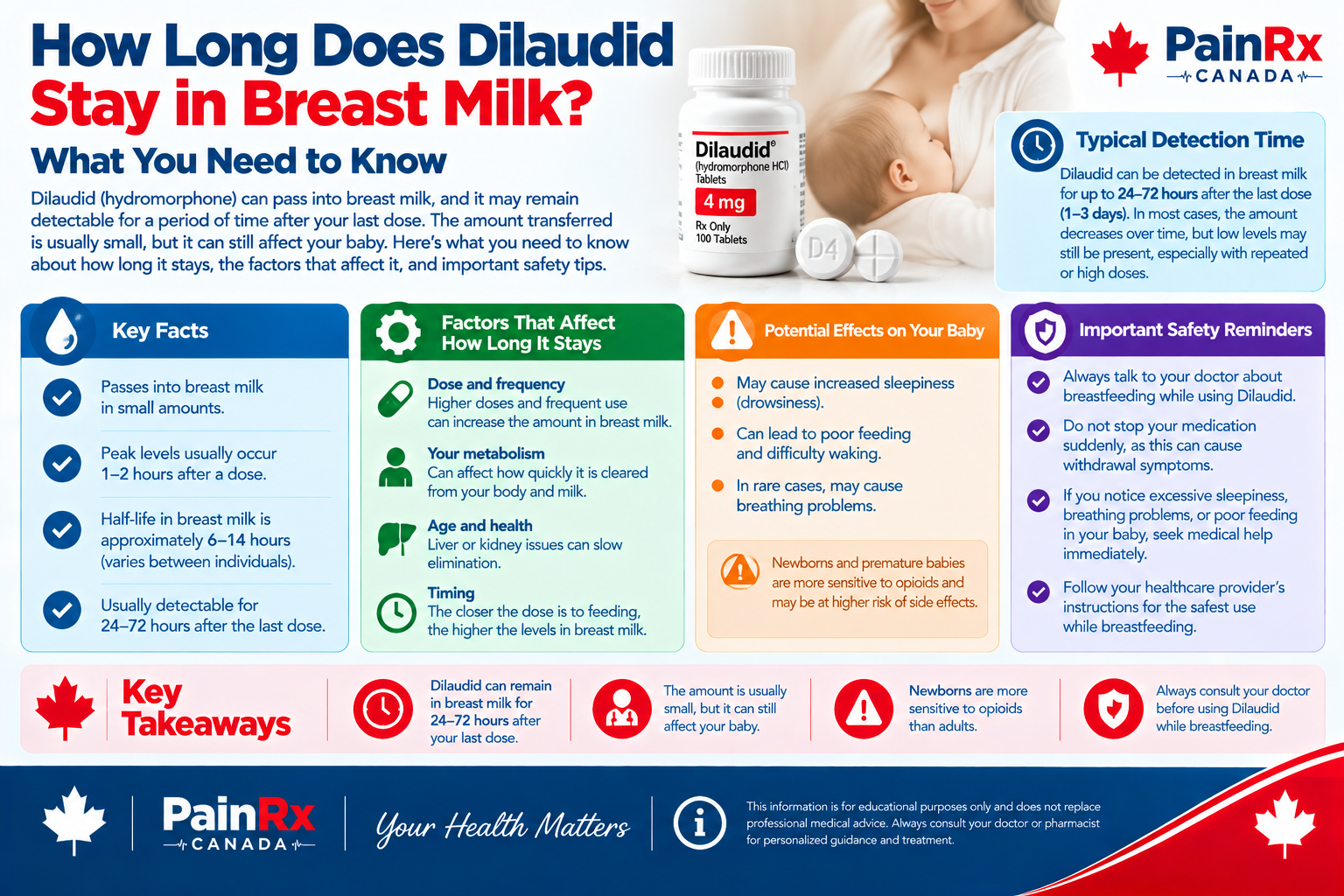
Postpartum pain, whether from a C-section, a difficult delivery, or another medical need, sometimes calls for a strong opioid like Dilaudid. Breastfeeding parents in this situation often feel caught between two priorities: managing genuine pain and protecting their baby from unnecessary exposure. This guide covers what research shows about hydromorphone in breast milk, how long it remains present, and how to reduce infant exposure while still managing pain safely.
How Much Hydromorphone Actually Reaches Breast Milk
Research specifically measuring hydromorphone transfer into breast milk offers real reassurance alongside real caution. A pharmacokinetic study using intranasal hydromorphone found that a fully breastfed infant would receive approximately 0.67% of the mother’s weight-adjusted dose. This figure, known as the relative infant dose, sits well below the 10% threshold many lactation specialists use as a general marker of concern for medication safety during breastfeeding.
A separate study measuring hydromorphone specifically as a metabolite of hydrocodone found that most mothers excreted little to no hydromorphone into breast milk at all, with combined opiate exposure averaging well under 1% of a therapeutic infant dose.
How Long Hydromorphone Stays Present in Milk
According to the same pharmacokinetic research, hydromorphone reaches peak levels in breast milk about two hours after a dose, and its elimination half-life from milk runs approximately 10.5 hours. This is notably longer than hydromorphone’s half-life in maternal blood plasma, which generally falls between 2.3 and 4 hours for immediate-release forms.
This difference matters practically. Because hydromorphone clears from breast milk more slowly than it clears from the bloodstream, a single dose can remain measurable in milk for considerably longer than a mother might expect based on how long she personally feels the medication’s effects.
Why Timing and Duration of Use Matter
Clinical guidance generally distinguishes between short-term, low-dose use immediately after delivery and any extended or higher-dose use.
Reference sources note that if a new mother needs hydromorphone, this doesn’t automatically mean stopping breastfeeding. Once milk supply becomes established, many clinical references suggest managing pain with a non-opioid option where possible and limiting hydromorphone use to a short window, generally cited as around two to three days at a low dose, with close monitoring of the infant during that time.
Extended, high-dose, or long-term maternal use raises different considerations than a brief post-surgical course, and any breastfeeding parent anticipating longer opioid use should discuss a specific monitoring and feeding plan with her doctor.
A Note on Extended-Release Dilaudid Specifically
Extended-release Dilaudid formulations carry more cautious guidance than immediate-release tablets in this context. Product information for at least one extended-release hydromorphone product specifically advises against breastfeeding during its use, given the longer, steadier drug exposure this formulation produces compared to immediate-release dosing.
Any breastfeeding parent prescribed an extended-release opioid should raise this specifically with her doctor before starting or continuing the medication.
Practical Steps to Reduce Infant Exposure
A few strategies can help reduce an infant’s exposure while still allowing a mother to manage genuine pain.
Feeding the baby right before taking a dose, rather than right after, can reduce the amount of medication present in the milk during the next feeding, since levels typically peak a couple of hours after the dose. Using the lowest effective dose for the shortest necessary duration limits overall exposure. Switching to a non-opioid pain reliever as soon as pain allows reduces exposure further. Close observation of the infant throughout any period of maternal opioid use remains essential regardless of these strategies.
Signs to Watch for in a Breastfed Infant
Because newborns are particularly sensitive to even small amounts of opioid exposure, monitoring for specific signs matters throughout any period of maternal hydromorphone use.
Watch for unusual or excessive sleepiness beyond a baby’s normal pattern, difficulty latching or feeding effectively, limpness or reduced muscle tone, and any signs of breathing difficulty. Contact a doctor immediately if any of these appear, since they can indicate the infant is more sensitive to the medication than expected.
Frequently Asked Questions
Do I need to stop breastfeeding if I’m prescribed Dilaudid after delivery? Not necessarily. Research suggests infant exposure through breast milk is generally low for short-term, low-dose use, though a doctor can help weigh the specific situation, including dose, duration, and the baby’s health.
How long after taking Dilaudid should I wait before breastfeeding? Since milk levels typically peak around two hours after a dose, feeding right before taking a dose, rather than right after, can reduce the amount present at the next feeding. A doctor or lactation consultant can offer guidance tailored to a specific dose and schedule.
Is it safe to take Dilaudid for an extended period while breastfeeding? Clinical guidance generally supports short-term, low-dose use with close monitoring more readily than extended or high-dose use, which carries more uncertainty and needs individualized medical guidance.
Can hydromorphone affect my milk supply? Available research focuses primarily on infant exposure rather than milk supply specifically. Any concern about supply changes during opioid use should go to a doctor or lactation consultant familiar with the full clinical picture.
What should I do if my baby seems unusually sleepy while I’m taking Dilaudid? Contact a doctor immediately. Unusual drowsiness, feeding difficulty, limpness, or breathing changes in a breastfed infant during maternal opioid use warrant prompt medical evaluation.
The Bottom Line
Research indicates that hydromorphone transfers into breast milk in relatively small amounts, with one key study estimating an infant would receive well under 1% of the maternal weight-adjusted dose. Even so, hydromorphone’s longer half-life in milk compared to blood plasma means it can remain present longer than a mother might expect, and newborns remain especially sensitive to even limited opioid exposure.
Short-term, low-dose use with close infant monitoring generally carries a more favourable profile than extended or high-dose use, and extended-release formulations warrant particular caution. Any breastfeeding parent taking or considering Dilaudid should work directly with her doctor to build a plan that manages her pain while protecting her baby.
This article is for general informational purposes only and is not a substitute for professional medical advice. Dilaudid and hydromorphone are prescription-only controlled substances in Canada. Always consult a doctor, pharmacist, or lactation consultant with questions about your specific medication, dosing, or breastfeeding plan, and seek emergency medical help immediately for any signs of an opioid overdose or concerning symptoms in your infant.