

Does Dilaudid Make You Itchy?

Does Dilaudid Make You Itchy? A Canadian Patient Guide
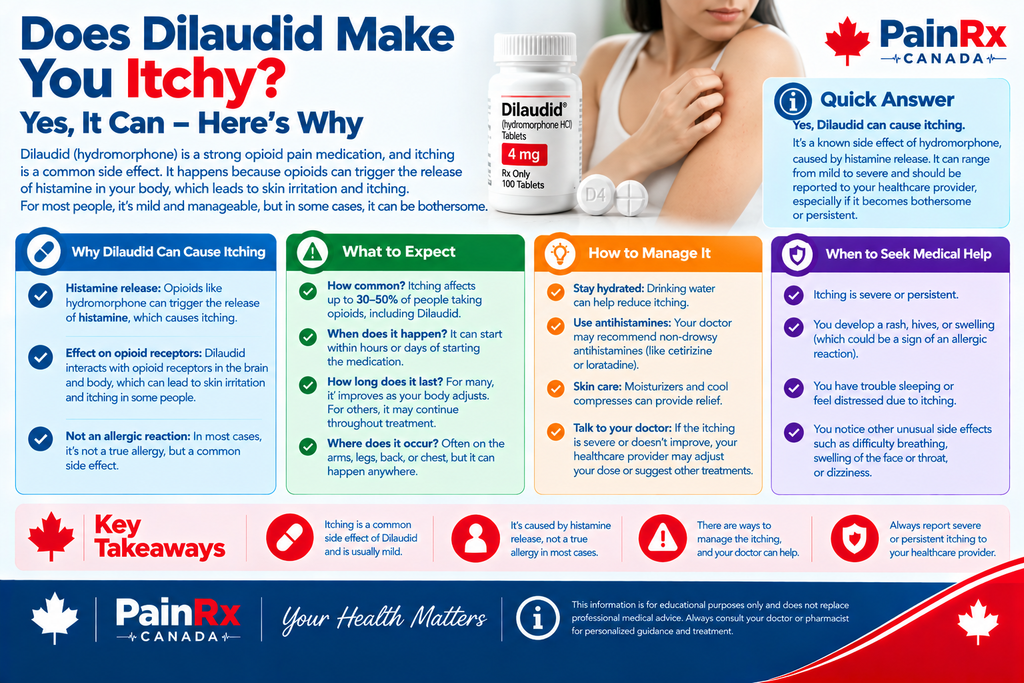
Itching after a Dilaudid dose catches many patients off guard, especially when nothing about the skin looks irritated or reacted. This is a genuinely common experience with opioids, and understanding why it happens can ease worry and help distinguish a normal side effect from something needing medical attention.
Yes, Itching Is a Recognized Side Effect
Itching, medically called pruritus, ranks among the more common side effects associated with opioid medications, including Dilaudid. It can occur anywhere on the body, though patients often notice it most on the face, chest, or in a generalized way across the skin.
This effect doesn’t require an allergy or an unusual reaction. Many patients who tolerate hydromorphone well overall still experience some degree of itching, particularly with a new prescription or shortly after a dose.
Why Opioids Cause Itching
Hydromorphone and other opioids can trigger the release of histamine, the same chemical the body releases during an allergic reaction, even without a true allergy taking place. Opioid receptors also exist in areas of the nervous system involved in processing itch sensations, and activating these receptors can produce an itching sensation independent of any histamine release at all.
This means opioid-induced itching stems from a genuine, understood pharmacological mechanism, not simply an unusual or unexplained reaction. It reflects how the medication interacts with the nervous system broadly, beyond its effect on pain signals alone.
How Common This Is
Clinical literature identifies itching as one of the more frequently reported opioid side effects, alongside nausea, drowsiness, and constipation, though frequency varies across studies and specific opioids. Some research suggests hydromorphone triggers less histamine release than morphine, which may make itching somewhat less pronounced for some patients switching between the two, though individual experience varies considerably.
When Itching Tends to Occur and How Long It Lasts
Itching often appears shortly after a dose, sometimes within the same general window as other early effects like drowsiness or warmth. For many patients, itching lessens noticeably within the first several days of regular use, as the body develops some tolerance to this particular effect, even while pain relief remains more stable.
A first dose or a recent dose increase tends to produce more noticeable itching than a dose a patient has taken regularly for some time.
Distinguishing Opioid-Induced Itching From a True Allergic Reaction
This distinction matters, since the two situations call for different responses.
Opioid-induced itching typically occurs without hives, without swelling of the face, lips, or throat, and without difficulty breathing. It often appears as a general itchy sensation, sometimes with mild flushing, but without a widespread rash.
A true allergic reaction, by contrast, can involve hives, significant swelling, difficulty breathing, or wheezing, and represents a medical emergency requiring immediate attention. Anyone experiencing swelling of the face or throat, difficulty breathing, or a widespread hive-like rash after taking Dilaudid should seek emergency care right away, since this could indicate a genuine allergic reaction rather than typical opioid-related itching.
Managing Itching From Dilaudid
A few approaches can help patients manage this side effect, generally guided by a doctor or pharmacist rather than self-directed changes.
Antihistamines. A doctor or pharmacist may recommend an antihistamine to reduce itching, since this addresses the histamine-related component of the reaction directly.
Dose timing and adjustment. In some cases, a doctor may adjust the dose or timing slightly to help manage bothersome itching without compromising pain control.
Switching opioids. For itching that remains persistent and bothersome, a doctor might consider switching to a different opioid with a different side effect profile, since individual reactions vary between medications.
Time. Since itching commonly lessens with continued regular use, a doctor may simply recommend monitoring the symptom for a period before making any changes, particularly if it’s mild.
Patients shouldn’t stop taking a prescribed medication or adjust the dose independently to manage itching. Raising the issue with a doctor or pharmacist allows for a safe, appropriate response.
When Itching Warrants a Call to the Doctor
While mild, generalized itching is common and often manageable, certain patterns deserve prompt medical attention.
Itching accompanied by hives, significant swelling, difficulty breathing, or wheezing needs immediate emergency care. Itching that’s severe, persistent, or significantly disrupts sleep or daily activity deserves a conversation with a doctor, even without other allergic symptoms present, since adjustments to the treatment plan may help.
Frequently Asked Questions
Does itching from Dilaudid mean I’m allergic to it? Not necessarily. Opioids commonly cause itching through histamine release and effects on nerve receptors involved in itch sensation, separate from a true allergic reaction. A doctor can help distinguish between the two based on the specific symptoms present.
Will the itching from Dilaudid go away on its own? For many patients, yes. Itching often lessens noticeably within the first several days of regular use as the body adjusts, though this varies between individuals.
Can I take an over-the-counter antihistamine for Dilaudid-related itching? Check with a doctor or pharmacist first, since they can confirm this is an appropriate and safe option given your specific medications and health situation, rather than assuming compatibility on your own.
Is itching more common with certain forms of Dilaudid? Injectable forms sometimes produce more immediate and noticeable itching than oral tablets, related to how quickly the medication reaches the bloodstream, though this varies between patients.
Should I stop taking Dilaudid if it makes me itchy? Not without talking to a doctor first. Mild itching alone usually doesn’t require stopping the medication, and a doctor can suggest management options or evaluate whether a change makes sense for your specific situation.
The Bottom Line
Itching is a common, well-understood side effect of Dilaudid and other opioids, generally caused by histamine release and the medication’s effect on nerve pathways involved in itch sensation, rather than a true allergy. It often lessens with continued use and can typically be managed with guidance from a doctor or pharmacist.
Itching accompanied by hives, swelling, or breathing difficulty differs from typical opioid-related itching and requires immediate medical attention. Any bothersome or persistent itching, even without these more serious signs, is worth discussing with a doctor rather than managing alone.
This article is for general informational purposes only and is not a substitute for professional medical advice. Dilaudid and hydromorphone are prescription-only controlled substances in Canada. Always consult a doctor or pharmacist with questions about your specific medication, dosing, or symptoms, and seek emergency medical help immediately for any signs of a severe allergic reaction or opioid overdose.