

What Is Xtampza ER?

What Is Xtampza ER? A Guide to This Extended-Release Opioid Medication
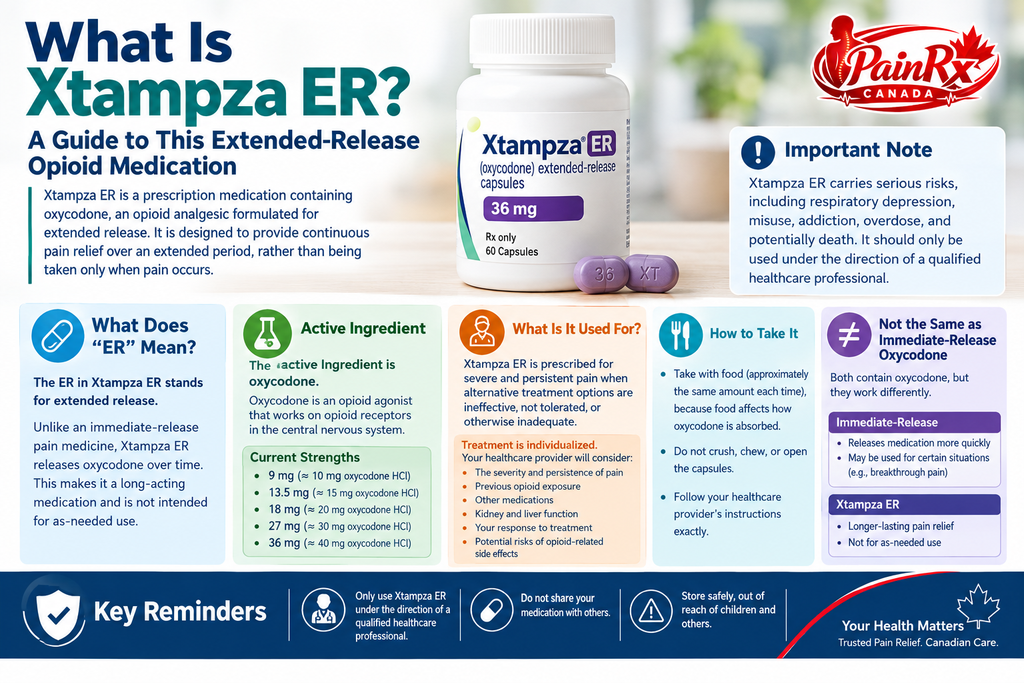
Xtampza ER is a prescription medication that comes up often in conversations about chronic pain management. It’s a strong opioid with serious risks. Because of this, understanding exactly what it is, who it’s meant for, and what precautions apply matters significantly. This guide covers the essentials in plain terms.
This article provides general information only. It isn’t medical advice, and it doesn’t replace the official prescribing information or a conversation with a licensed prescriber. Xtampza ER is a Schedule II controlled substance with serious risks, including addiction, abuse, and overdose. Only take it exactly as your doctor prescribes it, and only while your doctor actively monitors your situation.
What Xtampza ER Is
Xtampza ER is the brand name for an extended-release formulation of oxycodone, a strong opioid pain medication. Immediate-release oxycodone requires dosing every four to six hours for short-term or as-needed pain. Xtampza ER works differently. It releases the medication gradually over roughly twelve hours, which allows for twice-daily dosing instead.
The medication comes as microspheres inside a capsule. Patients who have difficulty swallowing capsules whole can open the capsule and sprinkle the microspheres on soft food. However, the microspheres themselves shouldn’t be crushed or chewed. Crushing defeats the extended-release mechanism, and it can cause a rapid release of a potentially fatal dose.
What It’s Approved to Treat
Doctors approve Xtampza ER specifically for pain severe enough to require daily, around-the-clock, long-term opioid treatment, when other options don’t provide adequate relief. This represents a narrow and specific indication. It isn’t intended for pain that responds to non-opioid options, or for pain expected to be short-term, such as recovery from minor surgery or an acute injury.
Because of this narrow indication, doctors generally reserve Xtampza ER for patients with significant chronic pain conditions. This usually happens only after other approaches, including non-opioid medications and non-pharmacological treatments, haven’t provided adequate relief.
Serious Risks: The Boxed Warning
Like all extended-release and long-acting opioid medications, Xtampza ER carries a Boxed Warning. Regulatory agencies reserve this warning as the strongest one they require. It exists because the risks are serious, and it demands careful attention from both prescribers and patients.
Addiction, abuse, and misuse represent a significant risk, even when someone takes the medication exactly as prescribed. Opioids carry a genuine potential for developing dependence. This risk exists regardless of how carefully someone follows their prescription.
Life-threatening respiratory depression ranks among the most serious risks this medication carries. Xtampza ER releases medication over an extended period. Because of this, taking it incorrectly, combining it with other substances that depress breathing, or exceeding the prescribed dose can slow or stop breathing entirely.
Accidental exposure poses a serious risk to anyone who isn’t the intended patient, particularly children. Even a single dose can kill a child who accidentally ingests it. This danger makes secure storage absolutely essential.
Neonatal opioid withdrawal syndrome can affect babies born to mothers who used this medication during pregnancy. These babies require specialized care after birth.
Interactions with other substances that depress the central nervous system significantly increase the risk of dangerous or fatal respiratory depression. This includes alcohol, benzodiazepines, and certain other medications. This particular combination causes many opioid-related deaths.
Who Shouldn’t Take Xtampza ER
Certain individuals and situations require particular caution, or they make this medication inappropriate altogether. It doesn’t suit pain that isn’t expected to persist long-term. It also doesn’t suit occasional, mild-to-moderate pain that other approaches could manage.
People with significant respiratory conditions generally can’t safely take this medication. Severe asthma and other conditions affecting breathing raise the respiratory depression risk too much. In most circumstances, this medication also doesn’t work as a starting point for opioid-naive patients, given its potency and extended-release profile.
Anyone with a known hypersensitivity to oxycodone, or a gastrointestinal obstruction, shouldn’t take this medication. A prescriber should always complete a full medical history review before considering this medication appropriate for any individual.
Safe Use Guidelines
Patients who receive an appropriate Xtampza ER prescription should follow several safety practices closely. Take the medication exactly as prescribed. Never adjust the dose or frequency without direct guidance from your prescriber.
Never combine this medication with alcohol. Discuss any other medications, including over-the-counter products, with your doctor or pharmacist before combining them with Xtampza ER, given the serious interaction risks involved.
Store this medication securely, out of reach of children, other household members, and pets, ideally in a locked location. Given the fatal risk to children from accidental exposure, secure storage isn’t optional.
Recognizing an Overdose
Understanding the signs of opioid overdose can save a life, whether for the person prescribed the medication or someone who accidentally accesses it. Watch for slow, shallow, or stopped breathing, extreme drowsiness, or an inability to wake up. Pinpoint pupils and bluish lips or fingertips also signal an overdose.
If you suspect an opioid overdose, call 911 immediately. Naloxone can temporarily reverse an opioid overdose, and most pharmacies sell it without a prescription in many jurisdictions. If you or someone in your household uses this medication, keeping naloxone accessible can genuinely save a life. Administer naloxone if you have it while you wait for emergency services, and stay with the person until help arrives.
Proper Disposal
Never keep unused Xtampza ER “just in case.” Don’t dispose of it in household trash or flush it down the toilet unless a professional specifically instructs you to do so. Many pharmacies offer drug take-back programs designed specifically for safe disposal of controlled substances like this one. These programs prevent accidental exposure or diversion.
The Role of REMS Programs
Regulators subject extended-release and long-acting opioids, including Xtampza ER, to a Risk Evaluation and Mitigation Strategy, commonly called REMS. This program requires manufacturers to educate prescribers about appropriate patient selection and safe prescribing practices. It also covers how to counsel patients on safe use, storage, and disposal.
This regulatory oversight reflects the serious nature of these medications. It also underscores the importance of careful, informed prescribing, rather than routine use for less severe pain.
Talking to Your Doctor
Has chronic pain led you to a conversation about medications like Xtampza ER? If so, discuss the full range of options with your doctor first. Non-opioid medications, physical therapy, and other approaches deserve consideration before, or alongside, a strong opioid. Ask specifically about the risks relevant to your situation. Also ask how long treatment might continue, and what a monitoring or tapering plan would look like over time.
Final Thoughts
Xtampza ER is a potent, extended-release opioid medication that doctors reserve for severe chronic pain requiring around-the-clock treatment. It carries serious risks that require careful medical supervision throughout its use. Anyone for whom this medication becomes part of a treatment plan should understand its Boxed Warning risks, proper safe-use practices, and the importance of secure storage and disposal. Have this conversation thoroughly with a prescriber who can weigh the risks and benefits specific to your individual health situation.