

What Is Dilaudid?

What Is Dilaudid? A Guide to This Prescription Opioid
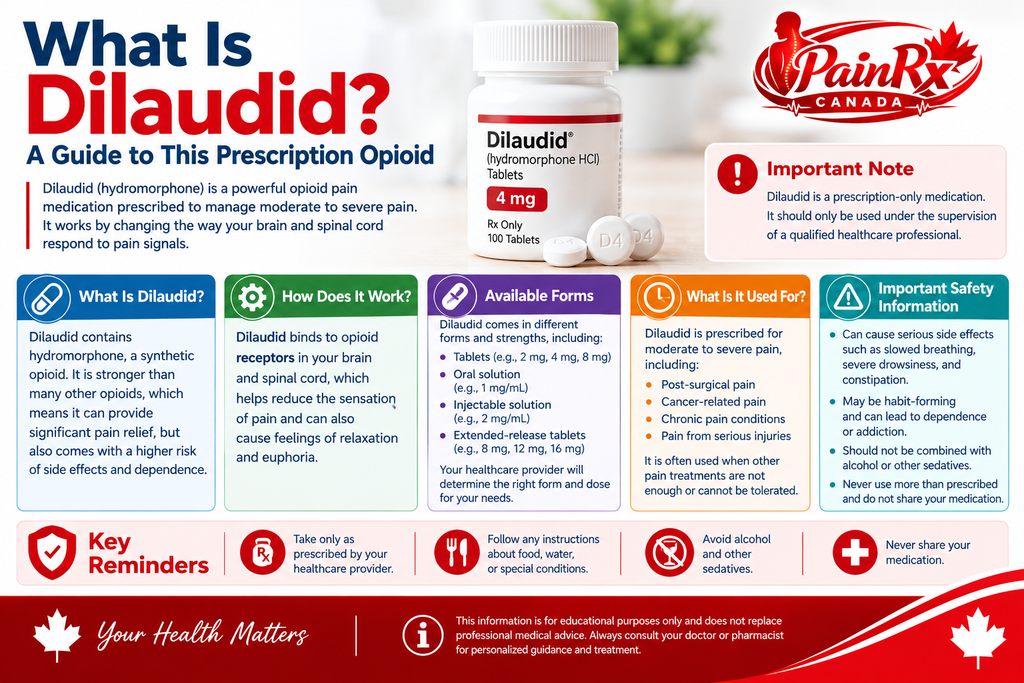
Dilaudid is a name many people encounter during a hospital stay, a cancer treatment journey, or a conversation about managing severe pain. Because it’s a powerful and tightly regulated medication, understanding what it actually is, how it’s used, and what risks it carries matters for patients and their families alike. This guide covers the essentials in plain terms.
This article provides general information only. It isn’t medical advice, and it doesn’t replace the official prescribing information or guidance from your doctor or pharmacist. Dilaudid is a Schedule II controlled substance with serious risks, including addiction, misuse, and fatal overdose. Only take it exactly as your doctor prescribes it.
What Dilaudid Actually Is
Dilaudid is the brand name for hydromorphone hydrochloride, a strong opioid pain medication derived from morphine. Chemists synthesize hydromorphone from morphine through a modification process, which changes its potency and how the body absorbs it, but it remains part of the same broad opioid drug class.
Doctors classify Dilaudid as a Schedule II controlled substance in the United States, reflecting both its legitimate medical value and its high potential for abuse and dependence. This classification means strict regulations govern its prescribing, dispensing, and storage at every step, from the pharmaceutical manufacturer to the patient.
What Dilaudid Treats
Doctors prescribe Dilaudid for moderate to severe pain, typically when other pain management options haven’t provided adequate relief. It doesn’t usually serve as a first-line treatment for mild or moderate pain that responds well to non-opioid medications.
Common clinical uses include post-surgical pain management, particularly for major surgeries requiring strong pain control during recovery. Cancer care teams frequently use it for cancer-related pain, especially in advanced disease or palliative care settings. Hospitals also use it for severe acute pain from trauma, kidney stones, or other significantly painful conditions requiring rapid, effective relief.
How Dilaudid Compares to Other Opioids
Understanding where Dilaudid sits relative to other common opioids helps clarify why doctors choose it in specific situations. Hydromorphone is generally considered significantly more potent than morphine on a milligram-for-milligram basis, meaning a much smaller dose produces comparable pain relief.
This higher potency makes Dilaudid useful in situations requiring effective pain control with a smaller volume of medication, such as in patients who can’t tolerate larger fluid volumes, or when rapid, powerful relief is clinically necessary. However, this same potency also means the margin for error is smaller, which is part of why strict medical supervision matters so much with this particular medication.
Compared to oxycodone, another commonly prescribed opioid, hydromorphone also tends to be more potent, though exact comparisons depend on the specific formulation and individual patient factors. Doctors and pharmacists use established conversion guidelines when switching a patient between different opioids, since these medications aren’t interchangeable on a simple one-to-one basis.
Available Forms of Dilaudid
Dilaudid comes in several different forms, each suited to different clinical situations. Immediate-release oral tablets represent one of the most commonly prescribed forms, typically dosed every four to six hours for ongoing pain management outside a hospital setting.
An oral liquid solution offers an alternative for patients who have difficulty swallowing tablets, providing the same immediate-release effect in liquid form. Extended-release tablets provide a different option, designed for continuous, around-the-clock pain control in patients with chronic, severe pain who need consistent relief throughout the day.
Injectable forms, including intravenous and subcutaneous options, appear primarily in hospital, hospice, and palliative care settings, where healthcare professionals can administer and monitor the medication closely.
Who Dilaudid Is Appropriate For
Dilaudid suits patients experiencing genuinely severe pain that other treatments haven’t adequately managed. This typically includes post-surgical patients, cancer patients, and those with acute traumatic injuries causing significant pain.
It generally isn’t appropriate as a first-choice treatment for opioid-naive patients with mild to moderate pain, given safer, less potent options that usually provide adequate relief for these situations. Doctors also avoid prescribing it for patients with certain respiratory conditions, given the medication’s effect on breathing, and use particular caution in older adults or those with liver or kidney impairment, since these conditions affect how the body processes the drug.
Serious Risks and the Boxed Warning
Dilaudid carries a Boxed Warning, the strongest warning regulatory agencies require for a medication. This warning reflects genuinely serious risks that both prescribers and patients need to understand clearly.
Addiction and dependence represent real risks, even for patients who take the medication exactly as prescribed. Opioids carry a fundamental potential for developing physical dependence and, in some cases, addiction, regardless of how carefully someone follows their treatment plan.
Life-threatening respiratory depression ranks among the most dangerous risks, particularly at higher doses or when combined with other substances that slow breathing. This risk exists throughout treatment, not just at the beginning.
Dangerous interactions with alcohol, benzodiazepines, and other central nervous system depressants significantly increase overdose risk. Combining these substances represents one of the most common causes of opioid-related deaths.
Accidental exposure poses a severe threat to children and other household members, since even a small amount can be fatal to a child. This makes secure storage a genuine safety necessity, not merely a suggestion.
Safe Use and Storage Practices
Patients prescribed Dilaudid should follow their exact prescribed dose and schedule, never adjusting either without direct guidance from their prescriber. Avoid alcohol entirely while taking this medication, and discuss every other medication, including over-the-counter products and supplements, with your doctor or pharmacist before combining anything with Dilaudid.
Store the medication securely, ideally in a locked location, out of reach of children, guests, and anyone else in the household. Once treatment ends, don’t keep leftover medication “just in case.” Use a pharmacy take-back program or another approved disposal method rather than household trash or flushing, unless specifically instructed otherwise.
Recognizing an Overdose
Knowing the signs of opioid overdose can genuinely save a life. Watch for slow, shallow, or stopped breathing, along with extreme drowsiness or an inability to stay awake. Pinpoint pupils and bluish or grayish lips, skin, or fingertips also signal a possible overdose emergency.
Call 911 immediately if you suspect an overdose. Naloxone can temporarily reverse an opioid overdose and is available without a prescription at many pharmacies. If you or someone in your household takes this medication, keeping naloxone on hand represents a genuinely worthwhile precaution.
Talking to Your Doctor
If your doctor has prescribed or is considering prescribing Dilaudid, it’s worth discussing the full picture openly. Ask why this specific medication suits your situation over other options, how long treatment is expected to last, and what monitoring or tapering plan applies as your pain improves or your treatment progresses.
Final Thoughts
Dilaudid is a potent opioid medication reserved for moderate to severe pain that hasn’t responded adequately to other treatments. Its strength, various available forms, and serious risk profile all reflect why it requires careful prescribing, close medical supervision, and strict safety practices throughout treatment. Understanding what this medication is, how it compares to other opioids, and the risks it carries can help patients and their families use it as safely as possible under a doctor’s guidance.