

Is Dilaudid an Opioid?

Is Dilaudid an Opioid? A Canadian Patient Guide
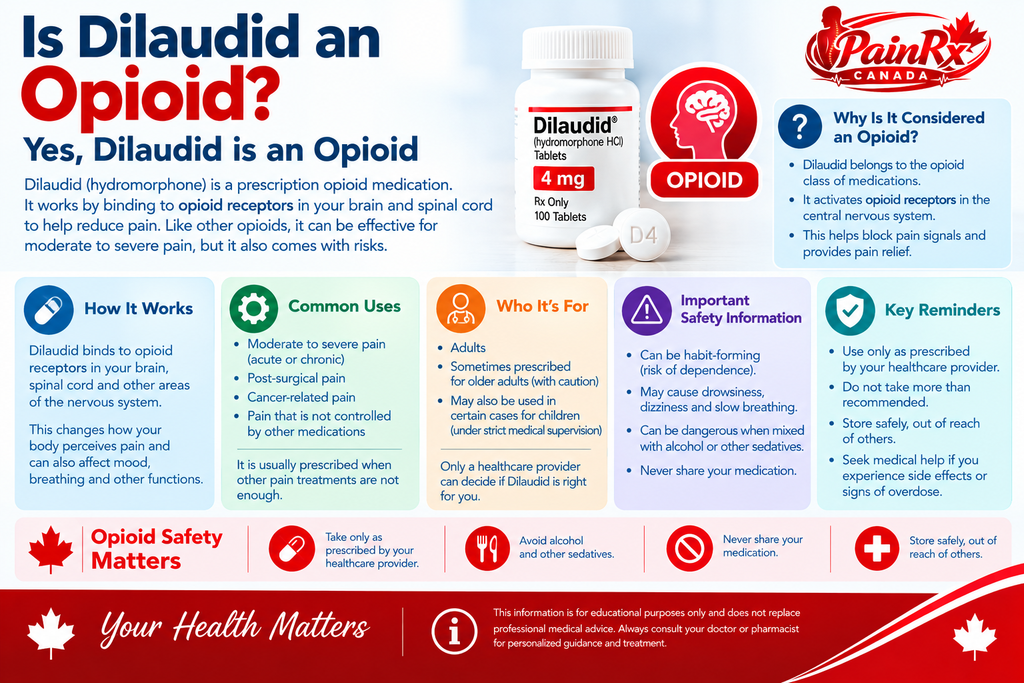
A patient picks up a Dilaudid prescription and notices the pharmacy label mentions controlled substance warnings. A natural question follows: is this an opioid, and if so, what does that actually mean for how it should be used?
The short answer is yes. This guide explains exactly what that classification means, how Dilaudid compares to other opioids, and what the opioid label means for safety in practice.
Yes, Dilaudid Is an Opioid
Dilaudid is the brand name for hydromorphone, a semi-synthetic opioid derived from morphine. Health Canada regulates it as a controlled substance under Schedule I of the Controlled Drugs and Substances Act, the same legal category that covers fentanyl, morphine, oxycodone, and heroin.
Doctors prescribe Dilaudid specifically for moderate to severe pain. Its opioid classification explains both why it works so effectively for pain and why it carries the strict controls and safety warnings that come with it.
What “Opioid” Actually Means
Opioids are a class of medications that act on specific receptors in the brain, spinal cord, and other parts of the body. These receptors, called opioid receptors, normally respond to naturally occurring chemicals the body produces to manage pain.
Opioid medications mimic those natural chemicals, but far more strongly. When hydromorphone binds to opioid receptors, it blocks pain signals from reaching conscious awareness and often produces feelings of calm or mild euphoria alongside the pain relief.
This same mechanism explains both the benefits and the risks of the drug class. The pain relief comes from the same receptor activity that also affects breathing, mood, and the potential for dependence.
How Dilaudid Compares to Other Opioids
Patients often want to know where Dilaudid fits among more familiar opioid names.
Dilaudid vs. morphine. Hydromorphone is generally considered more potent than morphine on a milligram-for-milligram basis. Doctors use conversion calculations when switching a patient between the two to avoid over- or under-dosing.
Dilaudid vs. oxycodone. Both are strong opioids used for moderate to severe pain, and doctors often choose between them based on a patient’s individual response, kidney function, or prior experience with one or the other.
Dilaudid vs. codeine or tramadol. Codeine and tramadol are considered weaker opioids, typically reserved for mild to moderate pain. Dilaudid sits at the stronger end of the opioid spectrum, reserved for pain that hasn’t responded to those milder options.
Dilaudid vs. fentanyl. Fentanyl is significantly more potent than hydromorphone. Doctors generally reserve fentanyl for situations requiring extremely strong, fast-acting pain control, such as certain surgical or palliative settings.
Why the Opioid Classification Matters for Safety
Every opioid, including Dilaudid, carries a set of risks tied directly to how it interacts with the body.
Respiratory depression. Opioid receptors also influence the brain’s breathing control centre. At high enough doses, or when combined with other depressants, hydromorphone can slow breathing to a dangerous degree.
Dependence and tolerance. Regular opioid use can lead the body to adapt, requiring higher doses over time to achieve the same effect. This is a known pharmacological response, not a reflection of a patient’s character or willpower.
Interaction risk. Combining any opioid with alcohol, benzodiazepines, or certain sleep medications significantly increases the risk of a life-threatening reaction.
Withdrawal. Stopping a regular opioid abruptly, rather than tapering under medical guidance, can trigger uncomfortable and sometimes serious withdrawal symptoms.
These risks apply to Dilaudid specifically because it’s an opioid, not because it differs from other medications in that class. The same core warnings that apply to morphine or oxycodone apply here too.
What the Opioid Classification Means for a Prescription
Because Dilaudid falls under Schedule I of Canada’s Controlled Drugs and Substances Act, it comes with specific prescribing and dispensing rules.
Doctors must assess a patient’s pain level and medical history carefully before prescribing it. Pharmacies track controlled substance prescriptions more closely than they track non-controlled medications. Patients typically can’t receive early refills without a documented medical reason, and doctors often monitor patients on long-term opioid therapy through regular follow-up visits.
These rules exist because of the opioid classification, not as an inconvenience layered on top of it. They reflect the genuine balance doctors strike between effective pain relief and patient safety.
Recognizing an Opioid Emergency
Because Dilaudid is an opioid, patients and caregivers should know the warning signs of an overdose, regardless of how long someone has taken it or at what dose.
Watch for extreme drowsiness that’s hard to rouse someone from, slow or shallow breathing, blue-tinged lips or fingertips, and unresponsiveness. Call 911 immediately if any of these signs appear. Naloxone can temporarily reverse an opioid overdose while emergency help is on the way, and many Canadian pharmacies provide it at no cost along with brief training.
Frequently Asked Questions
Is Dilaudid a narcotic? Yes. “Narcotic” and “opioid” are often used interchangeably in Canadian regulations and clinical settings, and Dilaudid falls under both terms.
Is Dilaudid addictive? Like all opioids, Dilaudid carries a risk of dependence and addiction, particularly with long-term use. Taking it exactly as prescribed and under a doctor’s supervision reduces, but doesn’t eliminate, this risk.
Is Dilaudid the strongest opioid available? No. Fentanyl and some other synthetic opioids are considerably more potent. Dilaudid is a strong opioid, but it sits below the most potent options used in medical settings.
Can I become dependent on Dilaudid even if I take it exactly as prescribed? Physical dependence can develop with regular opioid use, even when a patient follows their prescription exactly. This differs from addiction, which involves compulsive use despite harm. A doctor can explain this distinction for an individual situation and manage any tapering needed.
Why does my pharmacy treat my Dilaudid prescription differently than my other medications? Its opioid classification places it under stricter federal controls in Canada, which affects how pharmacies track, dispense, and refill it compared with non-controlled medications.
The Bottom Line
Dilaudid is an opioid, specifically a potent, semi-synthetic one derived from morphine and regulated under Schedule I of Canada’s Controlled Drugs and Substances Act. That classification explains both why it manages severe pain so effectively and why it comes with strict safety rules, monitoring requirements, and overdose risks shared by every drug in its class.
Any question about how Dilaudid’s opioid status affects a specific prescription, tapering plan, or safety concern belongs in a conversation with a doctor or pharmacist.
This article is for general informational purposes only and is not a substitute for professional medical advice. Dilaudid and hydromorphone are prescription-only controlled substances in Canada. Always consult a doctor or pharmacist with questions about your specific medication, dosing, or symptoms, and seek emergency medical help immediately for any signs of an opioid overdose.