

Is Dilaudid Addictive?

Is Dilaudid Addictive? A Canadian Guide to Hydromorphone Dependence and Risk
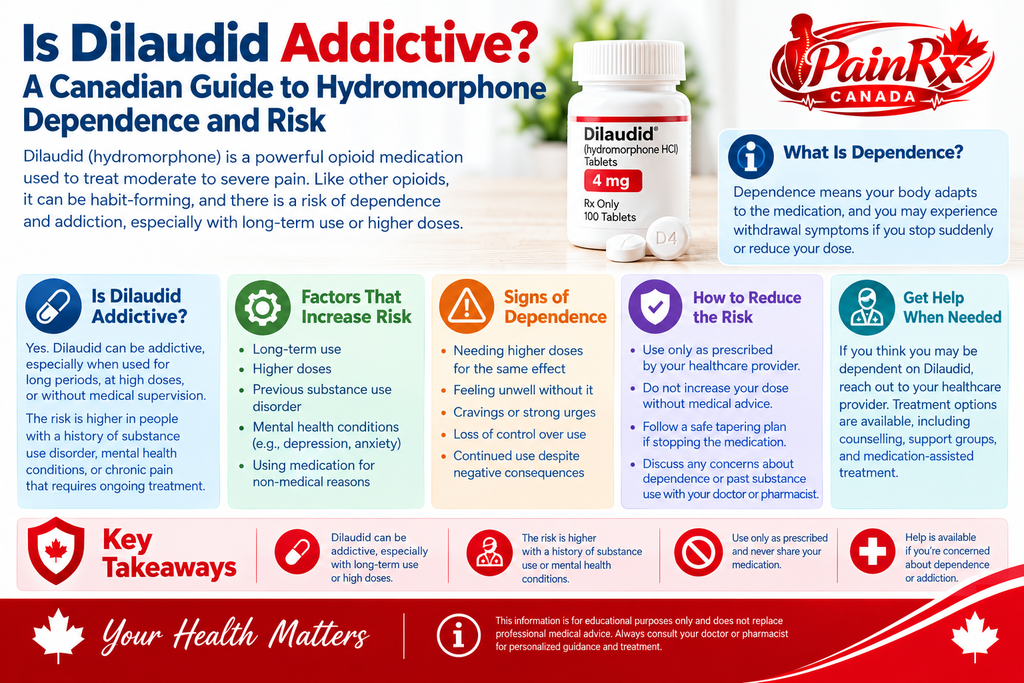
A doctor prescribes Dilaudid after surgery, and a quiet worry follows the relief. Could this medication become a problem? It’s a fair question, and a common one. Canadian emergency rooms and addiction clinics see the real-world consequences of opioid dependence every day. This guide explains exactly how addictive Dilaudid is, why it carries this risk, who faces the highest danger, and what warning signs to watch for. It also covers where Canadians can turn for help.
The Quick Answer
Yes, Dilaudid is addictive. It’s a potent opioid, and like all drugs in this class, it carries a real risk of physical dependence and addiction, even when taken exactly as prescribed. The risk grows with higher doses, longer use, and certain personal or genetic risk factors. Short-term use under medical supervision carries a lower risk than prolonged or unsupervised use, but no use is entirely risk-free. Understanding how this addiction develops, and recognizing the early warning signs, gives patients and families a real chance to intervene before serious harm occurs.
What Is Dilaudid?
Dilaudid is the brand name for hydromorphone, a semi-synthetic opioid derived from morphine. Canadian doctors prescribe it for severe pain following surgery, injury, or cancer treatment, and it’s also used in palliative care. Health Canada classifies hydromorphone as a controlled substance under the Controlled Drugs and Substances Act, which restricts its use to prescription only and imposes strict tracking requirements on pharmacies and prescribers. This classification exists precisely because of the drug’s potential for misuse and dependence.
Why Is Dilaudid Addictive?
Dilaudid works by binding tightly to opioid receptors in the brain and spinal cord. This action blocks pain signals, but it also triggers a flood of dopamine, the brain’s primary reward chemical. That dopamine surge produces feelings of relaxation, euphoria, and relief that go beyond simple pain control. Over time, the brain begins to associate the drug with this reward, and repeated exposure can reshape the brain’s reward circuitry. This is the same basic mechanism behind addiction to other opioids, though hydromorphone’s faster onset and shorter duration compared to morphine may make it somewhat more reinforcing for certain individuals.
Physical dependence and addiction are related but distinct. Dependence means your body has adapted to the drug’s presence and experiences withdrawal symptoms without it. Addiction, also called opioid use disorder, involves compulsive use despite negative consequences, a loss of control over use, and intense cravings. A patient can become physically dependent on Dilaudid without developing an addiction, particularly under short-term medical supervision. Still, dependence is often the first step toward addiction if use continues without careful oversight.
How Quickly Can Dependence Develop?
Physical dependence can begin developing within just a few days of regular use, though this varies significantly between individuals. Several factors influence how quickly dependence takes hold.
| Factor | Effect on Risk |
|---|---|
| Dose | Higher doses increase dependence risk faster |
| Duration of use | Longer use raises risk substantially |
| Route of administration | Injection carries a higher risk than oral use |
| Personal or family history of addiction | Significantly raises risk |
| Mental health conditions | Anxiety, depression, and trauma history increase risk |
| Age at first use | Younger age at first use raises long-term risk |
| Genetics | Certain genetic factors affect how strongly opioids activate reward pathways |
None of these factors guarantee addiction will develop, and none eliminate the risk entirely. They simply help explain why two patients taking an identical Dilaudid prescription can have very different outcomes.
Who Is Most at Risk?
Some Canadians face a meaningfully higher risk of developing a problematic relationship with Dilaudid, and awareness of this risk allows for closer monitoring and safer prescribing.
- People with a personal or family history of substance use disorder: Genetics and environment both play a measurable role in addiction vulnerability.
- People with untreated mental health conditions: Depression, anxiety, and PTSD are all linked to higher rates of opioid misuse, partly because opioids can temporarily numb emotional pain alongside physical pain.
- People prescribed high doses for extended periods: Chronic pain patients on long-term opioid therapy face a higher cumulative risk than those using it briefly after surgery.
- Adolescents and young adults: Brain development continues into the mid-twenties, and early opioid exposure is associated with greater long-term risk.
- People with a history of trauma: Adverse childhood experiences correlate strongly with higher rates of substance use disorders later in life.
- People using the medication outside its prescribed purpose: Taking a higher dose than prescribed, using it more frequently, or taking it for reasons other than pain relief all sharply raise the risk.
Warning Signs of Dilaudid Dependence or Addiction
Recognizing early warning signs can make a significant difference. Watch for these patterns in yourself or a loved one taking Dilaudid.
Physical signs include needing higher doses to achieve the same pain relief, experiencing withdrawal symptoms like sweating, chills, or nausea between doses, and noticeable changes in sleep or appetite.
Behavioural signs include taking more medication than prescribed, running out of a prescription early, seeking prescriptions from multiple doctors, using the medication to cope with emotional distress rather than physical pain, and continuing use despite clear negative consequences at work, school, or in relationships.
Psychological signs include intense cravings between doses, anxiety about running out of medication, and a preoccupation with obtaining or using the drug that begins to crowd out other interests and responsibilities.
Any one of these signs on its own doesn’t necessarily indicate addiction, but a cluster of them appearing together is a strong signal that a conversation with a healthcare provider is overdue.
Withdrawal Symptoms
Because the body adapts to regular opioid use, stopping Dilaudid suddenly after dependence has developed can trigger withdrawal. Symptoms typically begin within 6 to 12 hours of the last dose and can include muscle aches, sweating, chills, anxiety, insomnia, nausea, vomiting, diarrhea, and intense drug cravings. While opioid withdrawal is rarely life-threatening on its own, it’s extremely uncomfortable, and it’s one of the main reasons people struggle to stop using without support. Medical supervision during withdrawal, sometimes called medically supervised detox, can ease symptoms significantly and improve the chances of a successful, lasting recovery.
Can Dilaudid Be Used Safely?
Yes, many Canadians use Dilaudid safely and effectively for legitimate pain management, particularly for short-term, acute pain following surgery or injury. Safe use generally involves taking the medication exactly as prescribed, using the lowest effective dose, avoiding alcohol and other sedatives, and maintaining open communication with a prescriber about pain levels and any side effects. Doctors increasingly favour shorter prescription durations for acute pain and closer monitoring for patients on longer-term opioid therapy, both of which help reduce the risk of dependence developing in the first place.
Patients should never adjust their own dose, share their medication with anyone else, or continue using it beyond the prescribed period without checking in with their doctor. Storing the medication securely, away from children and anyone who might misuse it, is also an important safety step, given how tightly Health Canada regulates this drug class.
Getting Help in Canada
Reaching out for support is a sign of strength, not failure, and Canada offers several accessible resources for anyone concerned about their own or a loved one’s opioid use. Family doctors and walk-in clinics can refer patients to addiction medicine specialists, and many provinces offer rapid access addiction clinics that accept walk-in patients without a referral. Health Canada’s national overdose prevention resources and provincial health lines, such as 811 in most provinces, can point callers toward local treatment options, including counselling, opioid agonist therapy, and residential treatment programs.
For anyone in an active crisis involving substance use, Canada’s Wellness Together Canada portal and the 988 Suicide Crisis Helpline both offer free, confidential support around the clock. Take-home naloxone kits are available free of charge at most Canadian pharmacies for anyone using opioids or living with someone who does, and pharmacists can provide quick training on how to use one in an emergency.
Frequently Asked Questions
Is Dilaudid more addictive than other opioids? Dilaudid’s faster onset and shorter duration may make it somewhat more reinforcing for some individuals compared to longer-acting opioids like extended-release morphine, though addiction risk ultimately depends more on individual factors than on the specific drug.
Can you become addicted to Dilaudid even if you take it as prescribed? Yes, physical dependence and, less commonly, addiction can develop even with medically supervised, correctly dosed use, particularly with longer courses of treatment. This is why doctors monitor patients closely during extended opioid therapy.
How long does it take to get addicted to Dilaudid? There’s no fixed timeline, since it depends on dose, duration, and individual risk factors. Physical dependence can begin within days of regular use, while full addiction typically develops over a longer period of continued or escalating use.
What should I do if I think I’m becoming dependent on Dilaudid? Talk to your prescribing doctor as soon as possible. Never stop opioid use abruptly without medical guidance, since a supervised taper is generally safer and more comfortable than quitting cold turkey.
Is Dilaudid withdrawal dangerous? Withdrawal is rarely life-threatening for otherwise healthy adults, but it can be severe and is safest when managed with medical support, particularly for people with other health conditions.
Can Dilaudid addiction be treated successfully? Yes, opioid use disorder is a treatable medical condition. Options in Canada include counselling, opioid agonist therapy, and residential treatment programs, and many people achieve lasting recovery with the right support.
Are some people more likely to become addicted to Dilaudid than others? Yes, genetics, mental health history, personal or family history of substance use, and the dose and duration of use all influence individual risk significantly.
Supporting a Loved One Through Dilaudid Dependence
Watching a family member struggle with dependence on a medication that was originally meant to help can feel confusing and isolating. Approaching the situation with compassion rather than judgment tends to open the door to honest conversation far more effectively than confrontation does. Avoid framing the issue as a moral failing, since opioid use disorder is a recognized medical condition shaped by brain chemistry, genetics, and circumstance, not a simple lack of willpower.
Encourage your loved one to speak with their prescribing doctor about their concerns, and offer to help them find a rapid access addiction clinic if they’re ready to seek treatment. Learning to recognize the signs of an opioid overdose, and keeping a naloxone kit on hand, is one of the most practical steps a family member can take, regardless of whether the person is actively working toward recovery. Support groups for family members, such as those offered through many Canadian addiction treatment centres, can also provide guidance and a sense of community during a genuinely difficult time.
The Difference Between Physical Dependence and Addiction, Revisited
It’s worth returning to this distinction, since it shapes how patients and doctors approach treatment decisions. A patient who has taken Dilaudid for two weeks after major surgery and experiences mild withdrawal symptoms when stopping is exhibiting physical dependence, a normal and expected physiological response that a doctor can manage with a gradual taper. This is different from a patient who begins taking more than prescribed, seeks the medication from multiple sources, or continues using it despite serious consequences to their health, relationships, or work. That pattern reflects addiction, a more complex condition requiring specialized treatment. Understanding which situation applies helps guide the right next step, whether that’s a simple taper schedule or a referral to an addiction medicine specialist.
The Bottom Line
Dilaudid is an effective, tightly controlled medication for severe pain, and it carries a genuine risk of dependence and addiction, even when used exactly as prescribed. Risk rises with higher doses, longer use, and certain personal risk factors, but it never disappears entirely. Recognizing early warning signs, communicating openly with your healthcare provider, and using the medication exactly as directed all help reduce the danger. If you or someone you know is struggling with Dilaudid or another opioid, help is available across Canada, and reaching out early leads to better outcomes.
This article is for general informational purposes only and is not a substitute for professional medical advice. Dilaudid is a prescription-only controlled substance in Canada. If you’re concerned about your own or someone else’s opioid use, please speak with a doctor, pharmacist, or addiction medicine specialist.