

How Long Does Dilaudid Take to Work?

How Long Does Dilaudid Take to Work? A Complete Guide
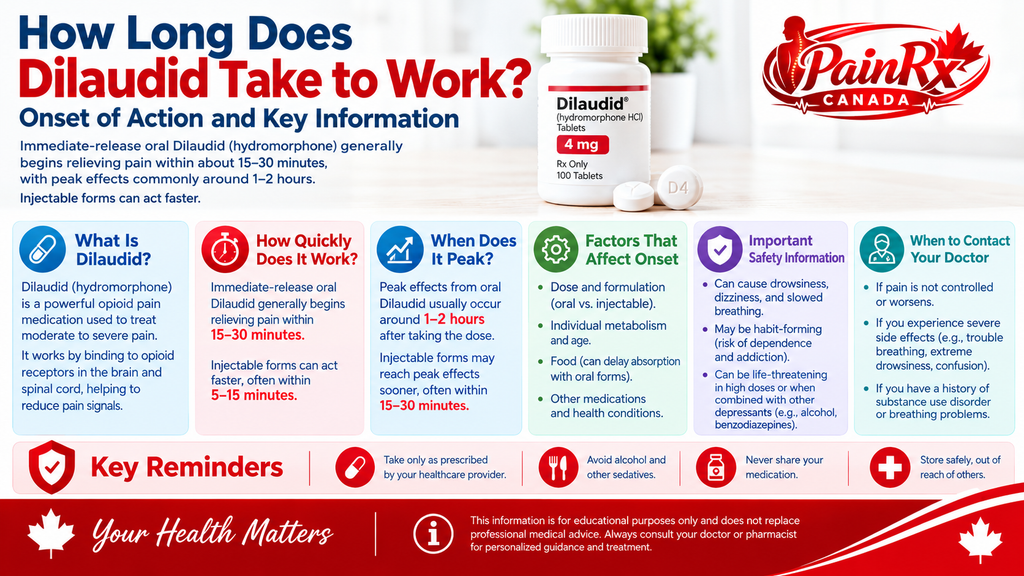
Waiting for pain relief can feel like the longest part of managing severe pain, which is why so many patients and caregivers ask exactly how long Dilaudid takes to start working. The answer depends heavily on the form of the medication, how it’s administered, and several individual factors unique to each patient. This guide explains onset time in detail and covers what to do if relief seems slower than expected.
This article provides general information only. It isn’t medical advice, and it doesn’t replace the official prescribing information or guidance from your doctor or pharmacist. Dilaudid is a Schedule II controlled substance with serious risks, including addiction, misuse, and fatal overdose. Only take it exactly as your doctor prescribes it, and never take an extra dose because relief seems slow without checking with your prescriber first.
Understanding Onset Time
Onset time refers to how long it takes from the moment you receive a dose until you start feeling its pain-relieving effects. This differs from duration, which describes how long those effects last once they begin. Both matter for effective pain management, but onset time specifically determines how quickly someone experiences relief after taking the medication.
Several factors influence onset time for any medication, including how it enters the body, how quickly it absorbs into the bloodstream, and individual differences in metabolism. Dilaudid’s onset varies considerably depending on which form a doctor prescribes and how it’s administered.
Onset Time by Formulation
The table below summarizes how quickly different forms of Dilaudid typically begin working, based on general clinical information. Individual response can vary, and your prescriber’s guidance always takes priority over these general ranges.
| Formulation | Typical Onset Time | Administration Setting |
|---|---|---|
| Immediate-release oral tablet | 15–30 minutes | Home use or hospital, taken orally |
| Oral liquid solution | 15–30 minutes | Home use, for patients who have difficulty swallowing |
| Extended-release tablet | Gradual, building over several hours | Home use, for continuous chronic pain |
| Intravenous (IV) injection | Within 5 minutes | Hospital or clinical setting |
| Subcutaneous injection | 15–30 minutes | Hospital, hospice, or palliative care settings |
| Intramuscular injection | 15–30 minutes | Clinical settings when IV access isn’t available |
These figures represent general patterns rather than guarantees for any specific individual. Your own experience may fall outside these typical ranges depending on several factors covered below.
Why Intravenous Administration Works So Quickly
Injectable Dilaudid administered directly into a vein bypasses the digestive system entirely, delivering the medication straight into the bloodstream. This explains why IV administration produces the fastest onset among all available forms, often within five minutes.
This rapid onset makes IV hydromorphone particularly valuable in hospital settings for managing acute, severe pain, such as immediately following major surgery or during a medical emergency involving significant pain. Because of this speed, healthcare professionals administer and monitor IV Dilaudid closely, watching for both effectiveness and any signs of adverse reaction.
Why Oral Forms Take Longer
Oral tablets and liquid formulations must first pass through the digestive system before the medication absorbs into the bloodstream. This process naturally takes longer than injection, typically producing noticeable pain relief within fifteen to thirty minutes for immediate-release forms.
Several factors can influence exactly how quickly an oral dose takes effect. Taking the medication on an empty stomach generally speeds up absorption compared to taking it with a large meal, since food can slow how quickly the digestive system processes the medication. However, some patients take oral Dilaudid with food specifically to reduce nausea, which represents a common side effect, even though this may modestly slow onset time.
Extended-Release Dilaudid Works Differently
Extended-release tablets don’t aim for a fast, noticeable onset in the same way immediate-release forms do. Instead, they’re specifically designed to release medication gradually over an extended period, typically building toward steady, consistent pain control over several hours rather than producing a quick, pronounced effect.
Patients switching to extended-release Dilaudid from an immediate-release form sometimes notice this difference and wonder whether the new medication is working properly. This gradual onset represents normal, expected behavior for this formulation, designed specifically for continuous, around-the-clock pain management rather than rapid relief of a sudden pain spike.
Individual Factors That Affect Onset Speed
Beyond the formulation itself, several personal factors can influence how quickly you notice Dilaudid working.
Metabolism varies significantly between individuals, affecting how quickly the body processes and responds to the medication. Some people naturally metabolize medications faster or slower than average, which can shift how quickly effects become noticeable.
Liver and kidney function play a meaningful role, since these organs handle drug metabolism and elimination. Impairment in either organ can sometimes alter how quickly a medication’s effects become apparent, and doctors often adjust dosing for patients with significant liver or kidney concerns.
Body weight and composition can influence absorption and distribution throughout the body, potentially affecting how quickly someone notices pain relief beginning.
Opioid tolerance significantly affects perceived onset for patients who have used opioids regularly over time. Someone with existing opioid tolerance may notice a less pronounced or slower-feeling onset compared to someone who hasn’t previously taken opioid medications, even though the drug’s actual pharmacological onset remains similar.
Severity and type of pain can also influence how noticeable the onset feels. Very severe pain sometimes makes it harder to perceive gradual improvement, while milder pain might make onset feel more immediately obvious.
Route of administration remains one of the most significant factors, as covered in detail above, with injectable forms working considerably faster than oral formulations.
What to Expect After Taking a Dose
Understanding what normal onset feels like can help you gauge whether your medication is working as expected. For immediate-release oral Dilaudid, most patients notice at least some reduction in pain intensity within thirty minutes, with fuller effects often developing over the following thirty to sixty minutes.
For extended-release formulations, don’t expect a dramatic, immediate change. Instead, anticipate a gradual smoothing of pain control over the following hours, with steady-state effects typically becoming apparent after the first few doses of a new prescription, as the medication builds to consistent levels in your system.
When Relief Seems Slower Than Expected
If Dilaudid doesn’t seem to be working within the expected timeframe, resist the urge to take an additional dose on your own. Taking extra medication before confirming with your prescriber significantly increases the risk of dangerous side effects, including life-threatening respiratory depression, particularly if the original dose is still absorbing and hasn’t yet reached its full effect.
Instead, contact your prescriber or pharmacist to discuss what you’re experiencing. They can help determine whether your dosing schedule needs adjustment, whether a different formulation might suit your pain pattern better, or whether other factors might be affecting how the medication works for you specifically.
Serious Risks to Keep in Mind
Regardless of how quickly Dilaudid takes effect, it carries a Boxed Warning reflecting serious risks that apply throughout treatment. Addiction and physical dependence represent genuine risks, even for patients taking the medication exactly as prescribed. Life-threatening respiratory depression remains a serious concern, particularly when the medication is taken incorrectly or combined with other substances that slow breathing.
Combining Dilaudid with alcohol, benzodiazepines, or other central nervous system depressants significantly increases the risk of dangerous or fatal respiratory depression. Accidental exposure also poses a severe threat to children and other household members, making secure storage essential throughout treatment.
Recognizing an Overdose
Understanding overdose signs matters regardless of how quickly you expect the medication to work. Watch for slow, shallow, or stopped breathing, along with extreme drowsiness or an inability to wake up. Pinpoint pupils and bluish or grayish lips, skin, or fingertips also signal a possible overdose emergency.
Call 911 immediately if you suspect an overdose. Naloxone can temporarily reverse an opioid overdose and is available without a prescription at many pharmacies. Keeping naloxone accessible if you or someone in your household uses this medication represents a genuinely worthwhile safety precaution.
Frequently Asked Questions
Why does my Dilaudid seem to work faster some days than others?
Several factors can affect perceived onset, including whether you’ve eaten recently, your hydration level, your current pain severity, and even your stress level. If this pattern continues or concerns you, mention it to your prescriber.
Is it normal for extended-release Dilaudid to feel like it’s not working right away?
Yes. Extended-release formulations are designed for gradual, sustained effect rather than rapid onset. This is expected behavior, not a sign that the medication isn’t working.
Can I take my next dose early if the current one hasn’t kicked in yet?
No. Taking doses closer together than prescribed increases the risk of dangerous side effects, since the medication can accumulate in your system faster than your body clears it. Contact your prescriber instead of adjusting your schedule independently.
Does taking Dilaudid with food change how fast it works?
Food can modestly slow absorption for oral forms, though many patients take it with food specifically to reduce nausea. Follow your prescriber’s specific guidance on timing relative to meals.
Why does IV Dilaudid work so much faster than the oral tablet?
Intravenous administration delivers the medication directly into the bloodstream, bypassing the digestive system entirely. This explains the significantly faster onset, often within five minutes, compared to fifteen to thirty minutes for oral forms.
Does opioid tolerance mean Dilaudid takes longer to start working?
Tolerance primarily affects how much relief you perceive and how long it lasts, rather than dramatically changing the drug’s actual onset time in your bloodstream. However, some patients with tolerance report that effects feel less pronounced or slower to notice.
Talking to Your Doctor About Onset and Timing
If you consistently notice that Dilaudid takes longer than expected to provide relief, or if the timing doesn’t align well with your daily pain patterns, this is worth discussing directly with your prescriber. They may adjust your formulation, timing, or overall pain management plan based on your specific experience, rather than leaving you to manage inconsistent relief on your own.
Final Thoughts
How long Dilaudid takes to work depends heavily on its formulation, ranging from as little as five minutes for intravenous administration to fifteen to thirty minutes for oral immediate-release forms, and a more gradual onset for extended-release tablets. Individual factors, including metabolism, tolerance, and organ function, can also shift how quickly you notice effects. If relief consistently feels slower than expected, resist adjusting your dose independently and instead reach out to your healthcare team, who can help fine-tune your treatment plan safely and effectively.