

Can You Take Tylenol and Advil Together?

Can You Take Tylenol and Advil Together? A Canadian Guide to Safe Pain Relief
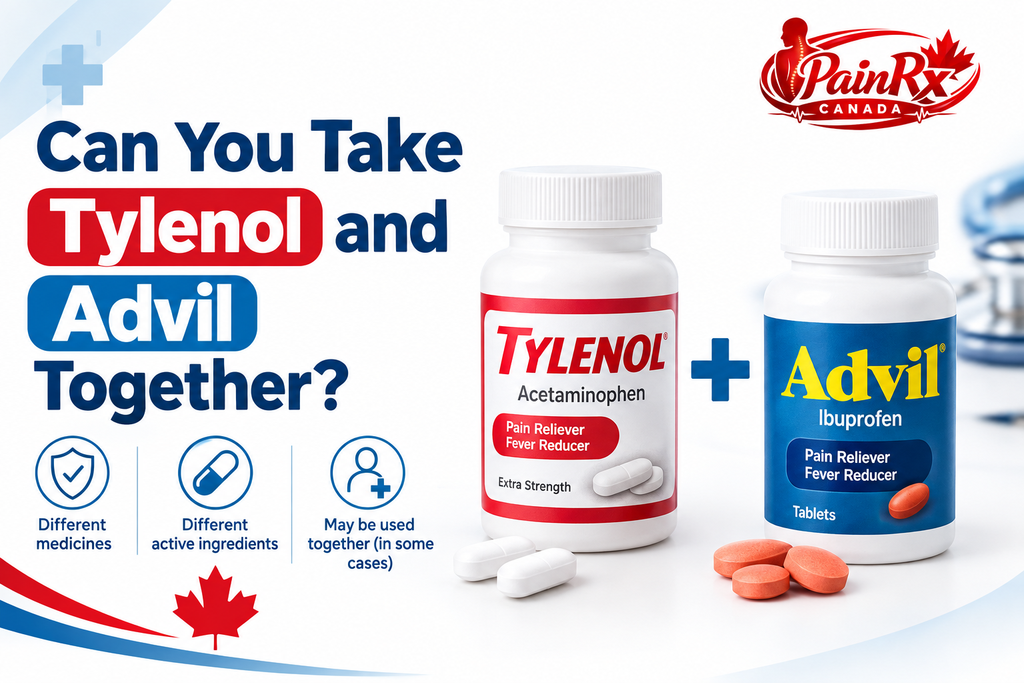
A headache hits. A fever won’t budge. Your back is sore, and you’re standing in the pharmacy aisle wondering: Tylenol, Advil, or both? Millions of Canadians ask their pharmacist this exact question every year. The short answer is reassuring. Most healthy adults can take Tylenol and Advil together, as long as they follow the correct dosing limits. This guide explains why the combination works. It covers safe dosing, who should avoid it, and what Health Canada actually recommends.
The Quick Answer
Healthy adults in Canada can generally take acetaminophen (Tylenol) and ibuprofen (Advil) together. They belong to different drug classes. They do not compete for the same pathway in your body. Many Canadian pharmacists recommend combining them for stronger relief after dental work, injuries, or surgery. Still, the combination isn’t risk-free for everyone. Daily dosing limits apply to each medication individually. The sections below explain exactly how to do this correctly.
Tylenol vs. Advil: What’s the Difference?
Understanding the difference matters. It explains why combining them is often considered safe. Tylenol’s active ingredient is acetaminophen. Outside North America, people call it paracetamol. It’s an analgesic and antipyretic. That means it relieves pain and reduces fever. It does very little for inflammation. Advil contains ibuprofen instead, a nonsteroidal anti-inflammatory drug (NSAID). Ibuprofen also relieves pain and fever. But it goes further and reduces swelling and inflammation too. That makes it useful for injuries, arthritis, and menstrual cramps.
| Feature | Tylenol (Acetaminophen) | Advil (Ibuprofen) |
|---|---|---|
| Drug class | Analgesic / antipyretic | NSAID |
| Reduces pain | Yes | Yes |
| Reduces fever | Yes | Yes |
| Reduces inflammation | No | Yes |
| Typical adult max daily dose | 4,000 mg | 1,200 mg (OTC) |
| Common risk with overuse | Liver damage | Stomach irritation, kidney stress |
| Safe in pregnancy | Generally yes (consult doctor) | Avoid, especially in the third trimester |
| Works well for | Headaches, fever, general pain | Swelling, muscle strains, dental pain, cramps |
Acetaminophen and ibuprofen target pain differently. They don’t simply duplicate each other’s effect. Instead, each works on a separate pathway. That’s why providers across Canada often suggest alternating or combining them. This helps with tougher pain that resists a single medication.
So, Can You Actually Take Them Together?
Yes. Once you understand the mechanism, the confusion clears up fast. Your body processes Tylenol and Advil differently. A normal dose of each doesn’t raise your overdose risk the way two NSAIDs together would. Combining Advil and Aspirin, for example, carries more risk. Health Canada and provincial pharmacy groups generally agree on this point. Combining acetaminophen and ibuprofen is safe for short-term use in healthy adults. Just respect each drug’s individual daily maximum.
This is exactly why many Canadian emergency rooms recommend it. Dental clinics do too. So do post-surgical care teams. After procedures like wisdom tooth removal, alternating or combining often controls pain better than either drug alone. It can also reduce the need for opioid painkillers.
How to Safely Combine Tylenol and Advil
Timing and dosage matter most here. Watch the numbers rather than guessing. Canadians commonly use two approaches. Either can work well, depending on your situation.
Method 1: Simultaneous Dosing
Take the recommended adult dose of both medications at once. For example, take two Extra Strength Tylenol tablets (500 mg each). Add two Advil tablets (200 mg each) at the same time. Many Canadian pharmacists consider this reasonable for short-term, moderate pain. The two drugs clear your system at different rates. Wait the appropriate interval before your next dose of either one.
Method 2: Staggered (Alternating) Dosing
Some people prefer staggering the medications every three hours. This keeps some form of pain relief active at all times. Take ibuprofen at 8 a.m, acetaminophen at 11 a.m. Take ibuprofen again at 2 p.m., and so on. This method can feel gentler on the stomach for some people. It does require more careful tracking, though, to avoid mistakes.
| Time | Medication | Typical Adult Dose |
|---|---|---|
| 8:00 a.m. | Advil (ibuprofen) | 200–400 mg |
| 11:00 a.m. | Tylenol (acetaminophen) | 500–650 mg |
| 2:00 p.m. | Advil (ibuprofen) | 200–400 mg |
| 5:00 p.m. | Tylenol (acetaminophen) | 500–650 mg |
This chart is a general illustration only. Always follow the dose on your product label. Strengths vary between regular, extra strength, and children’s formulations.
Whichever method you pick, keep a written log or use a phone reminder. It’s surprisingly easy to lose track of what you’ve taken during a busy day.
Daily Dosing Limits You Should Never Exceed
These limits function as hard boundaries in Canada. They deserve their own spotlight.
Acetaminophen (Tylenol): Adults shouldn’t exceed 4,000 mg in 24 hours. Health Canada has repeatedly stressed this ceiling. It protects the liver from serious, sometimes irreversible damage. Acetaminophen overdoses cause more than 4,000 hospitalizations in Canada every year. That’s a major reason Health Canada keeps reviewing whether to lower this maximum further. Do you have liver disease, or drink alcohol regularly? Your safe limit is likely lower. Talk to your doctor or pharmacist before relying on the maximum dose.
Ibuprofen (Advil): For over-the-counter use, stay at or below 1,200 mg in 24 hours. A doctor can raise this to a prescription-strength amount, up to 3,200 mg, under supervision. Exceeding the OTC limit raises your risk of stomach ulcers. It also raises the risk of gastrointestinal bleeding and added kidney strain.
Acetaminophen also hides inside hundreds of combination products in Canadian pharmacies. This includes cold and flu remedies, sleep aids, and some prescription painkillers. Always check the active ingredients on every product you take that day. It’s easy to accidentally double up without realizing it.
Who Should Avoid Combining Tylenol and Advil
This combination suits most healthy adults. Still, several groups should pause first and talk to a healthcare provider. Their risk profile changes the equation significantly.
- People with kidney disease: Ibuprofen can further reduce kidney function. Combining it with acetaminophen adds extra processing demand on already-compromised organs.
- People with liver disease or heavy alcohol use: The liver processes acetaminophen. Existing liver stress raises the danger of toxicity, even at normally safe doses.
- People with stomach ulcers or a history of GI bleeding: Ibuprofen is known for irritating the stomach lining. This group is generally steered toward acetaminophen alone.
- Pregnant individuals: Acetaminophen is typically the safer option during pregnancy. Doctors generally avoid ibuprofen, particularly in the third trimester, due to risks to the developing baby.
- People on blood thinners or certain heart medications: NSAIDs like ibuprofen can interact with these drugs. Always check with a pharmacist first.
- Older adults: Kidney function and drug clearance naturally decline with age. Seniors should generally use the lowest effective dose for the shortest time.
- Children: Pediatric dosing depends on weight, not age alone. A pediatrician or the product’s dosing chart should guide the amount given. Never combine the two medications in children without a doctor’s direction.
Possible Side Effects to Watch For
Even correct dosing can cause mild issues in some people. Stomach discomfort, nausea, or heartburn sometimes occur, particularly from the ibuprofen component. Taking each dose with food or a full glass of water often helps. But don’t ignore certain symptoms. They may signal a more serious problem developing.
Seek medical attention promptly if you notice: black or tarry stools, vomiting that looks like coffee grounds, or unusual bruising. Yellowing of the skin or eyes is also a warning sign. So is severe abdominal pain, leg swelling, or a big drop in urination. These signs can point to gastrointestinal bleeding, liver stress, or kidney trouble. Contact a Canadian emergency department, or call your provincial Health Link line, right away.
A Few Practical Tips for Canadians
Canadian pharmacies stock both generic and brand-name versions. Check the active ingredient on the label, not just the brand name. Store-brand ibuprofen works identically to Advil. Generic acetaminophen works identically to Tylenol, usually at a noticeably lower price. Canadian pharmacists can also give free, personalized dosing advice. Stop by the pharmacy counter before combining medications. It’s a smart, no-cost way to double-check your plan, especially if you manage a chronic condition or take other prescriptions.
Frequently Asked Questions
Is it safe to take Tylenol and Advil at the same time every day? Occasional combined use for a few days is generally low-risk for healthy adults. Long-term daily use of both together should only happen under a doctor’s supervision. The strain on your liver and kidneys builds over time.
How long should I wait between Tylenol and Advil? Many Canadian pharmacists suggest spacing doses roughly three hours apart when alternating. You can technically take both at once, too, as long as neither drug’s 24-hour maximum is exceeded.
Can I give my child both Tylenol and Advil together? Only under a pediatrician’s direction, or with pharmacist guidance. Children’s dosing depends on body weight. Combining medications without professional guidance raises the risk of accidental overdose.
Which is better for a fever, Tylenol or Advil? Both reduce fever effectively. For stubborn fevers, providers sometimes recommend alternating the two. They work through different biological pathways.
Can I take Tylenol and Advil together for a headache? Yes. People commonly use this combination for headaches that resist a single medication. It’s one of the more effective OTC options in Canada.
Is it okay to combine Tylenol and Advil after getting a vaccine? Many Canadian health units suggest acetaminophen first for post-vaccine soreness or fever. You can typically add ibuprofen if needed. Check with your local public health unit or pharmacist for current guidance.
Does alcohol change the safety of this combination? Yes. Regular or heavy alcohol use significantly raises the risk of liver damage from acetaminophen. Anyone who drinks regularly should talk to a doctor first.
The Bottom Line
Healthy adults in Canada can generally take Tylenol and Advil together. Pharmacists widely accept this approach for managing pain and fever more effectively than either drug alone. Just respect each medication’s individual daily limit, and track your dosing carefully. Do you have kidney, liver, stomach, or heart concerns? Check with a doctor or pharmacist first. The same goes for pregnant individuals, older adults, and children. When in doubt, use Canada’s free pharmacist consultations and provincial health lines. They exist specifically to answer questions like this one.
This article is for general informational purposes only and is not a substitute for professional medical advice. Always read product labels and consult a doctor or pharmacist regarding your specific health situation before combining medications.