

Government Assistance for Fibromyalgia in Canada

Government Assistance for Fibromyalgia in Canada: A Complete Guide
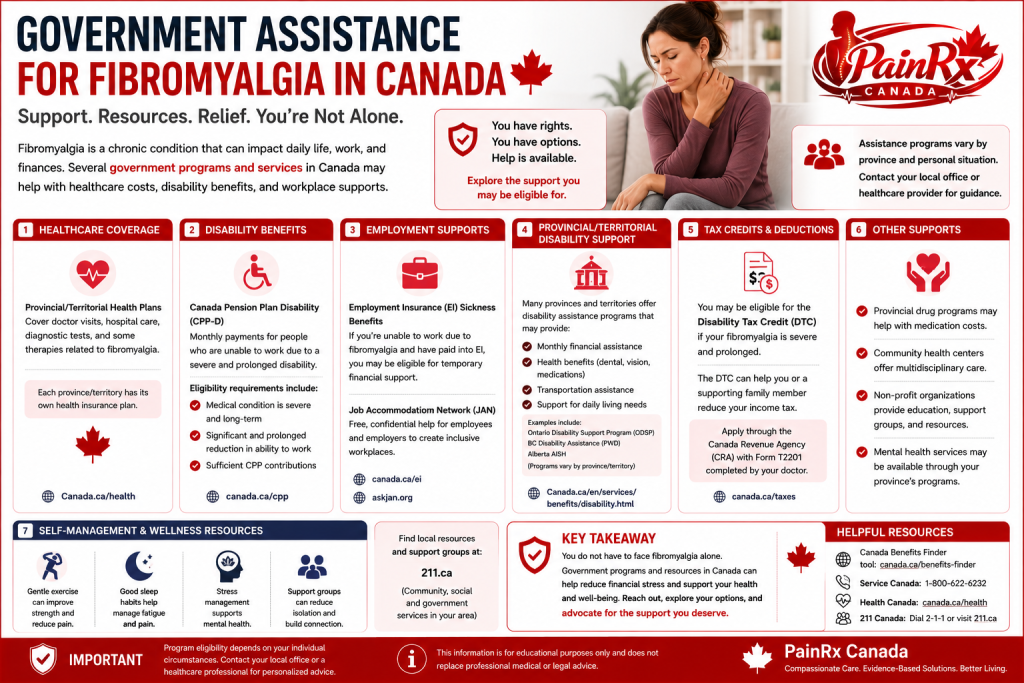
Fibromyalgia can significantly affect someone’s ability to work and manage daily life, yet because it doesn’t always show up on standard medical tests, navigating government assistance programs can feel especially challenging. This guide walks through the main federal and provincial support options available to Canadians living with fibromyalgia, what each program requires, and how to build a strong application.
This article provides general information only. It isn’t legal or financial advice. Program rules change over time and vary by province, so confirm current details directly with the relevant government agency or a qualified advisor.
Canada Pension Plan Disability (CPP-D)
The Canada Pension Plan Disability benefit is a federal program available to eligible Canadians whose medical condition prevents them from working regularly at any job. This is often the first program people consider when fibromyalgia significantly limits their capacity to work.
To qualify, applicants generally need to show that their condition is both “severe” and “prolonged,” meaning it prevents them from performing any substantially gainful work, not just their previous occupation, and is expected to continue indefinitely. Applicants must also have contributed to CPP for a minimum period, generally in four of the last six years, though some exceptions apply for long-term contributors.
Because fibromyalgia often lacks the kind of objective test results that some other conditions provide, CPP-D applications for fibromyalgia typically rely heavily on detailed medical documentation. This includes a completed medical report from a treating doctor, a thorough symptom and functional history, and ideally supporting evidence like specialist reports or functional capacity assessments that clearly demonstrate the practical impact on work capacity.
Processing times for CPP-D applications can extend several months, and many applications, including for legitimate conditions, get declined on the first attempt. Canada has a formal reconsideration process, followed by an appeal to the Social Security Tribunal, for applicants who wish to challenge an initial decision.
Provincial Disability Support Programs
Beyond CPP-D, each Canadian province and territory offers its own disability support program, generally aimed at providing income assistance for people unable to work due to a disability. These programs differ significantly from province to province in terms of eligibility criteria, benefit amounts, and application processes.
Ontario Disability Support Program (ODSP) provides income support to eligible Ontario residents with a disability that substantially restricts daily activities. Applicants need to demonstrate their condition is likely to last a year or more and significantly impacts their ability to work or manage daily tasks.
Alberta Assured Income for the Severely Handicapped (AISH) offers similar support for eligible Alberta residents, requiring documentation of a severe and permanent disability that significantly limits a person’s ability to earn a living.
British Columbia’s Persons with Disabilities (PWD) designation provides enhanced income assistance for BC residents whose disability substantially restricts their ability to perform daily living activities, requiring both medical and functional assessments as part of the application.
Other provinces and territories, including Quebec, Manitoba, Saskatchewan, and the Atlantic provinces, offer their own similarly structured programs, generally administered through provincial social services or income support ministries.
Because these programs often assess disability differently than CPP-D, some applicants pursue both federal and provincial support simultaneously, though benefit amounts and eligibility rules interact differently depending on the specific province and program combination.
The Disability Tax Credit (DTC)
The Disability Tax Credit is a federal, non-refundable tax credit designed to reduce the income tax owed by people with a severe and prolonged impairment, or their supporting family member. Unlike CPP-D, the DTC doesn’t require an inability to work. It focuses instead on whether a condition significantly restricts basic daily activities, such as walking, dressing, or mental functions, for at least twelve months.
Fibromyalgia patients can potentially qualify for the DTC if their symptoms, including pain, fatigue, or cognitive difficulties, significantly restrict these basic activities most of the time, even with appropriate treatment. Qualifying requires a healthcare provider to complete Form T2201, providing detailed information about how the condition affects daily functioning.
Beyond the direct tax credit itself, DTC approval can unlock access to other programs, including the Registered Disability Savings Plan (RDSP), which offers significant government contribution matching for eligible individuals building long-term savings.
Employment Insurance Sickness Benefits
For Canadians who become temporarily unable to work due to a fibromyalgia flare-up or related complications, Employment Insurance (EI) sickness benefits may provide short-term financial support. This program offers up to 26 weeks of benefits for eligible workers who can’t work due to illness, injury, or quarantine, supported by a medical certificate confirming their incapacity to work.
Because EI sickness benefits are designed for temporary, rather than long-term or permanent, incapacity, they generally suit fibromyalgia patients experiencing an acute flare-up or a defined recovery period, rather than those with an ongoing, permanent inability to work, which would more likely fall under CPP-D or provincial disability programs instead.
Employer-Sponsored Long-Term Disability Insurance
While not a government program, many Canadians access long-term disability (LTD) benefits through employer-sponsored group insurance plans, and it’s worth understanding how this interacts with government assistance. LTD claims for fibromyalgia often face similar documentation challenges to CPP-D claims, given the condition’s reliance on functional and symptom-based evidence rather than objective test results.
Many LTD policies require applicants to also apply for CPP-D benefits, with the LTD payment amount adjusted to account for any CPP-D benefits received. Understanding this interaction matters for anyone navigating both a workplace LTD claim and a CPP-D application simultaneously.
Building a Strong Application
Because fibromyalgia doesn’t always present with clear objective evidence, certain strategies can strengthen applications across most of these programs.
Consistent medical documentation matters significantly. Regular visits to your family doctor or specialist, with clear notes about symptom severity and functional impact over time, help build a credible, well-documented history.
Functional capacity assessments, conducted by an occupational therapist or physiotherapist, can provide objective, measurable evidence of how fibromyalgia affects specific work-related tasks, which often carries significant weight in disability assessments.
Detailed personal statements describing daily challenges, in your own words, can add valuable context that medical records alone sometimes miss.
Following recommended treatment matters too, since assessors sometimes view a lack of treatment engagement as a factor when evaluating disability claims, even when a patient has legitimate reasons for treatment gaps, such as access barriers or previous ineffective treatments.
Getting Help With Applications
Given the complexity involved, many Canadians seek assistance when applying for these programs. Community legal clinics in many provinces offer free guidance for disability benefit applications, particularly for applicants facing financial hardship. Some advocacy organizations specifically support chronic pain and fibromyalgia patients navigating government assistance systems.
For CPP-D specifically, Service Canada offers guidance directly, though independent advocates or disability consultants can sometimes provide more tailored support through the application and, if necessary, appeal process.
Final Thoughts
Government assistance for fibromyalgia in Canada spans several federal and provincial programs, each with different eligibility criteria, benefit structures, and application requirements. Because fibromyalgia often lacks the objective evidence some conditions provide, building a well-documented, functionally-focused application matters significantly across all these programs. For Canadians navigating this process, understanding which programs apply to their specific situation, and preparing thorough supporting documentation from the outset, can make a meaningful difference in securing the support they need.