

Chronic Pain Therapy

Chronic Pain Therapy: A Guide to Non-Medication Treatment Approaches
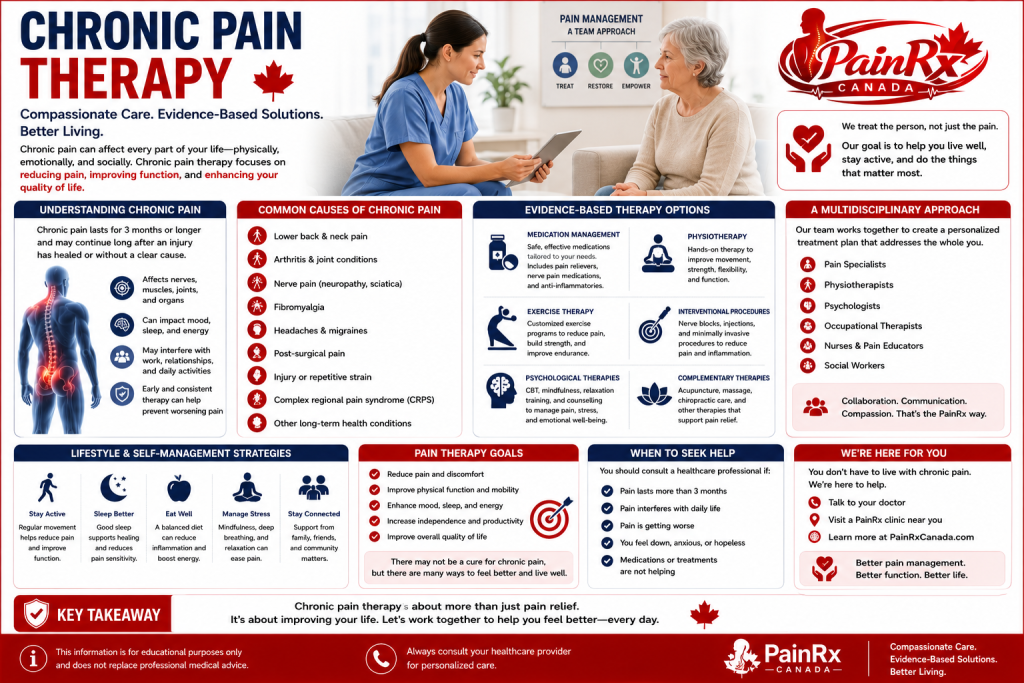
Medication represents just one piece of effective chronic pain treatment. A wide range of therapeutic approaches, addressing the physical, psychological, and functional aspects of chronic pain, often play an equally important role. This guide walks through the main types of chronic pain therapy available, how they work, and what to expect from each.
Why Therapy Matters Alongside Medication
Chronic pain rarely responds to a single treatment approach. Because it often involves nervous system sensitization, muscle deconditioning, sleep disruption, and psychological factors like fear-avoidance or pain catastrophizing, effective treatment usually needs to address more than just the sensation of pain itself.
This is why most evidence-based chronic pain guidelines now recommend combining medication, where appropriate, with active therapeutic approaches. Many patients find that therapy-based treatments produce more sustainable, long-term improvement than medication alone, particularly for conditions like fibromyalgia and chronic back pain.
Physiotherapy
Physiotherapy remains one of the most widely used and well-supported chronic pain therapies. A physiotherapist assesses movement patterns, muscle strength, and functional limitations, then develops a tailored program to address these specific issues.
For chronic pain specifically, physiotherapy often looks different than treatment for an acute injury. Rather than focusing purely on healing a specific structure, chronic pain physiotherapy frequently emphasizes graded exercise, meaning a carefully paced increase in activity designed to rebuild strength and confidence in movement without triggering significant flare-ups.
This graded approach matters because many chronic pain patients develop fear-avoidance patterns, where they avoid movement out of fear it will worsen their pain. Ironically, this avoidance often leads to muscle deconditioning, which can worsen pain and function over time. Physiotherapists trained in chronic pain management help patients break this cycle gradually and safely.
Cognitive Behavioural Therapy (CBT)
Cognitive behavioural therapy has strong evidence supporting its use in chronic pain management, working by addressing the thought patterns and behaviours that often accompany and amplify chronic pain.
CBT for chronic pain doesn’t suggest the pain is imaginary or purely psychological. Instead, it recognizes that thoughts, emotions, and pain genuinely interact within the nervous system. Pain catastrophizing, for example, where someone anticipates the worst possible outcome from their pain, has been shown to genuinely increase pain intensity. CBT helps patients identify and shift these patterns, alongside developing practical coping strategies for managing flare-ups and daily challenges.
A trained psychologist or counsellor typically delivers CBT, often over a structured series of sessions, sometimes in individual or group formats depending on availability and patient preference.
Acceptance and Commitment Therapy (ACT)
Acceptance and Commitment Therapy represents another psychological approach increasingly used in chronic pain treatment. Rather than focusing primarily on reducing pain or changing thought patterns directly, ACT emphasizes accepting the presence of pain while committing to actions aligned with personal values and meaningful life goals.
This approach can be particularly helpful for patients who’ve found that constantly fighting against their pain, or measuring success purely by pain reduction, has led to frustration and disengagement from treatment. ACT instead helps patients build a fulfilling life alongside their pain, rather than waiting for pain to disappear before re-engaging with valued activities.
Occupational Therapy
Occupational therapy focuses specifically on helping patients maintain independence and function in daily activities, despite chronic pain. An occupational therapist might assess how pain affects work tasks, household activities, or personal care, then develop strategies and, where helpful, recommend adaptive equipment to support continued function.
This might include pacing strategies to prevent overexertion, ergonomic adjustments for work or home environments, or techniques for managing specific daily tasks that have become difficult due to pain. Occupational therapy often plays a particularly important role for patients navigating workplace accommodations or applying for disability support, since therapists can provide detailed functional assessments.
Massage Therapy
Massage therapy offers a more direct, hands-on approach to managing certain types of chronic pain, particularly conditions involving significant muscle tension. While evidence varies depending on the specific chronic pain condition, many patients report meaningful short-term relief from regular massage therapy, particularly when combined with other treatment approaches.
It’s worth noting that massage therapy generally works best as a complementary therapy rather than a standalone treatment for chronic pain, since its effects, while often genuinely beneficial, tend to be more temporary compared to approaches like physiotherapy or CBT.
Mindfulness-Based Stress Reduction (MBSR)
Mindfulness-based approaches have gained substantial research support for chronic pain management in recent years. MBSR programs typically involve structured, guided practice in present-moment awareness and meditation techniques, helping patients change their relationship with pain sensations rather than necessarily reducing the sensations themselves.
Research suggests mindfulness practice can measurably reduce how distressing pain feels, even when pain intensity itself doesn’t change dramatically. This shift in perceived distress can meaningfully improve quality of life and daily functioning for many chronic pain patients.
Graded Exercise Therapy
While closely related to physiotherapy, graded exercise therapy deserves specific mention as a distinct therapeutic approach. This structured method involves gradually increasing physical activity levels according to a carefully planned schedule, rather than being guided purely by day-to-day pain levels.
This approach directly addresses the deconditioning that often develops in chronic pain patients who’ve reduced activity due to fear or pain avoidance. By following a predetermined, gradual progression rather than stopping whenever pain increases, patients can rebuild physical capacity more effectively over time, while learning that some increase in activity doesn’t necessarily signal harm.
Multidisciplinary Pain Programs
Many of these individual therapies come together within multidisciplinary pain programs, which combine several approaches under coordinated care. A typical program might include physiotherapy, psychological support, occupational therapy, and medical management working together, often with regular team communication to ensure a cohesive treatment approach.
Research consistently shows that multidisciplinary programs tend to produce better outcomes than any single therapy alone, particularly for complex chronic pain conditions like fibromyalgia. This reflects the broader understanding that chronic pain affects multiple areas of life simultaneously, requiring a correspondingly comprehensive treatment approach.
Choosing the Right Therapy Approach
With so many options available, deciding where to start can feel overwhelming. A few considerations can help guide this decision.
Your specific condition matters significantly. Conditions with a strong musculoskeletal component often benefit most from physiotherapy and graded exercise, while conditions involving significant psychological distress or pain catastrophizing may benefit more from CBT or ACT as a starting point.
Access and cost inevitably factor into these decisions too. Publicly funded options vary depending on your location and healthcare coverage, while private therapy options offer faster access but at direct cost, unless covered by extended health insurance.
Personal preference genuinely matters as well. Some patients respond better to hands-on physical approaches, while others find more benefit from psychological or mindfulness-based therapies. Many effective treatment plans ultimately combine several approaches based on what proves most helpful for the individual.
Getting Started
If you’re considering therapy-based approaches for chronic pain, start by discussing your options with your family doctor, who can help identify appropriate referrals based on your specific condition and circumstances. Many of these therapies require referral for insurance coverage purposes, even when a formal medical referral isn’t strictly necessary to begin treatment.
Final Thoughts
Chronic pain therapy encompasses a wide range of evidence-based approaches, from physiotherapy and graded exercise to psychological therapies like CBT and ACT. Rather than viewing these as competing options, many of the best outcomes come from combining several complementary approaches within a coordinated treatment plan. Working with your healthcare provider to identify which combination of therapies suits your specific condition and circumstances offers the best path toward meaningful, sustainable improvement.