

Chronic Pain Management in Vancouver

Chronic Pain Management in Vancouver: Your Options Explained
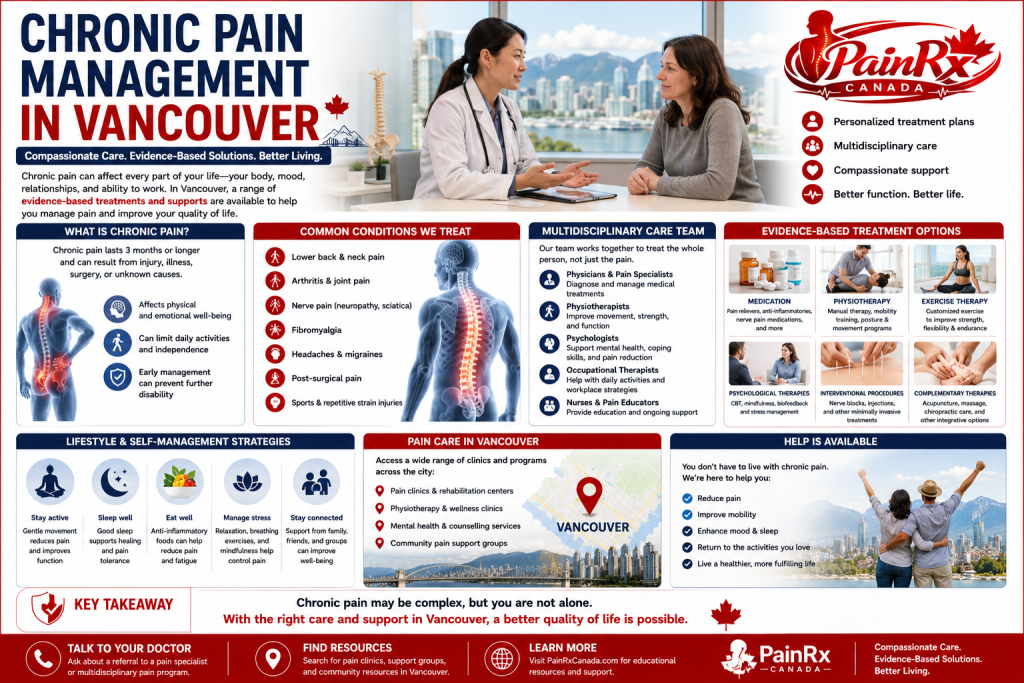
Vancouver residents living with chronic pain have access to a mix of public hospital-based programs and private clinics, each suited to different needs and circumstances. Navigating this landscape can feel overwhelming, particularly when trying to understand referral requirements, wait times, and which type of care fits your situation. This guide breaks down the main chronic pain management pathways available in Vancouver and how to access them.
Public Chronic Pain Programs Through Vancouver Coastal Health
Vancouver Coastal Health operates several chronic pain services across the region, generally accessed through physician referral rather than direct self-booking. The Chronic Pain Clinic based at Lions Gate Hospital treats patients with post-operative pain, as well as surgical and non-surgical candidates, supporting them to return to their normal lives, with access requiring a referral from a surgeon or physician.
For patients with more complex needs, Vancouver Coastal Health also operates specialized services. Patients with significant social and psychological issues alongside their pain are often more appropriately directed to a full-service pain clinic, such as the Transitional Pain Clinics at St. Paul’s Hospital and Vancouver General Hospital, or the Chronic Pain Clinic at Surrey Memorial Hospital. These transitional pain clinics generally focus on patients recovering from surgery or trauma who are at risk of developing longer-term chronic pain, aiming to intervene early before pain becomes deeply established.
Because these are public hospital-based programs, they operate within BC’s public healthcare system, meaning no direct cost to patients holding valid provincial health coverage. However, referral-based access means a family doctor or specialist typically needs to initiate the process, and wait times can extend for months given demand across the Lower Mainland.
Interdisciplinary Private Pain Clinics
Vancouver is also home to several interdisciplinary private pain clinics that combine multiple specialties under one roof. These clinics typically bring together pain physicians, physiotherapists, psychologists, and sometimes chiropractors or other allied health professionals to address chronic pain from several angles simultaneously.
ChangePain, one of Vancouver’s established interdisciplinary clinics, exemplifies this model. Its approach centres on specialists sharing opinions and working together on treatment methods, providing cutting-edge pain management interventions alongside patient education on movement, nutrition, sleep, and mindfulness. This kind of coordinated, team-based approach reflects the broader shift in chronic pain treatment toward addressing the whole person rather than a single symptom or body part.
Private interdisciplinary clinics generally offer faster access than public referral pathways, though costs vary depending on the specific services required and whether extended health insurance covers portions of the treatment.
Specialized Pain Clinics for Specific Conditions
Some Vancouver-area clinics focus more narrowly on interventional pain procedures, such as targeted injections or diagnostic imaging-guided treatments. Clinics serving the Vancouver and Burnaby area offer injection treatments intended to significantly reduce pain, supported by advanced ultrasound technology for improved diagnostic accuracy.
These types of clinics often suit patients with a well-defined source of pain, such as a specific joint or nerve issue, where a targeted procedure may offer meaningful relief. They differ from broader multidisciplinary programs, which tend to suit patients with more complex, widespread, or poorly understood chronic pain presentations, such as fibromyalgia.
Physiotherapy-Focused Pain Management
Several Vancouver clinics centre their chronic pain approach primarily around physiotherapy and active rehabilitation. This model emphasises empowering patients to take an active role in managing their pain, offering guidance on self-management techniques including lifestyle modifications and exercise-based approaches.
This approach tends to work well for patients whose chronic pain has a significant musculoskeletal component, and who are looking for a hands-on, exercise-based path toward improved function, alongside broader self-management education.
How to Access Chronic Pain Care in Vancouver
The right entry point depends largely on your specific situation and how your pain first developed.
Start with your family doctor in most cases. A GP can assess your condition, rule out other causes, and determine whether referral to a public hospital-based pain clinic, a specialist, or a private clinic makes the most sense for your circumstances.
Recent surgery or trauma often warrants asking specifically about transitional pain clinic referral, since these programs focus on preventing acute pain from becoming a long-term chronic condition, and timing matters significantly for this kind of early intervention.
Complex or long-standing chronic pain, particularly conditions like fibromyalgia or widespread pain without a clear structural cause, often benefits most from an interdisciplinary approach, whether through the public system or a private multidisciplinary clinic.
A specific, localized pain source, such as a particular joint or nerve-related issue, might be better suited to a clinic focused on interventional procedures, particularly if imaging has identified a clear target for treatment.
Understanding Wait Times and Access Challenges
Like much of Canada, Vancouver’s public chronic pain services face significant demand, and wait times for referral-based programs can extend considerably, sometimes many months, particularly for non-urgent cases. This reality leads many Vancouver residents to consider private clinic options, either as a primary treatment path or to bridge the gap while waiting for public system access.
For patients without extended health coverage, cost remains an important consideration when choosing between public and private pathways. It’s worth discussing this openly with your family doctor, who can help weigh the trade-offs between wait time and cost based on your specific situation and how urgently your condition needs attention.
What to Bring to Your First Appointment
Regardless of which pathway you pursue, arriving prepared can help your first appointment run more efficiently. Bring a list of current medications, relevant medical records or imaging results, and information about previous treatments you’ve tried. A pain diary, tracking when pain occurs, its intensity, and what seems to trigger or ease it, can also provide valuable context that helps your care team build a more targeted treatment plan from the outset.
Final Thoughts
Vancouver offers a genuine range of chronic pain management options, spanning public hospital-based programs, interdisciplinary private clinics, and specialized interventional services. The right starting point depends on how your pain developed, its complexity, and your access to extended health coverage. Speaking with your family doctor remains the most reliable first step, helping you navigate toward the pathway best suited to your specific chronic pain condition and circumstances.