

Chronic Pain Clinic Options in Halifax

Chronic Pain Clinic Options in Halifax: A Complete Guide
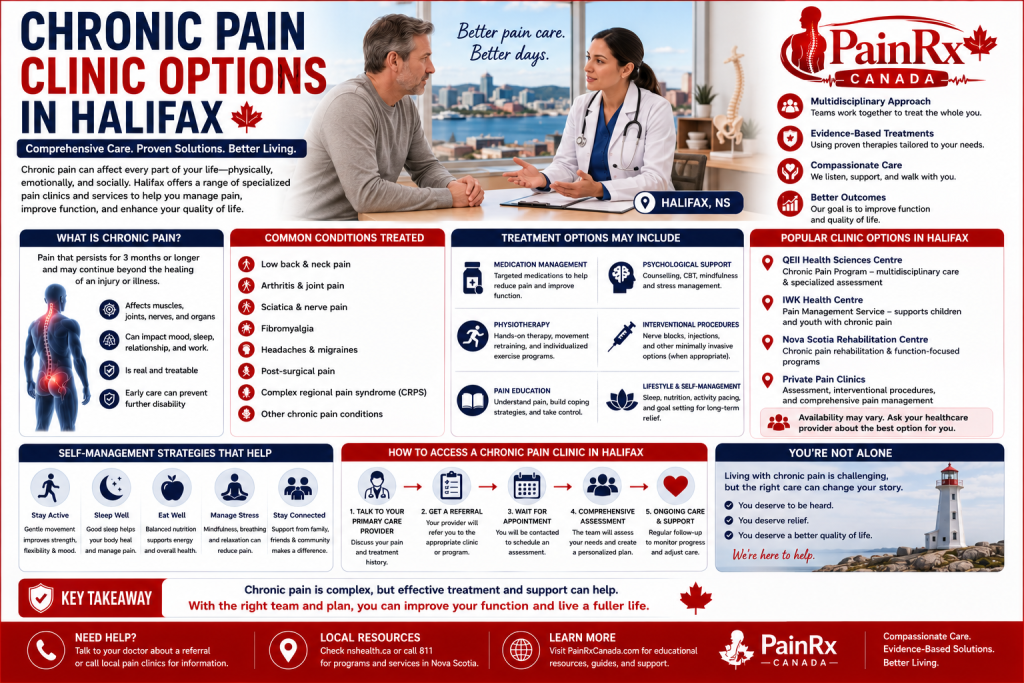
Halifax residents living with chronic pain have access to both public and private treatment pathways. Understanding how these systems work can save significant time and frustration. This guide breaks down the main chronic pain clinic options in Halifax, how the referral process works, and what to expect from each pathway.
Nova Scotia Health’s Tiered Chronic Pain System
Nova Scotia Health organizes its public chronic pain services into three tiers. Each tier serves a different level of complexity. Primary Care Clinics offer team assessments and give primary care providers recommendations on managing patients’ pain. Every clinic also offers a Pain Self-Management Program.
Secondary Care Clinics build on this foundation. These clinics also offer team assessments, but can provide nerve blocks directly in clinic, and in some cases, medication trials. They may also offer individual or group counselling and physiotherapy instruction.
At the top of this system sits Halifax’s Tertiary Care Clinic. Nova Scotia has one Tertiary Care Clinic, located in Halifax, resourced specifically to meet complex needs. This clinic generally handles the most involved chronic pain cases in the province, often after a patient has already engaged with primary or secondary level services.
The Halifax Pain Self-Management Program
For many patients, the entry point into the public system is the Pain Self-Management Program. This program helps anyone ready to take an active role in learning strategies to improve their quality of life, focusing on non-medication approaches. The Halifax location runs through the Pain Management Unit.
This program suits patients looking to build practical, day-to-day coping skills. It works well alongside other treatments rather than as a standalone solution for severe or complex chronic pain.
Accessing Public Chronic Pain Services
Getting into Nova Scotia Health’s chronic pain services requires a specific first step. A referral from your primary care provider, whether a doctor or nurse practitioner, is required to be seen at one of these clinics. Without an existing family doctor, this can create an additional barrier for some Halifax residents.
Nova Scotia Health currently accepts referrals from physicians, nurse practitioners, nurses, and other allied health professionals, and also accepts self-referrals in some cases. This flexibility can help patients without an established primary care provider still access support.
Public wait times for chronic pain services in Nova Scotia can extend considerably, reflecting high demand across the province. This reality leads many Halifax residents to also explore private clinic options, either as a primary pathway or to bridge the gap while waiting for public system access.
Private Pain Management Clinics in Halifax
Halifax is also home to private chronic pain clinics serving patients from across Atlantic Canada. CPM Centre for Pain Management treats clients from all over Atlantic Canada, helping patients understand their condition and find a treatment plan that works. This clinic treats a range of chronic pain conditions, including arthritis, head and neck pain, and neuropathic pain.
Like the public system, private clinics generally require a referral. Clients typically need referral from their family doctor, who stays involved throughout the healing process and provides follow-up care once treatment concludes. Each patient usually receives an individualized treatment plan, with the length and frequency of appointments based on personal needs.
One key difference lies in wait times. Many chronic pain sufferers wait up to two years for treatment through standard channels, while some private clinics report starting patients within roughly 14 weeks. This gap matters significantly for patients experiencing severe, disabling pain who need faster access to care.
Specialized Clinics for Specific Conditions
Some Halifax-area clinics focus on particular chronic pain conditions rather than general pain management. IWK Health operates the Endometriosis and Chronic Pelvic Pain Program, the first interdisciplinary clinic in Atlantic Canada focused specifically on endometriosis and chronic pelvic pain. This program suits patients whose chronic pain centres specifically around pelvic or reproductive health concerns, offering more targeted expertise than a general pain clinic might provide.
Choosing Between Public and Private Pathways
Several factors can help guide the decision between public and private chronic pain care in Halifax.
Urgency matters significantly. If your pain is severely affecting daily function and work capacity, the shorter wait times of private clinics may justify the associated cost, particularly if extended health insurance covers a portion of treatment.
Cost and coverage play an obvious role too. Public system services fall under provincial health coverage, meaning no direct cost for MSI-eligible Nova Scotia residents. Private clinics involve fees, though some costs may be covered by extended health benefits depending on your specific plan.
Complexity of your condition also factors in. Straightforward cases may do well starting with a Primary Care Clinic referral through the public system. More complex or long-standing conditions might benefit from the faster access and often more specialized services available privately.
Preparing for Your First Appointment
Whichever pathway you choose, a few preparations can help your first appointment run smoothly. Bring a list of current medications and any relevant medical records or imaging results. Note previous treatments you’ve tried, including what helped and what didn’t. A simple pain diary, tracking intensity, triggers, and functional impact, can also provide valuable context for your care team.
Final Thoughts
Halifax offers Nova Scotia residents a genuine range of chronic pain treatment options, from the tiered public system through Nova Scotia Health to private clinics serving all of Atlantic Canada. Understanding referral requirements, typical wait times, and how each pathway suits different levels of complexity can help you make a more informed choice. Speaking with your family doctor remains the best starting point for navigating either pathway effectively.