

Best Mattress for Fibromyalgia in Canada

Best Mattress for Fibromyalgia in Canada: A Buyer’s Guide
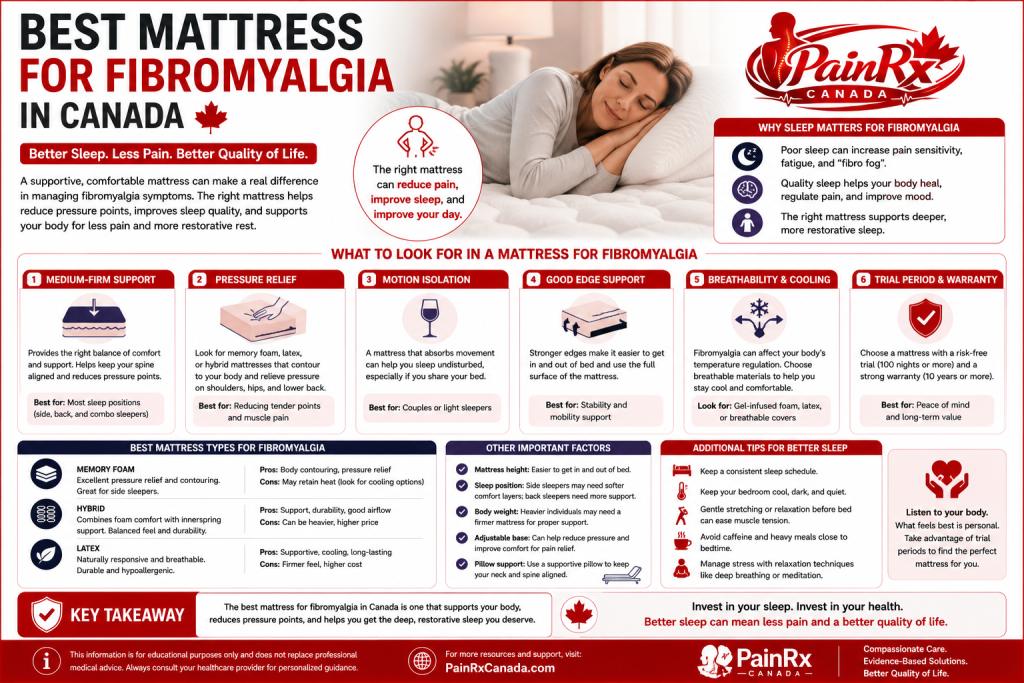
Sleep and fibromyalgia share a difficult relationship. Pain disrupts sleep, and poor sleep worsens pain the next day. While a mattress alone won’t resolve fibromyalgia, choosing the right one can meaningfully reduce nighttime discomfort and support better sleep quality. This guide walks through what actually matters when choosing a mattress for fibromyalgia, and what Canadian shoppers should consider before buying.
This article provides general information only. It isn’t medical advice. Speak with your doctor about your overall fibromyalgia management plan, including sleep-related concerns.
Why Mattress Choice Matters for Fibromyalgia
Fibromyalgia involves widespread tenderness, often concentrated around specific pressure points like the shoulders, hips, and lower back. A mattress that doesn’t adequately cushion these areas can worsen pain throughout the night, leading to frequent waking and difficulty finding a comfortable position.
Beyond pressure relief, fibromyalgia often involves heightened sensitivity to temperature, which means overheating during sleep can become a genuine problem for many patients. Because non-restorative sleep sits at the centre of the fibromyalgia symptom cluster, addressing the physical sleep environment, including mattress choice, forms a reasonable part of an overall management approach, alongside medical treatment.
Key Factors to Consider
Firmness level matters more than most people realise. Extremely firm mattresses can create pressure points that worsen pain, while overly soft mattresses may fail to provide adequate spinal support, leading to different but equally uncomfortable strain. Most guidance points toward a medium to medium-firm feel as the general sweet spot for fibromyalgia, though individual preference and body type both play a role in finding the right fit.
Pressure relief should be a top priority. Materials like memory foam and latex contour closely to the body, distributing weight more evenly and reducing concentrated pressure at tender points. This contouring effect can make a meaningful difference for side sleepers in particular, who tend to experience more direct pressure on the hips and shoulders.
Temperature regulation deserves genuine attention given how common temperature sensitivity is among fibromyalgia patients. Traditional memory foam can trap heat, while newer gel-infused foams, latex, and hybrid constructions with coil layers tend to sleep cooler. For patients who run hot at night, this feature can significantly affect overall sleep quality.
Motion isolation matters for anyone sharing a bed, since fibromyalgia patients often already struggle with fragmented sleep. A mattress that absorbs movement well can help prevent a partner’s movements from causing additional wake-ups throughout the night.
Edge support affects how easy it is to get in and out of bed, which matters more than it might seem for people managing stiffness and pain, particularly first thing in the morning.
Mattress Types to Consider
Memory foam mattresses offer strong pressure relief through close body contouring, making them a popular choice for fibromyalgia patients. Higher-density foams tend to provide better support and durability, though budget matters here since lower-quality foam can break down faster and lose its supportive properties.
Latex mattresses provide similar pressure relief benefits to memory foam, but with a more responsive, less “sinking” feel, along with generally better temperature regulation. Natural latex options, including those made by several Canadian manufacturers, appeal to patients sensitive to synthetic materials or seeking a more environmentally conscious option.
Hybrid mattresses, combining coil support systems with foam or latex comfort layers, often represent a practical middle ground. They tend to offer better temperature regulation than all-foam options while still providing meaningful pressure relief, along with the more traditional supportive feel some sleepers prefer.
Adjustable air mattresses allow firmness customisation, which can benefit couples with different comfort needs or fibromyalgia patients whose symptom severity fluctuates and who want the flexibility to adjust their sleep surface accordingly.
What Canadian Shoppers Should Look For
Several practical considerations matter specifically for Canadians shopping for a fibromyalgia-friendly mattress.
Trial periods give you the chance to test a mattress in your own home over an extended period, since fibromyalgia-related comfort needs can be difficult to assess from a brief in-store test. Look for generous trial periods, ideally 100 nights or more, along with a clear, reasonable return policy.
Shipping and delivery across Canada varies considerably between companies, particularly for those shipping to more remote provinces and territories. Some companies offer free delivery across most of the country, while others charge extra or have limited service to northern or remote regions, so it’s worth confirming delivery terms for your specific location before purchasing.
Warranty coverage provides insight into a manufacturer’s confidence in their product’s durability. Longer warranties, generally ten years or more, often indicate higher-quality materials and construction.
Price range for mattresses well-suited to fibromyalgia typically spans a fairly wide range, depending on materials, brand, and size. Higher price doesn’t always guarantee better suitability for your specific needs, so prioritising the features discussed above matters more than simply choosing the most expensive option available.
In-person testing options remain valuable where available. Some Canadian mattress retailers offer showroom locations where you can physically test comfort and firmness before committing, which can complement online research and trial periods.
Additional Sleep Accessories Worth Considering
Beyond the mattress itself, several accessories can further support fibromyalgia-related sleep needs. Supportive pillows, particularly those designed for side sleepers or with adjustable loft, can help maintain proper spinal alignment alongside your mattress. Mattress toppers offer a lower-cost way to adjust firmness or add pressure relief to an existing mattress before committing to a full replacement. Breathable, moisture-wicking bedding can complement a temperature-regulating mattress for patients particularly sensitive to overheating.
When a New Mattress Isn’t Enough
While a well-chosen mattress can meaningfully support better sleep, it’s important to keep expectations realistic. Fibromyalgia-related sleep disruption often involves factors beyond the physical sleep surface, including nervous system sensitization and disrupted sleep architecture that a mattress alone can’t resolve.
If sleep problems persist despite an appropriate mattress and reasonable sleep hygiene practices, it’s worth discussing this with your doctor. Approaches like cognitive behavioural therapy for insomnia, medication adjustments, or referral to a sleep specialist may address aspects of the problem that mattress choice alone can’t fully solve.
Final Thoughts
Choosing the right mattress can play a genuinely useful role in managing fibromyalgia-related sleep disruption, particularly when you prioritise pressure relief, appropriate firmness, and temperature regulation. For Canadian shoppers, paying attention to trial periods, delivery terms, and warranty coverage helps ensure a confident purchase, ideally as part of a broader fibromyalgia management plan developed with your healthcare provider.