

Does OHIP or MSP Cover Pain Management Treatments?

Does Provincial Health Insurance (Like OHIP or MSP) Cover Pain Management Treatments?
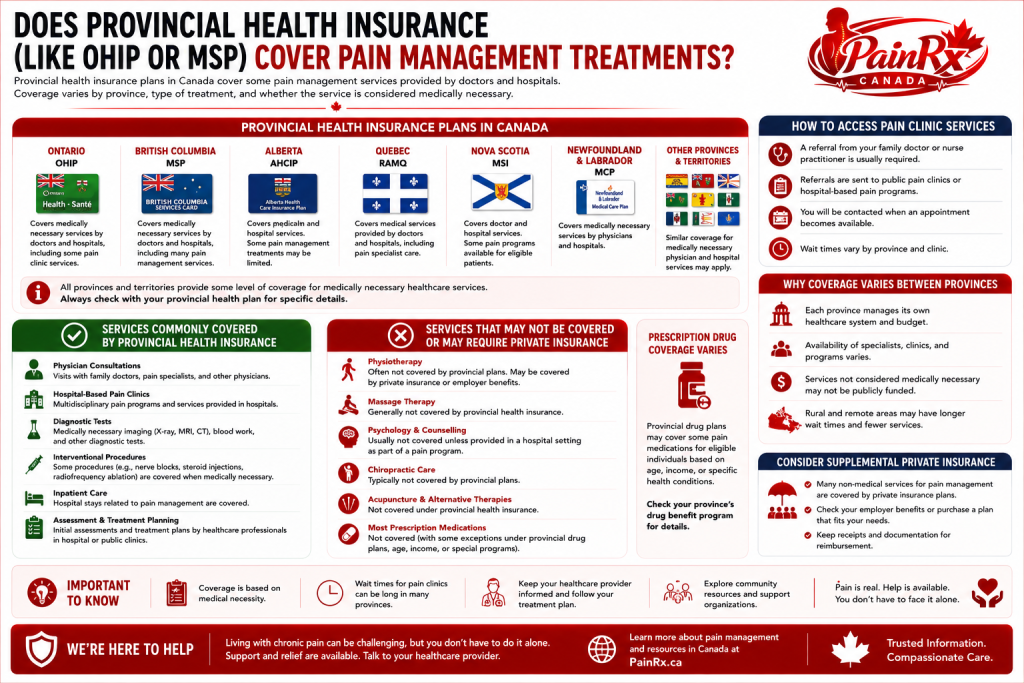
Provincial health insurance in Canada covers some pain management treatments, but not others. The coverage picture varies by province and by treatment type. Understanding what’s actually included in plans like OHIP or MSP can help Canadians avoid unexpected bills. It can also help them plan for costs that fall outside public coverage.
What Provincial Health Plans Generally Cover
Across Canada, provincial health plans cover medically necessary services from physicians. This includes doctor visits, referrals to specialists, and hospital-based care. For pain management, this means seeing a family doctor, a physiatrist, or a physician at a multidisciplinary pain clinic is typically covered. A valid referral needs to be in place first.
Physician-led procedures at pain clinics are generally covered too. This can include nerve blocks, epidural injections, and trigger point injections when performed by a physician. Diagnostic testing ordered by a doctor, like imaging or bloodwork, is also usually included.
What OHIP Covers in Ontario
In Ontario, chronic pain clinic treatment is covered by OHIP. Patients need a referral from a doctor or nurse practitioner to access this coverage. A valid health card is required at the first appointment.
Within a pain clinic, the physician-led components of care bill to OHIP like any other specialist service. This includes physician assessment, medication management, and physician-administered injection procedures. Physiotherapy, however, works differently. OHIP only covers physiotherapy for specific groups. This includes Ontario residents over 65 who were recently discharged from hospital, and children under 19 in certain circumstances. For most working-age adults, physiotherapy at a pain clinic is funded through extended health benefits, WSIB, or motor vehicle accident insurance rather than OHIP directly.
What MSP Covers in British Columbia
In British Columbia, MSP covers medically necessary physician services. This includes doctor visits, specialist referrals, and physician-led care at chronic pain programs run through regional health authorities.
Physiotherapy coverage under MSP is more limited than many people expect. Standard MSP does not cover physiotherapy for most BC residents. Coverage only applies to people enrolled in MSP Supplementary Benefits. This is an income-tested program available to residents below a set income threshold. Even for those who qualify, MSP contributes a fixed amount per visit, currently $23. This applies up to a combined maximum of 10 visits per year across physiotherapy, chiropractic care, massage therapy, acupuncture, and naturopathy.
This means most working-age British Columbians pay for physiotherapy out of pocket or through employer extended health benefits. Some regional health authority chronic pain programs do provide physiotherapy as part of a broader publicly funded treatment plan. This differs from the standard MSP physiotherapy rules described above.
What AHCIP Covers in Alberta
The Alberta Health Care Insurance Plan covers medically required physician and hospital services. This includes consultations with a family doctor or a physician at a pain clinic. It also includes physician-administered procedures and diagnostic testing ordered by a doctor.
Physiotherapy is treated differently in Alberta. It’s generally not an insured service under AHCIP for most residents. Alberta Health Services does fund physiotherapy in specific situations, though. This includes recent fractures, post-surgical recovery, and certain low-income eligibility criteria, delivered through AHS facilities or contracted community clinics. Outside these situations, most Albertans pay for physiotherapy out of pocket or through employer extended health benefits, workplace injury coverage, or motor vehicle accident benefits.
What RAMQ Covers in Quebec
In Quebec, RAMQ covers medically necessary services from physicians, including consultations and physician-led procedures at pain clinics. Quebec has also introduced publicly funded musculoskeletal clinics in several regions. These clinics offer physiotherapist-led assessment and treatment covered by RAMQ, though a physician or specialized nurse practitioner referral is required to access them.
Outside these specific programs, standard physiotherapy at a private clinic generally isn’t covered by RAMQ. This is similar to the pattern seen in Alberta and BC. Physiotherapy following a car accident is typically covered through Quebec’s automobile insurance board instead, while workplace injuries are covered through Quebec’s workplace safety board.
What Manitoba Health Covers
Manitoba Health covers medically necessary physician services, including consultations and physician-led care at chronic pain clinics. The Winnipeg Regional Health Authority runs pain clinics that include physicians, physiotherapists, and psychologists, accessed through a physician referral.
Physiotherapy coverage in Manitoba largely depends on setting. Manitoba Health pays for physiotherapy delivered through hospitals, including inpatient care and select publicly funded outpatient programs for specific conditions. Physiotherapy at private clinics generally isn’t covered, meaning most Manitobans rely on employer extended health benefits, WCB, or Manitoba Public Insurance for private physiotherapy costs.
What MSI Covers in Nova Scotia
In Nova Scotia, MSI covers medically necessary physician services, including physician-led chronic pain clinic care. Nova Scotia Health operates a network of community-based and regional chronic pain clinics across the province, along with one tertiary clinic in Halifax for more complex cases. A referral from a primary care provider is required.
Physiotherapy is covered by MSI only when delivered through public hospital outpatient departments, and wait times for this route can be lengthy. Physiotherapy at private clinics isn’t covered by MSI, so most Nova Scotians pay out of pocket or through employer extended health benefits for private physiotherapy care.
What Saskatchewan’s Health Plan Covers
Saskatchewan’s provincial health plan covers medically necessary physician services, including chronic pain clinic consultations. Multidisciplinary chronic pain clinics operate through the Saskatchewan Health Authority in cities like Regina, with teams that include physicians, nurse practitioners, pharmacists, and exercise therapists.
As in other provinces, physiotherapy coverage is more limited. Some outpatient physiotherapy is covered through local hospitals for specific conditions, but private clinic physiotherapy generally falls outside standard coverage, again leaving employer benefits or out-of-pocket payment as the main funding routes for most residents.
How the Provinces Compare
Across Ontario, British Columbia, Alberta, Quebec, Manitoba, Nova Scotia, and Saskatchewan, a consistent pattern shows up. Physician-led pain management care, including consultations and physician-administered procedures at pain clinics, is reliably covered by provincial health insurance. Physiotherapy coverage, by contrast, is the exception rather than the rule for most working-age adults in every one of these provinces.
Where physiotherapy coverage does exist outside private insurance, it tends to be narrow and situation-specific. This includes post-surgical recovery, income-tested programs, or dedicated public clinics like Quebec’s musculoskeletal clinics. Canadians relocating between provinces for work or other reasons shouldn’t assume their previous province’s coverage rules carry over, since the specific programs and eligibility criteria differ meaningfully from one province to the next.
Why Physiotherapy Coverage Is So Inconsistent
Physiotherapy sits in an unusual category across most provinces. Physician services are almost always covered under provincial health plans, since physicians are considered medically necessary providers. Physiotherapy, delivered by a regulated but non-physician provider, is often treated differently. It’s frequently excluded from standard coverage for most adults.
This is why physiotherapy access for chronic pain often depends heavily on other funding sources. Workplace injury coverage through WSIB or WorkSafeBC typically provides comprehensive physiotherapy coverage for eligible claims. Motor vehicle accident insurance can also cover physiotherapy following a car accident. Employer extended health benefits are the most common source of coverage for the general working population. Annual maximums usually apply to these plans, though.
What’s Typically Not Covered
Certain pain management treatments generally fall outside provincial coverage, regardless of province. Newer or specialized procedures, like platelet-rich plasma injections or certain radiofrequency treatments, are often not covered. These can cost several hundred to several thousand dollars out of pocket. Botox injections for chronic migraine, viscosupplementation for joint pain, and some sedation options during procedures also frequently fall into this uncovered category.
Psychological support, like counselling or psychotherapy from a psychologist, is generally not covered by provincial health plans. This applies unless it’s delivered by a physician or within a publicly funded program. This is a significant gap. Psychological support is a core part of effective chronic pain management for many patients.
How to Find Out What’s Covered
Coverage details can vary even within a province. This depends on the specific clinic and whether a provider is enrolled to bill the provincial plan directly. Before starting treatment at a pain clinic, it’s worth asking directly which services are billed to provincial insurance. It’s equally worth asking which services require out-of-pocket payment or private insurance.
Patients with extended health benefits through an employer should also check their plan’s specific coverage limits. This applies to physiotherapy, psychology, and other pain-related services, since these vary significantly between employers and insurance providers.
The Bottom Line
Provincial health insurance in Canada covers physician-led pain management care. This includes consultations, physician-administered procedures, and treatment at publicly funded pain clinics. Coverage for physiotherapy, psychological support, and specialized procedures is far less consistent. It often depends on income, employment benefits, or the specific circumstances behind an injury. Understanding these gaps ahead of time can help Canadians plan for costs. It can also help identify which funding sources, like employer benefits or workplace insurance, might help cover treatments provincial health insurance doesn’t.