

How to Get a Referral to a Pain Clinic in Canada

How Do You Get a Referral to a Pain Clinic in Canada?
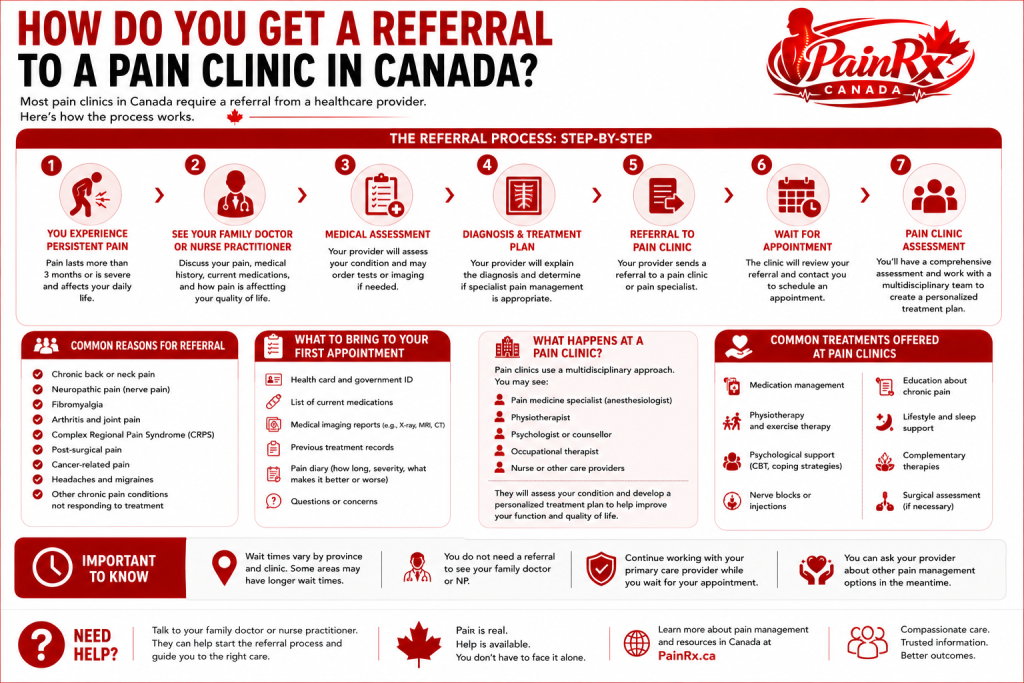
Getting a referral to a pain clinic in Canada can feel confusing. This is especially true when chronic pain is already making daily life difficult. The process varies somewhat by province, but the general path is similar across the country. Understanding how referrals work can help Canadians access specialized pain care more efficiently.
Start With a Family Doctor
In almost every province, a family doctor or nurse practitioner is the required first step. Pain clinics generally don’t accept walk-ins or self-referrals. Specialized care is coordinated through the primary care system instead. This means booking an appointment with a family doctor is usually the necessary starting point.
During this appointment, it helps to clearly describe the pain. Include its location, duration, and intensity. Also mention how it affects daily activities like work, sleep, and mobility. Doctors use this information to decide whether a referral is appropriate. Sometimes other treatments should be tried first instead.
When a Referral Is Typically Recommended
Referrals to pain clinics are usually considered when pain has persisted for three months or longer. This meets the general definition of chronic pain. Referrals are also common when standard treatments haven’t provided adequate relief. This includes physiotherapy, medication, or minor procedures.
Complex pain conditions can also prompt an earlier referral. This includes chronic pain combined with significant anxiety or depression. A multidisciplinary clinic is often better equipped for these cases. If a family doctor isn’t sure whether a referral is warranted, it’s reasonable to ask directly. Simply asking whether a pain clinic might help can open that conversation.
What Happens After the Referral Is Sent
Once a family doctor submits a referral, it typically goes to a specific pain clinic. In some provinces, it goes to a regional referral system instead. Some provinces use centralized intake systems for this purpose. These systems direct referrals to the most appropriate available clinic. The doctor doesn’t always need to choose a specific one.
Wait times vary significantly by province and by region within each province. Urban areas often have more clinic options. This doesn’t always mean shorter wait times, though, given higher demand. Rural and remote patients may face longer waits or need to travel for appointments. Virtual options are increasingly available to help with this, though.
Understanding Wait Times Across Canada
Pain clinic wait times in Canada can range from a few months to well over a year. This depends on the province and the specific clinic. Some provinces have worked to reduce these wait times. Centralized intake systems and expanded virtual care are two common strategies. Even so, demand still frequently outpaces available appointments.
Patients can ask their family doctor whether the referral has been received. It’s also worth asking where it currently stands in the queue. Some clinics also allow patients to check their own referral status directly. This depends on the system used in that province.
What to Do While Waiting
Waiting for a pain clinic appointment doesn’t mean treatment has to stop. Family doctors can continue managing pain in the meantime. This might include medication, physiotherapy referrals, or other interim treatments. Staying engaged with a family doctor during this period can help prevent gaps in care.
Keeping a symptom diary during the waiting period can also be useful. Track pain patterns, triggers, and the effectiveness of any treatments tried. This information gives the pain clinic team more to work with once the appointment happens.
What Happens at a Pain Clinic Appointment
Most Canadian pain clinics use a multidisciplinary model. This means patients may see a combination of providers rather than a single doctor. The team can include physicians, physiotherapists, psychologists, and sometimes occupational therapists or social workers, depending on the clinic.
The first appointment usually involves a detailed assessment. This covers pain history, previous treatments tried, and how pain affects daily function. Based on this assessment, the clinic team typically develops a personalized treatment plan. This may include physical therapy, psychological support, medication adjustments, or specialized procedures.
Private Pain Clinics as an Alternative
Some Canadians choose to explore private pain clinics. These typically have shorter wait times but require out-of-pocket payment or private insurance coverage. Private clinics can be a reasonable option for patients who have the financial means. They offer faster access to specialized care as a trade-off.
It’s worth confirming exactly what services a private clinic offers. Also ask how they coordinate with a patient’s existing family doctor. Continuity of care matters for effective long-term pain management.
Advocating for Yourself During the Referral Process
If pain is significantly affecting daily function and a referral hasn’t come up, it’s reasonable to raise the topic directly with a family doctor. Asking a specific question, like whether a multidisciplinary pain clinic might help, can prompt a more focused conversation about next steps.
If a referral has been sent but wait times feel unreasonably long, patients can ask about alternatives. A family doctor may know of another clinic with shorter wait times. Some patients also find it helpful to ask about interim options, like telehealth consultations, while waiting for an in-person appointment.
Virtual Pain Care Options in Canada
Many provinces have expanded virtual pain care options in recent years. This can help reduce wait times and improve access for patients in rural or remote areas. Virtual consultations can sometimes serve as an initial assessment step. This helps determine the most appropriate next steps before an in-person visit is scheduled.
Canadians interested in virtual options can ask their family doctor about availability. Virtual pain clinics accepting referrals vary by province, so it’s worth checking directly.
The Bottom Line
Getting a referral to a pain clinic in Canada starts with a conversation with a family doctor. That doctor can assess whether specialized, multidisciplinary care is appropriate. Wait times can be significant depending on the province. Staying engaged with a family doctor during the waiting period helps. Exploring virtual or private options where available can also help Canadians access the care they need more efficiently.