

Neuropathic vs Nociceptive Pain: What’s the Difference?

What’s the Difference Between Neuropathic and Nociceptive Pain?
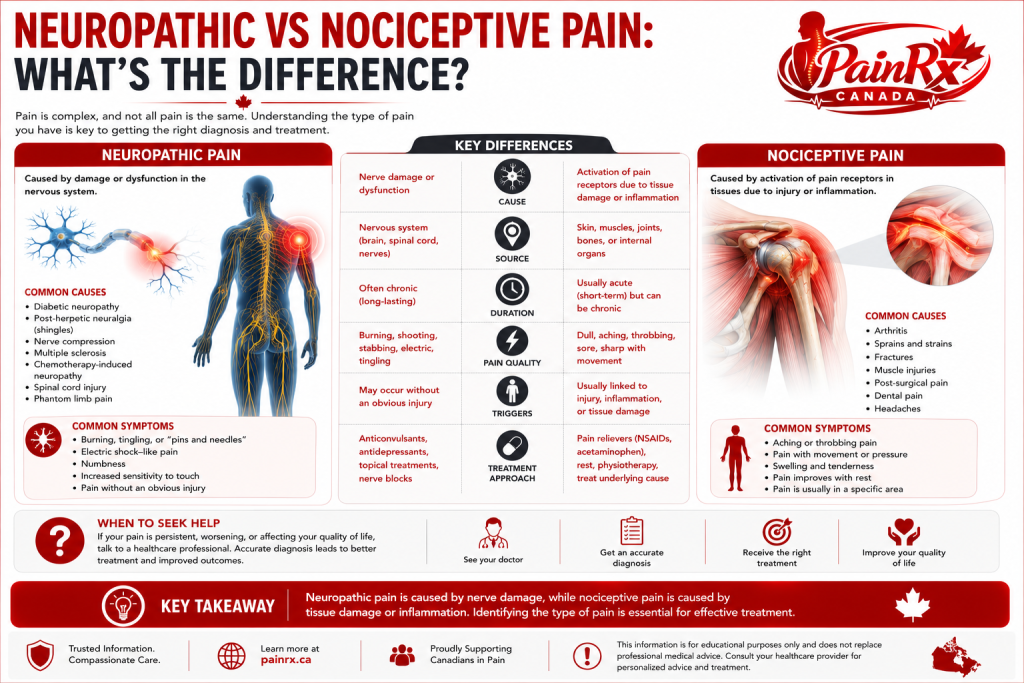
Not all pain works the same way inside the body. Doctors often categorize pain based on how it’s generated. Two of the most important categories are neuropathic and nociceptive pain. Understanding this distinction can help Canadians better describe their symptoms to a doctor. It can also help explain why certain treatments work well for one type of pain but poorly for another.
What Is Nociceptive Pain?
Nociceptive pain is the most familiar type of pain. It occurs when specialized nerve endings, called nociceptors, detect actual or potential tissue damage. These nociceptors are located throughout the skin, muscles, joints, and internal organs. When triggered, they send signals to the brain that get interpreted as pain.
This type of pain is typically associated with a clear physical cause. A sprained ankle, a burn, a broken bone, or arthritis-related joint damage are all common examples of nociceptive pain. The pain usually feels aching, sharp, or throbbing. It tends to worsen with movement or pressure on the affected area.
Nociceptive pain generally serves a protective function. It warns the body that something is wrong and encourages behaviours, like resting an injured limb, that support healing. In most cases, nociceptive pain improves as the underlying tissue damage heals.
What Is Neuropathic Pain?
Neuropathic pain works differently. Rather than being triggered by tissue damage, neuropathic pain results from damage or dysfunction within the nervous system itself. This can involve nerves in the peripheral body, the spinal cord, or the brain.
Common causes of neuropathic pain include diabetes, which can damage peripheral nerves over time. Shingles is another cause, sometimes leaving lasting nerve pain after the rash has healed. Nerve compression, spinal cord injuries, and certain chemotherapy treatments can also cause neuropathic pain. Sometimes, no clear cause can be identified at all.
Neuropathic pain often has a distinct quality compared to nociceptive pain. Patients frequently describe it as burning, shooting, stabbing, or electric-shock-like. Numbness, tingling, or heightened sensitivity to touch often accompany the pain as well. Unlike nociceptive pain, neuropathic pain doesn’t necessarily worsen with movement. It also doesn’t always correspond to an area with visible injury.
Why the Distinction Matters
Nociceptive and neuropathic pain often respond to different treatments, which is why correctly identifying the type of pain matters. Anti-inflammatory medications and standard pain relievers tend to work well for nociceptive pain. They target inflammation and tissue-level pain signals directly.
Neuropathic pain often responds poorly to these same medications. Instead, treatments like certain antidepressants, anticonvulsant medications, or topical treatments specifically designed for nerve pain tend to be more effective. This is because neuropathic pain involves a fundamentally different mechanism than pain caused by tissue damage.
Can Someone Have Both Types at Once?
Many chronic pain conditions actually involve a mix of nociceptive and neuropathic pain, sometimes called mixed pain. Chronic lower back pain, for example, can involve nociceptive elements, like muscle strain. It can also involve neuropathic elements, such as nerve compression from a herniated disc.
This overlap is one reason chronic pain treatment often requires a combination of approaches rather than a single medication. Identifying which components are present, nociceptive, neuropathic, or both, helps doctors design a more effective, targeted treatment plan.
How Doctors Identify the Type of Pain
Diagnosis usually starts with a detailed description of the pain’s quality, location, and triggers. Doctors will often ask whether the pain feels sharp and aching, or burning and electric-like. These descriptions provide important clues. Physical examination, including tests for numbness, tingling, or altered sensation, can help confirm a neuropathic component.
In some cases, nerve conduction studies or other specialized testing may be used to assess nerve function directly. Imaging can also help identify structural causes of neuropathic pain. This includes nerve compression from a disc or growth pressing on a nerve.
Where Central Sensitization Fits In
Central sensitization is sometimes considered a third category, distinct from classic nociceptive and neuropathic pain. It’s the process where the nervous system becomes increasingly reactive to pain. It involves changes in how the central nervous system processes pain signals overall. This differs from damage to a specific nerve or ongoing tissue injury.
Conditions like fibromyalgia are often classified this way, since they don’t fit neatly into either the nociceptive or neuropathic categories. Some pain specialists refer to this as “nociplastic” pain. It reflects a distinct underlying mechanism that requires its own tailored treatment approach.
Treatment Considerations for Canadians
For Canadians managing chronic pain, understanding which category applies to their condition matters. It can lead to more effective treatment conversations with their doctor. Bringing a clear, specific description of pain quality to appointments can help. Phrases like “burning and electric” versus “dull and aching” give doctors useful clues.
Referral to a pain specialist or neurologist may be appropriate for complex or unclear cases. This is especially true when standard treatments haven’t provided adequate relief. Multidisciplinary pain clinics across Canada are increasingly equipped to assess and treat mixed pain presentations involving multiple mechanisms at once.
The Bottom Line
Nociceptive pain arises from actual or potential tissue damage detected by specialized nerve endings. Neuropathic pain, by contrast, results from dysfunction within the nervous system itself. These two pain types often feel different, respond to different treatments, and sometimes occur together as mixed pain. Understanding this distinction can help Canadians communicate more effectively with healthcare providers. It also helps them access treatment approaches genuinely suited to their specific type of pain.