

What Is Fibromyalgia? How It’s Diagnosed in Canada

What Is Fibromyalgia and How Is It Diagnosed in Canada?
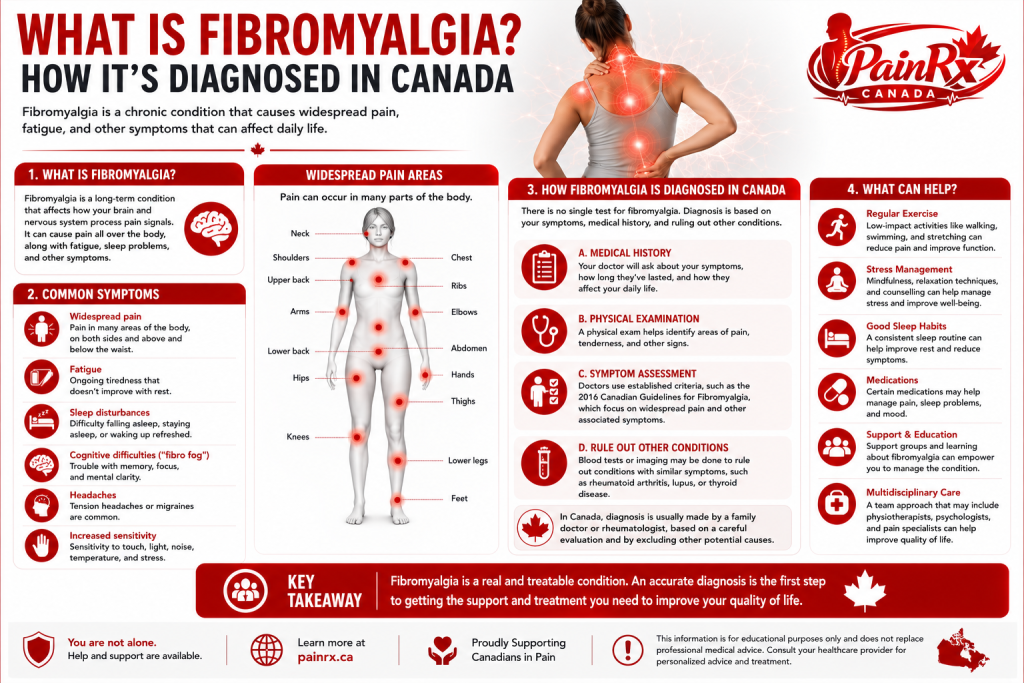
Fibromyalgia is one of the most common chronic pain conditions in Canada, yet it remains widely misunderstood. Many people go years without a proper diagnosis. They’re often told their symptoms are stress-related or “all in their head.” Understanding what fibromyalgia actually is can help patients get the answers they need. Knowing how it’s diagnosed in Canada can also speed up treatment.
What Is Fibromyalgia?
Fibromyalgia is a chronic condition characterized by widespread musculoskeletal pain, often accompanied by fatigue, sleep problems, and cognitive difficulties. The pain typically affects multiple areas of the body rather than a single specific location. Many patients describe it as a constant, deep aching sensation, sometimes combined with tenderness in specific points across the body.
Unlike many other chronic pain conditions, fibromyalgia doesn’t involve visible tissue damage. It also doesn’t show up as inflammation on standard imaging or bloodwork. Instead, it’s now understood as a condition involving central sensitization, where the nervous system becomes overly reactive to pain signals. This explains why people with fibromyalgia often experience pain that seems disproportionate to any identifiable physical cause.
Common Symptoms of Fibromyalgia
Widespread pain is the defining symptom of fibromyalgia, but it’s rarely the only one. Fatigue is extremely common, often described as persistent exhaustion that doesn’t improve with rest. Many patients also experience non-restorative sleep, meaning they wake up feeling tired even after a full night in bed.
Cognitive difficulties, sometimes called “fibro fog,” are another frequent symptom. This can include trouble concentrating, memory lapses, and difficulty finding words. Headaches, irritable bowel symptoms, and heightened sensitivity to temperature, light, or noise are also commonly reported alongside the core symptoms.
What Causes Fibromyalgia?
The exact cause of fibromyalgia isn’t fully understood, and it likely involves a combination of factors. Genetics appear to play a role, since fibromyalgia tends to run in families. Physical trauma, infections, or significant psychological stress sometimes precede the onset of symptoms. Not everyone can identify a clear trigger, though.
is considered a key underlying mechanism. Over time, the nervous system becomes increasingly efficient at producing pain signals, even without ongoing tissue damage. This helps explain why fibromyalgia symptoms can persist and even worsen over time without a clear structural cause.
How Fibromyalgia Is Diagnosed in Canada
Diagnosing fibromyalgia can be challenging, since there’s no single definitive lab test or imaging scan that confirms the condition. Instead, Canadian doctors typically rely on patient history and symptom patterns. They also rule out other conditions that could explain the symptoms.
The most widely used diagnostic approach follows criteria from the American College of Rheumatology. Canadian physicians commonly reference these criteria too. This involves assessing widespread pain across multiple body regions and evaluating symptom severity. Symptoms typically need to persist for at least three months.
Doctors will usually order bloodwork to rule out conditions with overlapping symptoms. This can include rheumatoid arthritis, lupus, or thyroid disorders. Imaging may also be used to exclude structural problems, even though fibromyalgia itself won’t appear on these tests. This process of elimination is a standard, expected part of reaching a fibromyalgia diagnosis.
The Role of Family Doctors and Specialists
In most provinces, a family doctor is the first point of contact for fibromyalgia symptoms. Family doctors can often diagnose fibromyalgia directly. This is especially true if symptoms clearly match established criteria and other conditions have been ruled out.
In more complex cases, a referral to a rheumatologist may be recommended. Rheumatologists specialize in musculoskeletal and autoimmune conditions and can help distinguish fibromyalgia from other overlapping conditions. Referral to a multidisciplinary pain clinic is also common, particularly for patients whose symptoms significantly affect daily function.
Wait times for rheumatology referrals vary considerably across Canadian provinces, sometimes extending to several months. Patients experiencing significant delays can ask their family doctor about interim management strategies while waiting for a specialist appointment.
Why Diagnosis Can Take So Long
Many fibromyalgia patients report years of symptoms before receiving an accurate diagnosis. This delay often happens because symptoms overlap with other conditions. There’s also no definitive test to confirm the diagnosis quickly. Some patients are initially misdiagnosed with conditions like chronic fatigue syndrome, depression, or various autoimmune disorders.
This diagnostic delay can be genuinely frustrating and can also delay access to appropriate treatment. Keeping a detailed symptom diary can help. Tracking pain locations, fatigue patterns, and sleep quality lets doctors identify patterns more efficiently.
Treatment Approaches After Diagnosis
Once diagnosed, fibromyalgia treatment in Canada typically involves a multidisciplinary approach rather than a single medication or intervention. Physiotherapy and graded exercise programs are often central to treatment, helping improve function and gradually reduce pain sensitivity over time.
Cognitive behavioural therapy can help address the psychological impact of living with a chronic, often invisible condition. It also targets thought patterns that may worsen pain perception. Some patients benefit from medications originally developed for depression or nerve pain. This reflects the overlapping biology between these conditions and fibromyalgia.
Sleep management is particularly important, given how closely fibromyalgia symptoms and poor sleep are connected. Addressing sleep quality often produces noticeable improvements in both pain and fatigue levels over time.
Living with Fibromyalgia in Canada
Beyond formal treatment, many Canadians with fibromyalgia find value in pacing strategies. These involve balancing activity and rest to avoid triggering flare-ups. Support groups, both in-person and online, can also provide valuable community and practical coping strategies from others managing similar symptoms.
Provincial disability and workplace accommodation programs may be available for Canadians whose fibromyalgia significantly impacts their ability to work. A family doctor or specialist can help provide documentation needed to access these supports where appropriate.
The Bottom Line
Fibromyalgia is a real, measurable chronic pain condition involving central sensitization of the nervous system. It simply doesn’t show up on standard imaging or bloodwork. Diagnosis in Canada typically involves symptom assessment, ruling out other conditions, and applying established clinical criteria. This process usually starts with a family doctor and sometimes involves a rheumatologist. While the diagnostic process can take time, an accurate diagnosis opens the door to effective, multidisciplinary treatment. These approaches can meaningfully improve quality of life.