

Chronic Pain and Mental Health: How They’re Connected

How Does Chronic Pain Affect Mental Health, and Vice Versa?
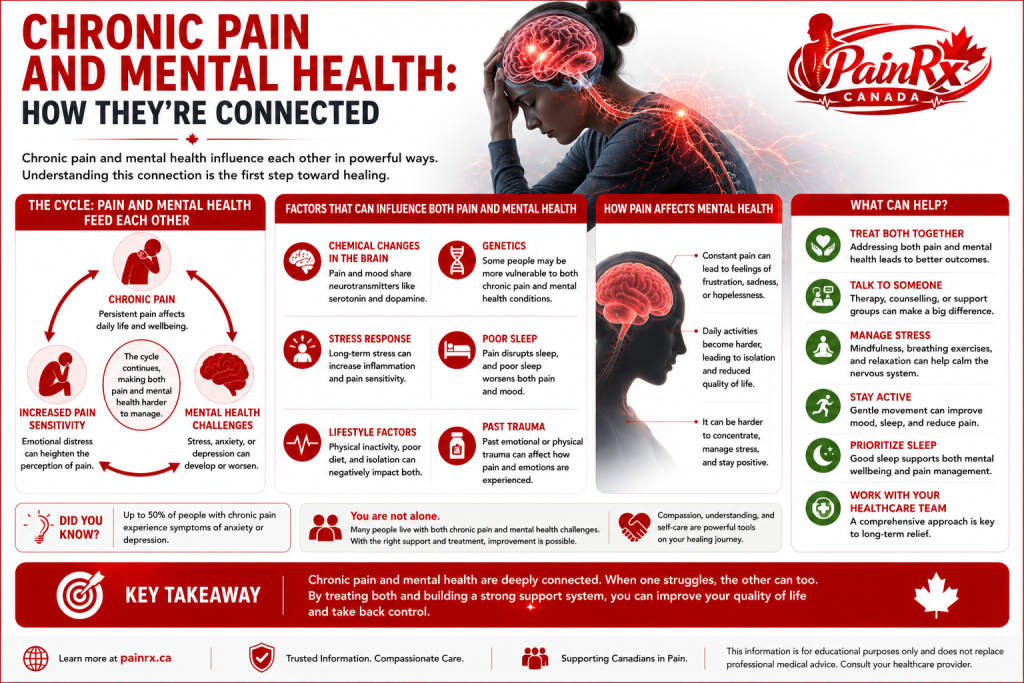
Chronic pain and mental health are deeply connected, and the relationship runs in both directions. Living with ongoing pain can take a real toll on mood, motivation, and emotional wellbeing. At the same time, mental health conditions like anxiety and depression can intensify how pain is experienced. Understanding this two-way relationship can help Canadians get more effective, comprehensive care, rather than treating physical and mental health as entirely separate issues.
How Chronic Pain Affects Mental Health
Living with chronic pain is exhausting, both physically and emotionally. Constant discomfort can wear down a person’s resilience over time, even in people with no prior history of mental health struggles. Sleep disruption, reduced mobility, and changes to daily routine often compound this emotional strain.
Depression is particularly common among people with chronic pain. Studies suggest a significant percentage of chronic pain patients also meet criteria for depression at some point. This isn’t simply sadness about being in pain. Chronic pain can alter brain chemistry in ways that overlap directly with the biology of depression.
Anxiety is also common, often centered around fear of movement, fear of flare-ups, or worry about the future. Some people develop anticipatory anxiety before activities that might trigger pain. This can lead to avoidance behaviours that, over time, may actually worsen both pain and disability.
Beyond depression and anxiety, chronic pain often affects identity and self-esteem. Many people struggle with the loss of activities, roles, or hobbies they once enjoyed. Grief over these losses is a real and valid emotional response, even though it’s rarely discussed openly.
How Mental Health Affects Chronic Pain
The relationship isn’t one-directional. Mental health conditions can genuinely intensify how pain is experienced. Depression and anxiety are linked to changes in brain chemistry that overlap with pain-processing pathways. This means existing mental health struggles can amplify pain signals, not just make pain feel worse subjectively.
Stress plays a particularly important role. Chronic stress triggers the release of hormones like cortisol, which can increase inflammation and heighten pain sensitivity throughout the body. This creates a physiological pathway connecting emotional stress directly to physical pain intensity.
Pain catastrophizing, a pattern of expecting the worst and feeling helpless about pain, is another well-studied factor. People who catastrophize tend to report higher pain intensity and greater disability, even when their underlying physical condition is similar to others who don’t catastrophize. This isn’t a character flaw. It’s a learned thought pattern that can be addressed through specific therapeutic approaches.
The Shared Biology Behind Pain and Mood
Pain and mood share overlapping neural pathways in the brain. Regions involved in processing physical pain also play a role in processing emotional pain and regulating mood. This helps explain why chronic pain and mental health conditions so frequently occur together, rather than as unrelated coincidences.
Neurotransmitters like serotonin and norepinephrine are involved in both pain regulation and mood regulation. This shared biology is part of why certain medications, originally developed as antidepressants, are also used to treat chronic pain conditions. It reflects genuine biological overlap, not simply a secondary use.
Central sensitization, the process where the nervous system becomes increasingly reactive to pain, also appears linked to mood regulation. Chronic stress and low mood may contribute to central sensitization developing or worsening over time, adding another layer to this interconnected relationship.
Breaking the Cycle
Because pain and mental health influence each other so directly, addressing only one side of the equation often produces limited results. Someone treated for depression without addressing chronic pain may see limited improvement. Someone treated for pain without addressing underlying anxiety or depression may also struggle to see meaningful progress.
This is why many Canadian pain clinics now take an integrated approach, treating physical and mental health together rather than separately. Psychologists specializing in chronic pain are increasingly part of standard multidisciplinary pain teams, working alongside physicians and physiotherapists.
Treatment Approaches That Address Both
Cognitive behavioural therapy (CBT) is one of the most well-researched approaches for chronic pain and co-occurring mental health conditions. CBT helps patients identify and change thought patterns, like catastrophizing, that can worsen both pain and mood. It also teaches practical coping strategies for managing flare-ups without triggering a downward emotional spiral.
Acceptance and commitment therapy (ACT) is another approach gaining traction in Canadian pain clinics. Rather than focusing on eliminating pain entirely, ACT helps patients build a meaningful life alongside pain, reducing the emotional struggle against symptoms that can’t always be fully controlled.
Mindfulness-based stress reduction has also shown benefits for both pain and mood. Regular mindfulness practice can help reduce pain catastrophizing and lower overall stress reactivity, which may in turn reduce pain intensity over time.
Medication can play a role too, particularly for people with significant depression or anxiety alongside chronic pain. Some medications address both conditions simultaneously, given their shared underlying biology. A doctor or psychiatrist can help determine whether medication makes sense as part of a broader treatment plan.
Physical activity, though sometimes difficult to start, has consistent research support for improving both pain and mood. Gentle, graded exercise programs designed specifically for chronic pain patients can help build confidence and reduce fear of movement over time.
When to Seek Mental Health Support
Persistent low mood, loss of interest in previously enjoyed activities, or ongoing anxiety alongside chronic pain are worth discussing with a doctor. These symptoms aren’t a normal or necessary part of living with pain, even though they’re common. Effective treatment exists, and addressing mental health can genuinely improve physical pain outcomes as well.
Canadians can ask their family doctor for a referral to a psychologist or psychiatrist experienced in chronic pain, or inquire about multidisciplinary pain clinics that include mental health support as part of their standard care model. Many provinces also offer virtual mental health services, which can help reduce wait times and improve access for people in rural or remote areas.
Reducing the Stigma
Talking about the mental health side of chronic pain can feel uncomfortable, partly due to lingering stigma around both pain and mental illness. Some patients worry that discussing mood or anxiety will lead doctors to dismiss their physical pain as “just psychological.” This concern is understandable, but addressing mental health doesn’t invalidate physical pain. It reflects an accurate, evidence-based understanding of how deeply the two are connected.
The Bottom Line
Chronic pain and mental health influence each other in a genuine, bidirectional relationship rooted in shared biology. Living with chronic pain can contribute to depression and anxiety, while mental health struggles can intensify pain intensity and disability. Recognizing this connection allows Canadians to seek integrated, comprehensive care rather than treating physical and emotional symptoms as unrelated issues. Addressing both sides together often leads to better outcomes than focusing on either one alone.
One note on this topic specifically: since it touches mental health directly, if you publish this on PainRx Canada it’s worth adding a brief crisis-resource line (e.g., pointing to Talk Suicide Canada or a provincial crisis line) somewhere near the “When to Seek Mental Health Support” section — a lot of health sites include this as standard practice for reader safety, and it’s an easy trust signal too.