

Chronic Pain and Sleep Problems: How They’re Connected

What’s the Connection Between Chronic Pain and Sleep Problems?
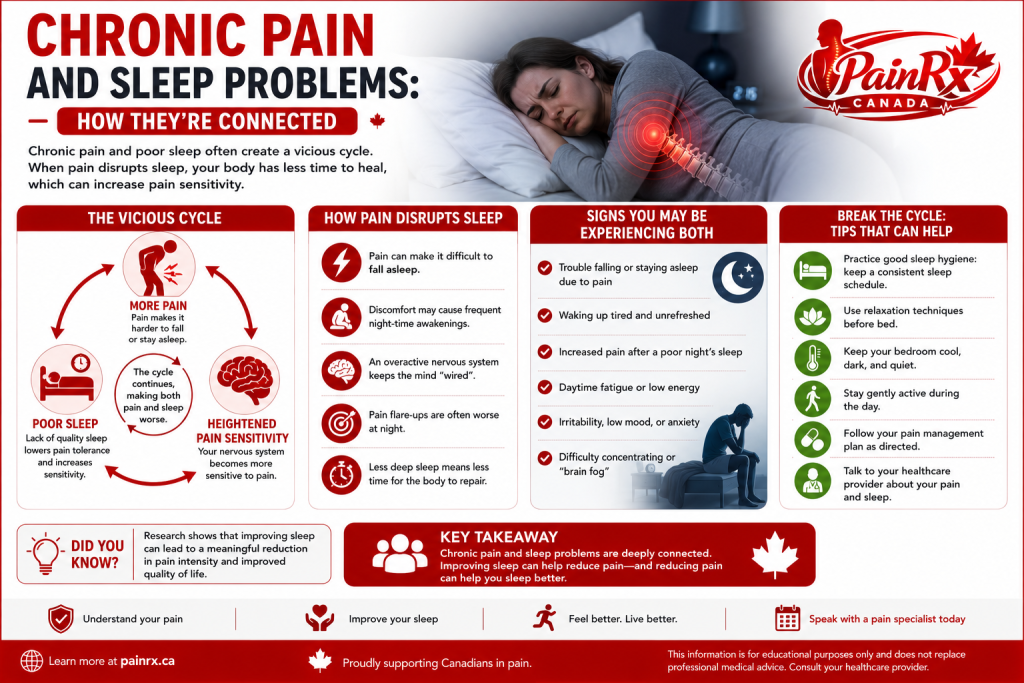
Chronic pain and sleep problems tend to travel together, and the overlap between them is far more common than most people realize. Most people living with ongoing pain also struggle with sleep in some form. This connection isn’t a coincidence at all. Pain and sleep are deeply intertwined through shared biological systems. Problems in one area tend to make the other worse. Understanding this relationship can help Canadians break the cycle, manage symptoms more effectively, and get better rest overall.
Why Pain Disrupts Sleep
Pain makes it harder to fall asleep and harder to stay asleep. Physical discomfort can prevent the body from settling into a relaxed state needed for sleep onset. Even after falling asleep, pain can cause frequent micro-awakenings throughout the night. Often, the person doesn’t fully realize this is happening.
These interruptions prevent the body from reaching deeper, more restorative stages of sleep. Even if someone technically spends eight hours in bed, fragmented sleep leaves them feeling unrested the next day. Over time, this pattern can become chronic in its own right, separate from the original pain condition.
Certain sleeping positions can also worsen pain at night. This is particularly true for conditions affecting the back, hips, or joints. Finding a comfortable position can become a nightly challenge, adding frustration on top of physical discomfort. Some people develop anxiety specifically around bedtime, anticipating pain and poor sleep before it even happens.
Why Poor Sleep Worsens Pain
The relationship works in both directions. Poor sleep doesn’t just result from pain. It can actively make pain worse. Research has consistently shown that sleep deprivation lowers pain thresholds. The same stimulus that feels mildly uncomfortable after a good night’s sleep can feel significantly more painful after a poor one.
This happens partly because sleep plays a critical role in regulating the nervous system. During deep sleep, the body works to repair tissue and regulate inflammation. It also resets pain-processing pathways in the brain and spinal cord. When sleep is disrupted, these processes don’t happen as effectively.
Sleep deprivation also affects levels of certain neurotransmitters involved in pain regulation, including serotonin and dopamine. Lower levels of these chemicals are associated with increased pain sensitivity. In some cases, they’re also linked to worsened mood. This helps explain why poor sleep and pain so often appear alongside symptoms of low mood or irritability.
The Vicious Cycle Between Pain and Sleep
Because pain disrupts sleep, and poor sleep intensifies pain, many people end up caught in a self-reinforcing cycle. A bad night of sleep leads to a more painful day. That increased pain then makes it even harder to fall asleep the following night. Without intervention, this cycle can continue indefinitely. Both symptoms tend to gradually worsen over time.
Breaking this cycle usually requires addressing pain and sleep at the same time. Treating one and hoping the other improves on its own often isn’t enough. This is one reason many multidisciplinary pain clinics in Canada now include sleep assessment. It’s becoming a standard part of chronic pain treatment rather than an afterthought.
Central Sensitization and Sleep
Central sensitization is the process by which the nervous system becomes increasingly reactive to pain signals. This process appears to be closely linked with sleep quality. Poor sleep has been shown to increase markers of central sensitization in some studies. This suggests that improving sleep may help calm an overactive nervous system. In turn, this could reduce pain sensitivity over time.
This connection is part of why sleep is increasingly recognized as a core component of chronic pain management. It isn’t treated as a separate, unrelated issue anymore. Addressing sleep isn’t just about feeling more rested. It may directly influence how the nervous system processes pain signals throughout the day.
Common Sleep Disorders Linked to Chronic Pain
Several specific sleep disorders occur more frequently in people with chronic pain. Insomnia, characterized by difficulty falling or staying asleep, is one of the most common. Restless legs syndrome also appears more often among people with certain chronic pain conditions. It causes uncomfortable sensations and an urge to move the legs, especially at night.
Sleep apnea is another concern. This condition involves repeated pauses in breathing during sleep. It’s particularly common among people carrying additional weight due to reduced activity from chronic pain. Fibromyalgia has a well-documented association with disrupted, non-restorative sleep. This can happen even when total sleep time seems adequate on paper.
Identifying whether a specific sleep disorder is present matters. Treatment approaches can differ significantly depending on the underlying issue. A Canadian sleep clinic or sleep study referral may be appropriate for patients with persistent, unexplained sleep disruption alongside chronic pain.
How Much Sleep Do Chronic Pain Patients Actually Need?
Most adults need between seven and nine hours of sleep per night, but people with chronic pain sometimes need more time in bed to achieve the same amount of restorative sleep. This is because pain-related awakenings reduce sleep efficiency, meaning less of the time spent in bed is actually spent in deep, restful sleep.
Rather than focusing purely on total hours, many sleep specialists encourage patients to track sleep quality alongside sleep quantity. Waking up feeling rested, even after a slightly shorter night, can sometimes be a better sign of progress than simply logging more hours in bed.
How Canadians Can Improve Sleep Alongside Pain Management
Improving sleep quality often requires a combination of approaches, much like chronic pain management itself. Establishing a consistent sleep and wake schedule, even on weekends, can help regulate the body’s internal clock. Limiting screen time and bright light exposure in the hour before bed can also support better sleep onset.
Cognitive behavioural therapy for insomnia, often called CBT-I, has strong research support for people with chronic pain. Sleep medication can lose effectiveness over time and carries risks of dependence. CBT-I works differently. It addresses the thought patterns and habits that interfere with sleep directly, rather than relying on medication alone.
Gentle movement and physiotherapy can also help improve sleep indirectly. Reducing pain intensity often improves physical comfort at night as a result. Some Canadians also find relaxation techniques helpful for calming the nervous system before bed. Guided breathing and progressive muscle relaxation are two common examples worth trying.
The Role of Mattress and Sleep Environment
Sleep environment can meaningfully affect both pain and sleep quality, even though it may seem like a minor factor. A mattress that doesn’t adequately support the spine can worsen back and joint pain overnight. Pillows positioned to support proper neck and spine alignment can also reduce nighttime discomfort for many people.
Temperature, noise, and light levels in the bedroom all influence sleep quality as well. Small adjustments to the sleep environment are often inexpensive and low-risk. They can be a reasonable starting point alongside other treatment approaches.
Medication Considerations
Some medications used for chronic pain can affect sleep, either positively or negatively. Certain pain medications may cause drowsiness, which can help with sleep onset. At the same time, they sometimes reduce overall sleep quality despite making it easier to fall asleep. Others can interfere with normal sleep architecture, even if they help in the short term.
It’s worth discussing sleep specifically with a doctor or pharmacist when reviewing pain medications. Some options may support better sleep, while others may inadvertently make sleep problems worse. This conversation matters most for Canadians managing multiple medications for chronic pain and related conditions.
When to See a Doctor About Sleep and Pain Together
Persistent sleep problems lasting more than a few weeks are worth raising with a doctor, particularly alongside chronic pain. Loud snoring, gasping during sleep, or excessive daytime sleepiness can be signs of sleep apnea, which requires specific testing and treatment. Restless, uncomfortable sensations in the legs at night are also worth mentioning, since restless legs syndrome has its own targeted treatments.
Canadians can ask their family doctor for a referral to a sleep clinic if symptoms persist despite basic sleep hygiene changes. Many provinces also offer virtual sleep medicine consultations, which can reduce wait times for patients in rural or remote areas.
The Role of Diet, Caffeine, and Alcohol
Diet and daily habits can also influence both sleep quality and pain sensitivity. Caffeine consumed later in the day can interfere with falling asleep, even in people who feel unaffected by it. This is especially relevant for chronic pain patients who may rely on caffeine to offset daytime fatigue caused by poor sleep the night before.
Alcohol is sometimes used to help with sleep onset, but it tends to fragment sleep later in the night. This can worsen the very sleep problems it initially seemed to help with. Heavy or late meals close to bedtime can also disrupt sleep for some people, particularly those managing conditions like irritable bowel syndrome alongside chronic pain.
Staying hydrated and eating regular, balanced meals throughout the day can support more stable energy levels and, indirectly, better sleep. While diet alone won’t resolve chronic pain or major sleep disorders, small adjustments can meaningfully support other treatment strategies already in place.
Naps and Daytime Rest
Many people with chronic pain rely on daytime naps to cope with poor nighttime sleep. Short naps, generally twenty to thirty minutes, can provide a helpful energy boost without significantly disrupting nighttime sleep for most people. Longer or later naps, however, can make it harder to fall asleep at the usual bedtime.
For Canadians struggling with both chronic pain and sleep, keeping naps short and scheduling them earlier in the day is generally a safer approach. Tracking how naps affect nighttime sleep can help identify a personal pattern that works, since responses to daytime rest vary from person to person.
Why This Matters for Long-Term Chronic Pain Management
Addressing sleep isn’t a minor add-on to chronic pain treatment. Given how closely pain and sleep interact, improving sleep quality may be one of the more impactful steps a person can take. This doesn’t mean better sleep alone will eliminate chronic pain. It can, however, meaningfully reduce its severity and improve day-to-day function.
Canadians working with a family doctor or pain clinic can ask specifically about sleep assessment as part of their pain management plan. This might include screening questionnaires or a referral to a sleep specialist. It could also mean incorporating CBT-I into an existing treatment plan alongside physiotherapy and other approaches.
The Bottom Line
Chronic pain and sleep problems are closely connected through shared biological pathways. These include the nervous system, inflammation, and neurotransmitter regulation. Pain disrupts sleep, and poor sleep in turn intensifies pain. Together, this creates a cycle that can be difficult to break without targeted intervention.
Recognizing this connection allows Canadians to address both issues together, rather than treating them as separate, unrelated problems. Small, consistent changes to sleep habits, combined with an active pain management plan, often produce better results than focusing on either issue in isolation. With the right combination of sleep-focused strategies and pain management approaches, many people find meaningful, lasting improvement in both areas over time.