

Does the Green Whistle Get You High?

Does the Green Whistle Get You High? Understanding Penthrox’s Effects in Canada
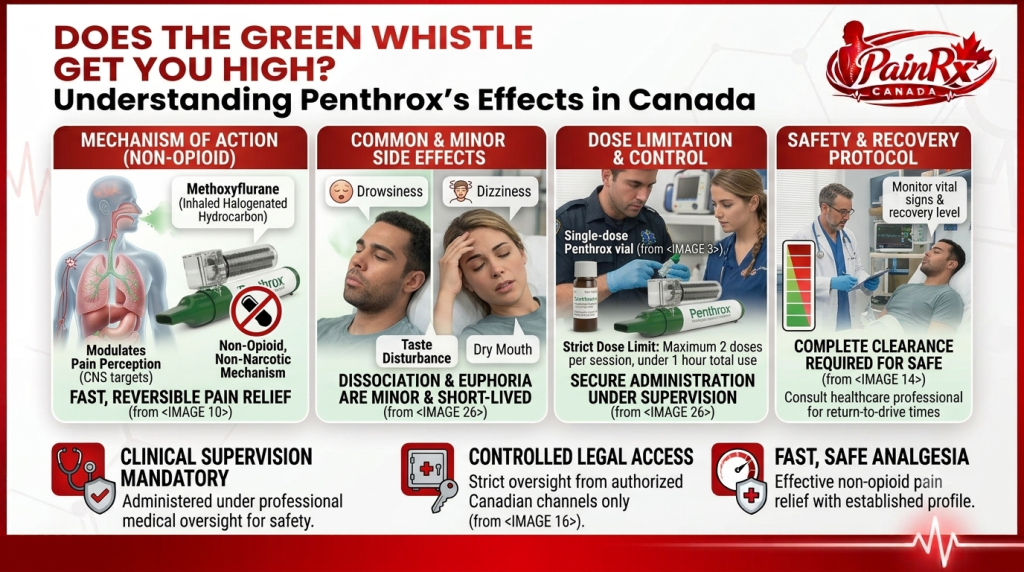
Imagine you are a patient in a Canadian emergency department with a painful broken arm. The medical team offers you the “green whistle” for pain relief. As you inhale from the small, bright green device, you feel your pain begin to subside. But you might also wonder: is this going to make me feel “high”? Will I lose control or say things I do not mean?
These are common and understandable questions. Many Canadians have heard about the green whistle—Penthrox—and are curious about its effects. Some people mistakenly assume that because it is a powerful pain reliever, it must produce a “high” similar to opioids or other recreational drugs. Understanding the truth about this medication is important for making informed decisions about your healthcare.
This comprehensive guide will explain exactly what the green whistle does and does not do. We will explore its effects on the body and mind, how it differs from opioids, and what patients can realistically expect when using this innovative pain relief device in Canada.
What Is the Green Whistle?
Before we explore its effects, it is helpful to understand what the green whistle actually is. The green whistle is the common nickname for the Penthrox inhaler, a handheld device that delivers methoxyflurane, a potent inhalational analgesic. Healthcare professionals use it to manage moderate to severe acute pain resulting from trauma or injury.
The device earned its nickname because of its distinctive bright green colour and the whistling sound it can make when the patient inhales. It is small, lightweight, and portable, making it ideal for use in ambulances, emergency departments, and other pre-hospital settings.
Does the Green Whistle Get You High?
The short answer is no. The green whistle does not produce a “high” or euphoria in the way that opioids or recreational drugs do. Here is why.
What Does “Getting High” Mean?
When people talk about “getting high,” they are usually referring to a state of euphoria, intense pleasure, or altered perception. This feeling is often associated with drugs that act on the brain’s reward system, particularly those that stimulate the release of dopamine. Opioids like morphine, fentanyl, and heroin produce euphoria by binding to opioid receptors in the brain and triggering a dopamine release.
How Methoxyflurane Differs from Opioids
The green whistle’s active ingredient, methoxyflurane, works through a completely different mechanism than opioids. While opioids bind to opioid receptors and trigger dopamine release, methoxyflurane acts as a central nervous system depressant. It reduces the perception of pain without significantly affecting the brain’s reward system.
| Feature | Green Whistle (Methoxyflurane) | Opioids (Morphine, Fentanyl) |
|---|---|---|
| Mechanism of Action | Central nervous system depressant | Binds to opioid receptors |
| Dopamine Release | Minimal or none | Significant |
| Euphoria/High | No | Yes |
| Risk of Addiction | Very low | High |
| Respiratory Depression | Low | High |
What Does the Green Whistle Feel Like?
Patients who use the green whistle typically describe the experience as:
- Pain Relief: The most noticeable effect is a significant reduction in pain. The pain may feel “distant” or less intense.
- Relaxation: Many patients feel a sense of calm or relaxation as the pain subsides.
- Mild Drowsiness: Some patients experience mild drowsiness, but they usually remain awake and alert.
- Clear-Headedness: Unlike opioids, which can cause confusion or foggy thinking, patients using the green whistle often remain clear-headed and able to communicate effectively.
- No Euphoria: Patients do not typically experience a feeling of intense pleasure or euphoria.
One Canadian paramedic described it this way: “Patients often say they feel like the pain is just floating away. They are calm, they are relaxed, but they are still completely themselves. They can answer questions, they can make decisions, and they remember everything.”
Is There Any Risk of Addiction?
Because the green whistle does not produce euphoria or significantly affect the brain’s reward system, the risk of addiction is considered very low. Methoxyflurane is not classified as a controlled substance under the Controlled Drugs and Substances Act in Canada. It does not have the same abuse potential as opioids.
However, like any medication, it should only be used under the supervision of a healthcare professional and for its intended purpose—short-term pain relief in emergency settings.
Why Do Some People Think the Green Whistle Gets You High?
There are several reasons why some people might mistakenly believe that the green whistle produces a high.
Confusion with Other Inhalants
Some people confuse the green whistle with other inhalants that are misused recreationally. For example, nitrous oxide (“laughing gas”) is an inhaled substance that can produce euphoria and is sometimes misused. However, methoxyflurane is a completely different drug with different effects.
The “Whistle” Nickname
The nickname “green whistle” might lead some people to associate it with other recreational inhalants. However, the name simply comes from the device’s colour and the sound it makes when the patient inhales.
Misinformation and Urban Legends
As with many medical innovations, misinformation can spread quickly. Some people may have heard stories or urban legends about the green whistle producing a high. These are not based on scientific evidence.
What Are the Actual Effects of the Green Whistle?
Let us explore the actual effects of the green whistle in more detail.
Therapeutic Effects
| Effect | Description |
|---|---|
| Analgesia (Pain Relief) | The primary effect. Pain significantly reduces within 2-4 minutes. |
| Relaxation | Patients often feel calm and relaxed as the pain subsides. |
| Anxiolysis (Anxiety Reduction) | Reducing pain can also reduce anxiety and distress. |
Side Effects
| Side Effect | Description | How Common? |
|---|---|---|
| Drowsiness | Mild drowsiness is common but not severe. | Common |
| Nausea | Some patients experience mild nausea. | Common |
| Headache | A mild headache may occur. | Common |
| Dizziness | Some patients feel slightly dizzy. | Common |
| Euphoria | Patients do not experience euphoria. | None |
| Hallucinations | Patients do not experience hallucinations. | None |
What Patients Say
Here are some real-world descriptions from patients who have used the green whistle:
- “I could still think clearly. The pain just faded away.”
- “I felt relaxed, but I knew exactly what was going on around me.”
- “It was weird—I was in pain, and then I wasn’t. I didn’t feel high or confused.”
- “I was worried it would make me loopy, but I felt completely normal, just without the pain.”
How Does the Green Whistle Compare to Other Pain Relievers?
Understanding how the green whistle compares to other pain relievers helps clarify why it does not produce a high.
Green Whistle vs. Opioids
| Feature | Green Whistle | Opioids |
|---|---|---|
| Pain Relief | Excellent | Excellent |
| Euphoria/High | No | Yes |
| Addiction Risk | Very low | High |
| Respiratory Depression | Low | High |
| Sedation | Mild | Moderate to severe |
| Mental Clarity | Preserved | Often impaired |
| Nausea | Mild | Common |
| Constipation | No | Common |
Green Whistle vs. Nitrous Oxide (Entonox)
| Feature | Green Whistle | Nitrous Oxide (Entonox) |
|---|---|---|
| Pain Relief | Excellent | Good |
| Euphoria | No | Mild to moderate |
| Sedation | Mild | Moderate |
| Mental Clarity | Preserved | Sometimes impaired |
| Duration of Action | 15-20 minutes (per breath) | 2-3 minutes (after stopping) |
The Green Whistle vs. Oral Pain Relievers
| Feature | Green Whistle | Oral Pain Relievers |
|---|---|---|
| Onset of Action | 2-4 minutes | 30-60 minutes |
| Pain Relief | Excellent for severe pain | Variable |
| Euphoria | No | No (for NSAIDs); Yes (for some opioids) |
Frequently Asked Questions
To further assist Canadians, here are answers to the most frequently asked questions about whether the green whistle gets you high.
Does the Green Whistle Make You Feel “Euphoric”?
No, the green whistle does not produce euphoria. Patients typically experience pain relief and relaxation but do not feel intense pleasure or a “rush.” This is because methoxyflurane does not trigger the dopamine release in the brain’s reward system that is associated with euphoria.
Does the Green Whistle Make You “Loopy” or Confused?
No, patients using the green whistle typically remain clear-headed and able to communicate effectively. Unlike opioids, which can cause confusion or foggy thinking, methoxyflurane does not significantly impair cognitive function at the doses used for pain relief.
Does the Green Whistle Give You a “Body High”?
No, patients do not experience a “body high” or altered physical sensations. The primary effect is pain relief. Some patients may feel mild relaxation or drowsiness.
Can the Green Whistle Be Misused Recreationally?
While any medication has the potential for misuse, the green whistle is not typically associated with recreational use. It does not produce the euphoria or altered perception that would make it attractive for misuse. Additionally, it requires a specific device for administration and is only available through healthcare professionals.
What If I Feel a Bit “Dizzy” or “Relaxed”?
Feeling slightly dizzy or relaxed is a normal side effect of the green whistle. This is not the same as feeling “high.” It simply means the medication is working. These feelings are usually mild and pass quickly after you stop inhaling.
Will I Remember Everything After Using the Green Whistle?
Yes, unlike some medications used for medical procedures, the green whistle does not typically cause amnesia. Patients usually remember everything that happened during and after using the device.
Conclusion
The green whistle pain killer does not get you high. Its active ingredient, methoxyflurane, works differently from opioids and other drugs that produce euphoria. Instead, it provides effective pain relief by depressing the central nervous system without significantly affecting the brain’s reward system.
Patients who use the green whistle can expect:
- Rapid pain relief within 2-4 minutes
- Mild relaxation and sometimes mild drowsiness
- Clear-headedness and the ability to communicate effectively
- No euphoria or “high”
- No significant cognitive impairment
- Very low risk of addiction
For Canadians, the green whistle represents a significant advancement in pain management. It offers a safe, effective, non-opioid alternative to traditional painkillers, providing relief without the risks of addiction, respiratory depression, or the clouded thinking associated with other medications.
Understanding what the green whistle does and does not do empowers patients to make informed decisions about their healthcare. If you or a loved one ever need pain relief in an emergency setting, you can feel confident that the green whistle provides effective analgesia without producing a high.
FAQs
1. Can the green whistle cause hallucinations?
No, the green whistle does not cause hallucinations. It does not act on the parts of the brain responsible for perception and sensory experience in a way that would produce hallucinations.
2. Does the green whistle make you sleepy?
The green whistle can cause mild drowsiness, but it is not a sedative. Patients typically remain awake and alert. If you feel excessively sleepy, tell your healthcare provider.
3. Is the green whistle addictive?
The green whistle has a very low risk of addiction. It does not produce euphoria or significantly affect the brain’s reward system, which are key factors in addiction.
4. Can I drive after using the green whistle?
No, you should not drive or operate machinery for at least 24 hours after using the green whistle. While it does not get you high, it can cause mild drowsiness and dizziness that can impair your ability to drive safely.
5. Does the green whistle affect your memory?
No, the green whistle does not typically cause amnesia. Patients usually remember everything that happened during and after using the device.