

How Long After Penthrox Can You Drive?

How Long After Penthrox Can You Drive? A Canadian Guide to Safe Recovery
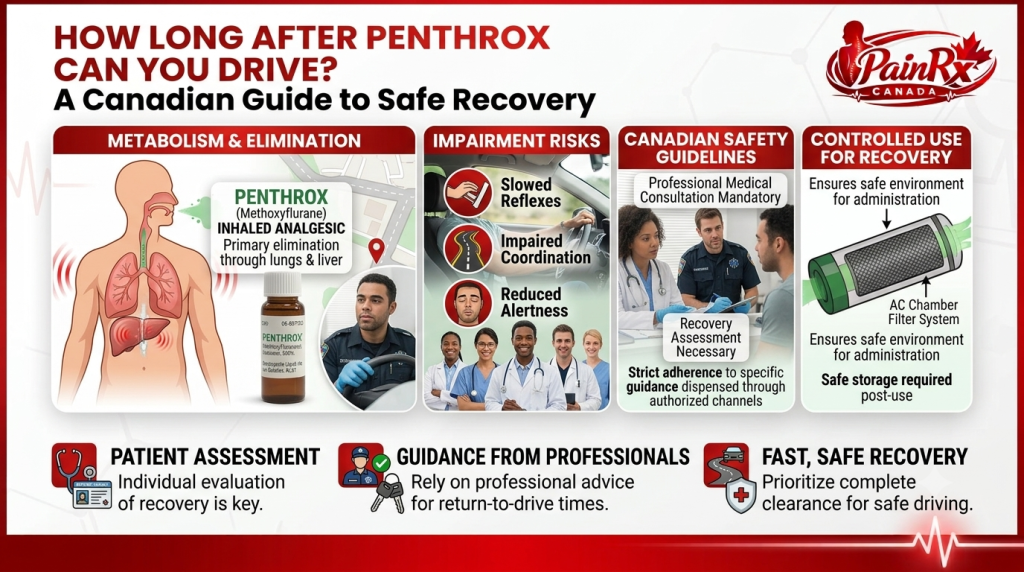
Imagine this scenario: You have just been treated in a Canadian emergency department for a painful injury, such as a broken ankle or a dislocated shoulder. The medical team used Penthrox—the “green whistle”—to provide rapid, non-opioid pain relief while they assessed your condition and performed necessary procedures. Now, you are being discharged. Your car is in the hospital parking lot, and you are eager to get home. But is it safe to get behind the wheel?
This is a crucial question that many Canadians face after receiving emergency care. The answer is not simply “yes” or “no.” It requires a careful understanding of how Penthrox affects your body, how long those effects last, and what the legal and safety implications are for driving in Canada.
This comprehensive guide will provide you with all the information you need to make a safe and informed decision about driving after receiving Penthrox. We will explore the drug’s duration of action, the factors that influence your recovery, the legal landscape in Canada, and practical recommendations for patients and caregivers.
Understanding Penthrox and Its Effects
Before we can answer the driving question, it is helpful to revisit what Penthrox is and how it works. As we have discussed in previous guides, Penthrox is an inhalational analgesic containing the active ingredient methoxyflurane. It is used for the short-term management of moderate to severe acute pain from trauma or injury.
One of the key advantages of Penthrox is that it provides rapid pain relief without the heavy sedation and respiratory depression associated with opioid medications like morphine or fentanyl. Patients often remain awake, alert, and communicative while using the device. However, this does not mean there are no effects that could impair driving ability.
How Penthrox Affects the Body and Mind
While Penthrox is a non-opioid, it still acts on the central nervous system to block pain signals. This can result in several effects that are relevant to driving safety:
- Drowsiness: Some patients experience mild to moderate drowsiness after using Penthrox. This is a common side effect and can significantly impair reaction times and decision-making.
- Dizziness and Light-headedness: These sensations can affect balance, coordination, and the ability to focus on the road.
- Reduced Cognitive Function: Even if you feel alert, your cognitive processing speed may be slightly reduced. This can affect your ability to quickly assess traffic situations.
- Nausea: While not directly related to driving, nausea can be a distraction and impair your ability to concentrate.
- Residual Pain or Injury: It is also important to consider that the injury itself may affect your ability to drive safely. For example, a broken leg or arm may make it physically impossible to operate the vehicle properly.
The critical point is that Penthrox is not a “clearance” drug. It does not instantly wear off the moment you stop inhaling.
Duration of Effects: How Long Does Penthrox Stay in Your System?
The effects of Penthrox are relatively short-lived, but they do not disappear immediately. The drug has a rapid onset (within 2-4 minutes) and a short duration of action for pain relief. However, the side effects, particularly drowsiness and dizziness, can persist for some time after you have stopped using the device.
Here is a general timeline:
| Timeframe | What Happens |
|---|---|
| During Use | Maximum analgesic effect. Patient may experience drowsiness, dizziness, and mild euphoria. |
| 0-30 Minutes After Use | Pain relief begins to fade. Side effects like drowsiness and dizziness often persist. |
| 1-2 Hours After Use | Most side effects have subsided for many patients. However, residual effects can still occur. |
| 4-6 Hours After Use | The drug has been largely metabolised and cleared from the body for most individuals. |
It is important to understand that these are general guidelines. Individual responses can vary significantly.
How Long After Penthrox Can You Drive?
This is the central question, and the answer from medical professionals and health authorities is clear: you should not drive for at least 24 hours after receiving Penthrox, unless you have been cleared by a healthcare professional.
This recommendation is not arbitrary. It is based on the principle of “better safe than sorry” and is consistent with advice given for other medications that can cause sedation or impairment.
General Recommendations from Health Canada
While Health Canada does not have a specific, legally binding timeframe for driving after Penthrox, its general guidance on drugs and driving applies. Health Canada advises that patients should not drive or operate machinery if they are taking a medication that causes drowsiness, dizziness, or any other impairment. Since Penthrox can cause these effects, the safe approach is to avoid driving for a minimum of 24 hours.
Clinical Guidelines for Healthcare Professionals
Hospitals and healthcare providers across Canada typically provide discharge instructions that explicitly address driving. These instructions are based on clinical guidelines and best practices. You will commonly hear the following advice:
- “Do not drive for 24 hours after receiving Penthrox.”
- “Do not operate heavy machinery or make important decisions for 24 hours.”
- “Arrange for a responsible adult to drive you home.”
These instructions are given to protect you and others on the road.
Factors That Influence the Driving Timeline
While 24 hours is a general rule, several factors can influence how long you should wait before driving. You should consider your own situation carefully:
| Factor | How It Affects Driving Timeline |
|---|---|
| Age | Older adults may metabolise the drug more slowly and experience prolonged effects. |
| Weight and Metabolism | Individuals with slower metabolisms may take longer to clear the drug. |
| Liver and Kidney Function | These organs are responsible for clearing the drug; impairment can prolong effects. |
| Other Medications | Taking other medications that cause drowsiness (e.g., pain relievers, sleep aids) can compound the effects. |
| Severity of Injury | A significant injury may limit your physical ability to drive safely. |
| Individual Sensitivity | Some people are simply more sensitive to the effects of medications. |
| Alcohol Consumption | Alcohol can amplify the sedative effects of Penthrox. |
It is always safest to err on the side of caution. If you have any doubt, do not drive.
Legal and Safety Considerations in Canada
Beyond the medical advice, there are important legal and safety considerations for driving after receiving Penthrox. In Canada, driving is a privilege, and you have a legal responsibility to ensure you are fit to drive.
Is It Illegal to Drive After Penthrox?
Driving after taking Penthrox is not explicitly illegal in the same way that driving over the legal blood alcohol limit is. However, it can become illegal under several circumstances:
- Criminal Code Offence: Under the Criminal Code of Canada, it is a criminal offence to operate a motor vehicle while your ability to do so is impaired by a drug. If you are involved in an accident and it is determined that Penthrox impaired your driving, you could face charges.
- Provincial Offences: Most provinces have laws against driving while impaired by a drug. This includes prescription medications.
- Liability: If you cause an accident while impaired, you could be held civilly liable for any damages or injuries. Your insurance company may also refuse to cover you.
What the Law Says About Drug-Impaired Driving
Canada has strict laws against drug-impaired driving. Police officers are trained to recognize signs of impairment from drugs, including prescription medications. If an officer suspects you are impaired, they can:
- Conduct a Standardized Field Sobriety Test (SFST).
- Use an approved drug screening device (e.g., a saliva test) to detect the presence of drugs.
- Demand a blood or urine sample.
- Charge you with impaired driving.
While Penthrox is not a drug that is typically tested for in roadside saliva tests, the impairment it causes can still be detected through physical and cognitive tests.
Insurance Implications
Your car insurance policy likely has a clause requiring you to drive safely and legally. If you drive while impaired by Penthrox and are involved in an accident, your insurance company may:
- Deny your claim.
- Cancel your policy.
- Hold you personally liable for damages.
This is a significant financial risk that you should not take.
Practical Advice for Patients and Caregivers
The best way to ensure safety is to plan ahead. If you know you are going to a hospital or clinic where you might receive Penthrox, make arrangements in advance.
Before Receiving Penthrox
- Arrange a Ride: If you are going to the hospital for a potentially painful procedure, ask a family member or friend to drive you home.
- Use Public Transport: Consider taking public transport or a taxi to the hospital.
- Keep the Hospital’s Number Handy: Know how to contact the hospital if you need to arrange for a ride home.
After Receiving Penthrox
- Follow Discharge Instructions: Your healthcare provider will give you specific instructions. Follow them carefully.
- Do Not Drive: Even if you feel fine, wait the recommended time (at least 24 hours).
- Rest: Give your body time to recover. Rest at home for the remainder of the day.
- Avoid Alcohol: Do not drink alcohol for at least 24 hours, as it can increase the sedative effects.
- Monitor Your Symptoms: If you feel dizzy or drowsy, these are signs that you are still not fit to drive.
What to Say to Your Healthcare Provider
Be honest with your healthcare provider about your plans. They can offer you the best advice. You might ask:
- “How long will I need to avoid driving?”
- “Are there any other activities I should avoid?”
- “What side effects should I watch for?”
Special Considerations for Different Patient Groups
- Older Adults: If you are over 65, you may need to wait longer than 24 hours before driving. Discuss this with your doctor.
- Commercial Drivers: If you drive professionally (e.g., a truck driver), you should follow the strictest guidelines. You may need to wait several days or obtain medical clearance before returning to work.
- Patients with Comorbidities: If you have liver or kidney disease, the drug may be cleared more slowly. You should wait longer before driving.
Frequently Asked Questions
To further assist Canadians, here are answers to the most frequently asked questions about driving after Penthrox.
Can I Drive 12 Hours After Penthrox?
No, you should not drive 12 hours after Penthrox. The general recommendation is to wait at least 24 hours. While the drug may be mostly cleared from your system, residual effects can still impair your driving ability. It is simply not worth the risk.
Can I Drive if I Only Took One Breath?
Even if you took only one inhalation, you could still experience side effects like drowsiness or dizziness. The 24-hour recommendation is based on the principle of safety. The amount you inhaled is less relevant than the effect it has on you. If you have any doubt, do not drive.
Is It Safe to Drive the Next Morning?
If you received Penthrox in the evening, you might be tempted to drive the next morning. However, you should still exercise caution. Some individuals may feel drowsy or off-balance the next day. Wait the full 24 hours to be safe. Consider your own condition before driving.
Can I Operate Heavy Machinery After Penthrox?
No, you should not operate heavy machinery or power tools for at least 24 hours after receiving Penthrox. The same risks of impairment apply. You should also avoid making important decisions or signing legal documents.
What If I Feel Fine Right Away?
Feeling fine does not necessarily mean you are safe to drive. The effects of medications can be subtle. Your reaction time might be slower without you even realising it. It is always better to wait the full 24 hours, even if you feel completely normal.
Can I Drive if a Doctor Clears Me?
Yes, if a healthcare professional explicitly clears you to drive, you can. However, this would be rare. A doctor would only do this if they were confident that all effects had worn off and that you are physically and mentally capable of driving safely.
Conclusion
The question of how long after Penthrox you can drive is one of the most important safety considerations for patients in Canada. The clear and consistent advice from medical professionals and health authorities is to wait at least 24 hours before getting behind the wheel.
This recommendation is designed to protect you, your passengers, and everyone else on the road. Penthrox, while a valuable and effective pain relief option, can cause side effects such as drowsiness and dizziness that impair your ability to drive safely. Even if you feel fine, the subtle effects of the drug can persist longer than you think.
By planning ahead—arranging for a ride, following discharge instructions, and prioritizing your safety—you can ensure a smooth and safe recovery. Remember, driving is a serious responsibility, and it is never worth taking a risk when your health and safety, and the safety of others, are at stake. When in doubt, always wait it out.
FAQs
1. Can Penthrox affect my coordination and reaction time?
Yes, Penthrox can cause drowsiness and dizziness, which can significantly impair your coordination and reaction time. These effects can last for several hours after you have stopped using the device, making driving dangerous.
2. Should I inform my employer if I received Penthrox?
If your job involves driving, operating machinery, or other safety-sensitive duties, you should inform your employer. You may need to take time off work to ensure you are fully recovered and safe to perform your duties. Some workplaces have specific policies on drug use and impairment.
3. Can I take public transportation after Penthrox?
Yes, taking public transportation is a safe alternative to driving. However, you should still exercise caution. If you feel dizzy or unsteady, ask someone to assist you. It is always better to have a companion with you if possible.
4. Will I be tested for Penthrox if I am pulled over?
While roadside drug tests in Canada typically target cannabis, cocaine, and opioids, police officers can still assess you for impairment. If an officer suspects you are impaired, they can conduct field sobriety tests and potentially demand a blood or urine sample. Driving while impaired by any drug is illegal.
5. What is the safest option for getting home after receiving Penthrox?
The safest option is to have a responsible adult (family member, friend, or caregiver) drive you home. If that is not possible, you can use a taxi, ride-sharing service (like Uber or Lyft), or public transportation. Do not get behind the wheel yourself under any circumstances.