

Pain Medication and Driving: How Long Should You Wait?

Pain medication and driving: How long should you wait? (2026 Safety Guide)
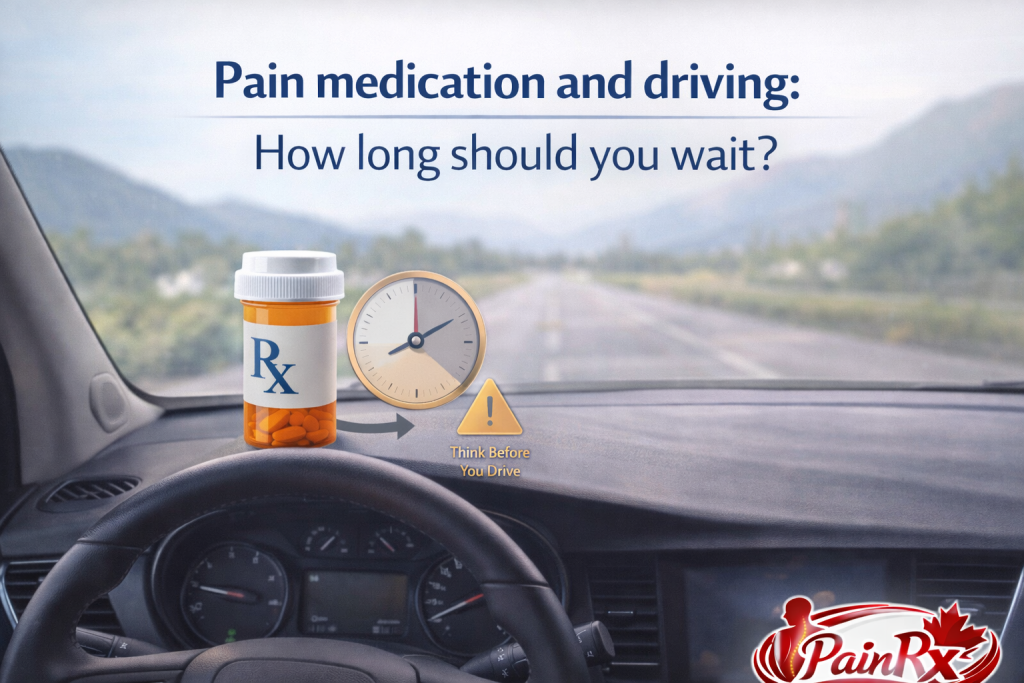
You take your pain medication as prescribed. The pain subsides, and you feel ready to go about your day. Then comes a critical question: is it safe to drive? For millions of Canadians managing pain, this dilemma is a daily reality. The answer is not always simple. It depends on the medication, the dose, your personal tolerance, and the laws of this country. Understanding pain medication and driving how long to wait is not just about following rules. It is about protecting yourself, your passengers, and everyone else on the road.
The Scope of the Problem
Drug-impaired driving is a growing concern in Canada. The percentage of Canadian drivers killed in crashes who test positive for drugs now exceeds those who test positive for alcohol. This is a startling statistic. While much attention focuses on illegal drugs, prescription medications play a significant role. Opioids, benzodiazepines, muscle relaxants, and even some over-the-counter drugs can impair your ability to drive safely.
Impaired driving is the leading criminal cause of death and injury in Canada. Getting behind the wheel while impaired by drugs, including prescription medications, is not only dangerous but also against the law. Trained police officers can determine if you are under the influence and charge you accordingly. You could face license suspension, fines, criminal charges, and even jail time. This makes the question of pain medication and driving how long to wait a legal as well as a medical concern.
How Pain Medications Affect Driving
Pain medications, particularly opioids, affect the central nervous system. They can cause a range of side effects that directly impair driving ability. These include sleepiness, drowsiness, blurred vision, dizziness, slowed movement, difficulty focusing, and nausea.
Opioids such as codeine, tramadol, morphine, oxycodone, and fentanyl are known to cause drowsiness. They impair concentration and judgment. Muscle relaxants can cause similar effects. Even some over-the-counter cold remedies and allergy medicines containing antihistamines can slow reaction time. They can make it hard to think clearly. The combination of multiple medications can amplify these effects significantly.
When you ask pain medication and driving how long to wait, you are really asking how long these effects last. The answer varies widely, but understanding the general timeline is essential.
The Duration of Impairment
Some medications affect your driving for a short time after you take them. For others, the effects can last for several hours and even into the next day. This is a critical point. Many people assume that if they take medication at night, they will be fine to drive in the morning. This is not always true.
For example, some sleep medications containing zolpidem can impair driving ability the next morning. Extended-release formulations are particularly concerning. The same principle applies to pain medications. Long-acting opioids are designed to release medication slowly over many hours. Their effects, including impairment, may persist well into the following day.
Research on cannabis, another substance that impairs driving, shows that effects can last at least five to eight hours in occasional users. While pain medications differ chemically, the principle of prolonged impairment applies.
The Role of Tolerance
One of the most important factors in pain medication and driving how long to wait is your level of tolerance. Tolerance develops when your body adapts to a medication over time. This affects how the drug impacts you.
Studies on patients receiving long-term oral opioid treatment suggest that initial side effects decrease after a few weeks. Sedation, dizziness, and drowsiness often improve. Some patients on stable opioid doses react as fast as medication-free volunteers in driving simulator tests. No significant differences in reaction times were found between older patients receiving opioids and older healthy volunteers.
However, this does not mean long-term opioid therapy is risk-free. Research shows that long-term use does not inevitably impair complex skills. However, the decision to permit driving can only be made on an individual basis. Critical factors include:
- Stable dosage: Driving may be possible when dosage and general condition remain stable.
- Dosage changes: Any changes in dosage, switching to a different opioid, or poor general condition must result in prohibition of driving.
- Individual variation: Response to medication varies greatly between individuals.
The Danger of Combining Substances
A major risk factor for impairment is combining medications with other substances. Research consistently shows that polypharmacy is extremely common in impaired driving cases.
One study found that in cases where codeine or tramadol was detected in drivers, the increased crash risk became non-significant when controlling for co-prescription of other psychoactive substances. In other words, the danger often came from combining medications, not the opioid alone.
Other research paints a stark picture. Of deceased drivers who tested positive for prescription opioids, 30% had elevated blood alcohol and 67% tested positive for other drugs. In one study, polydrug use was present in all but 28 of 486 cases where codeine was found. In 71% of cases, benzodiazepines were also present. Another study found a high odds ratio of fatal crash involvement for drivers using non-alcohol depressants, a category that includes opioids and benzodiazepines.
Alcohol is particularly dangerous when combined with pain medication. Avoid drinking alcohol while using any medication that causes drowsiness. The combination can increase sedative effects dramatically.
The Challenge of Determining Impairment
Unlike alcohol, where blood alcohol concentration provides a rough guide to impairment, there is no simple formula for drugs. Health Canada acknowledges that there is no guidance to drivers about how much cannabis can be consumed before it is unsafe to drive or how long a driver should wait to drive after consuming cannabis. The same is true for pain medication.
The presence of a drug in your system alone does not necessarily mean you are impaired. Individual factors such as metabolism, tolerance, body weight, and overall health all play a role. This uncertainty makes the question of pain medication and driving how long to wait particularly challenging.
Practical Guidelines for Patients
Given the complexity, how should you approach driving while on pain medication? Here are practical steps to protect yourself and others.
First, start low and go slow. When you begin a new medication or a new dose, do not drive. Take the medication for the first time when you do not need to drive. Observe how it affects you over several days.
Second, read all labels and warnings. For prescription medications, follow the directions and warnings on packaging. For over-the-counter medicines, always follow directions for use and understand the warnings on the Drug Facts label.
Third, talk to your healthcare providers. Your doctor or pharmacist can tell you about known side effects of medications, including those that interfere with driving. You can request printed information about side effects for any new medicine. Tell your healthcare provider about all the products you are taking. Let them know about any reactions you experience.
Fourth, be honest with yourself. Your doctor has a duty to inform you of possible dangers. However, you have a responsibility for critical self-examination. If you feel drowsy, dizzy, or less alert, do not drive.
The Stabilization Period
For those starting long-term opioid therapy, experts recommend a strict approach. From a medical point of view, driving must be prohibited until a stable opioid dosage is reached. This stabilization period allows your body to adapt and side effects to diminish.
Once stable, some patients may be able to drive safely. However, any changes in dosage, switching to a different opioid, or poor general condition must result in prohibition of driving. Continuous monitoring and documentation are essential.
When in doubt, special performance testing may be considered. Some clinics offer driving simulation or cognitive testing to assess fitness to drive objectively.
Cannabis and Driving: A Related Concern
While this article focuses on pain medication, cannabis is relevant for two reasons. First, some patients use medical cannabis for pain. Second, the principles of impairment apply broadly.
In Canada, cannabis is legal but driving while impaired by cannabis is illegal. Quebec has even introduced a zero tolerance principle for drugs. It makes it illegal to drive with any detectable presence of cannabis or another drug in the body.
Research shows that cannabis consumption impairs attention and concentration. It impairs the ability to follow traffic signals. It impairs the ability to avoid obstacles and maintain lane position. Reaction time increases. Decision-making speed slows. Psychomotor coordination suffers. These effects are strikingly similar to those caused by opioid pain medications. The same caution applies.
How Police Detect Drug-Impaired Driving
Canadian police are trained to detect drug-impaired driving. They use Standardized Field Sobriety Testing and Drug Recognition Experts to evaluate drivers. Following a legal roadside stop, police can demand an oral fluid sample. They can conduct sobriety tests if they suspect you are driving under the influence of a drug.
The consequences of being charged are severe. You can have your license suspended. You can face fines, criminal charges, and even jail time. Ignorance is not a defense. The responsibility to know how your medication affects you rests with you, the driver.
Creating a Personal Safety Plan
Here is a simple plan to ensure you never drive while impaired.
- Know your medication. Learn the name, dose, and potential side effects of every medication you take.
- Track your response. Pay attention to how each dose affects you. Keep a simple log if helpful.
- Plan ahead. If you need to drive, time your medication accordingly. If you cannot be certain of your fitness, arrange alternative transportation.
- Have backup options. Identify a friend, family member, taxi service, or rideshare option you can call if you feel impaired.
- Review regularly. Whenever your medication changes, revisit your safety plan.
PainRx Canada: Your Partner in Responsible Pain Management
At PainRx Canada, we believe that effective pain management and public safety go hand in hand. We are committed to providing you with the information you need to make responsible decisions.
Our pharmacists can discuss the potential side effects of your medications. We can review your full medication profile for dangerous combinations. We can advise on timing and dosage considerations. We can also provide written information about side effects and driving precautions.
If you ever have questions about pain medication and driving how long to wait, ask us. We are here to help you manage your pain safely and responsibly.
Conclusion: When in Doubt, Don’t Drive
The question of pain medication and driving how long to wait does not have a one-size-fits-all answer. It depends on the specific drug, your dose, your tolerance, your metabolism, and other medications you take. What works for your neighbour may not work for you.
The safest approach is conservative. When starting a new medication, do not drive until you understand its effects. When changing doses, observe how your body responds. If you feel any impairment whatsoever, do not get behind the wheel. If you combine medications, be especially cautious. And if you are ever in doubt, choose not to drive.
Your life and the lives of others depend on your judgment. Take the time to know your body, know your medication, and make the right choice every time.
Frequently Asked Questions
1. How long after taking codeine can I drive?
There is no universal answer. Codeine affects individuals differently. First-time users should not drive for at least 24 hours until they understand their response. Regular users on stable doses may be less impaired, but caution is still essential. Never drive if you feel drowsy or less alert.
2. Can I drive if I take my pain medication at night?
Not necessarily. Some medications, especially long-acting or extended-release formulations, can cause impairment that lasts into the next day. Morning drowsiness is a red flag. Test your response on a non-driving day before assuming you are safe.
3. Is it safe to drive if I don’t feel drowsy?
Drowsiness is not the only sign of impairment. Medications can slow reaction time, impair judgment, and reduce coordination even when you feel wide awake. Antihistamines, for example, can cause impairment without noticeable drowsiness. Be honest with yourself and consider objective testing if uncertain.
4. What are the legal consequences of driving while impaired by medication?
In Canada, drug-impaired driving is a criminal offense. You can face license suspension, fines, criminal charges, and jail time. A conviction can affect your employment, travel, and reputation. The risks far outweigh any perceived convenience.
5. Can my doctor help me determine if I can drive safely?
Yes. Your doctor can advise on the expected effects of your medication. However, they cannot guarantee your safety in real-world conditions. The ultimate responsibility rests with you. If your doctor advises against driving, follow that advice. If you are unsure, ask for a referral for objective fitness-to-drive testing.