

How To Sleep with Lower Back Pain: Positions and Remedies.

How to sleep with lower back pain: Positions and remedies.
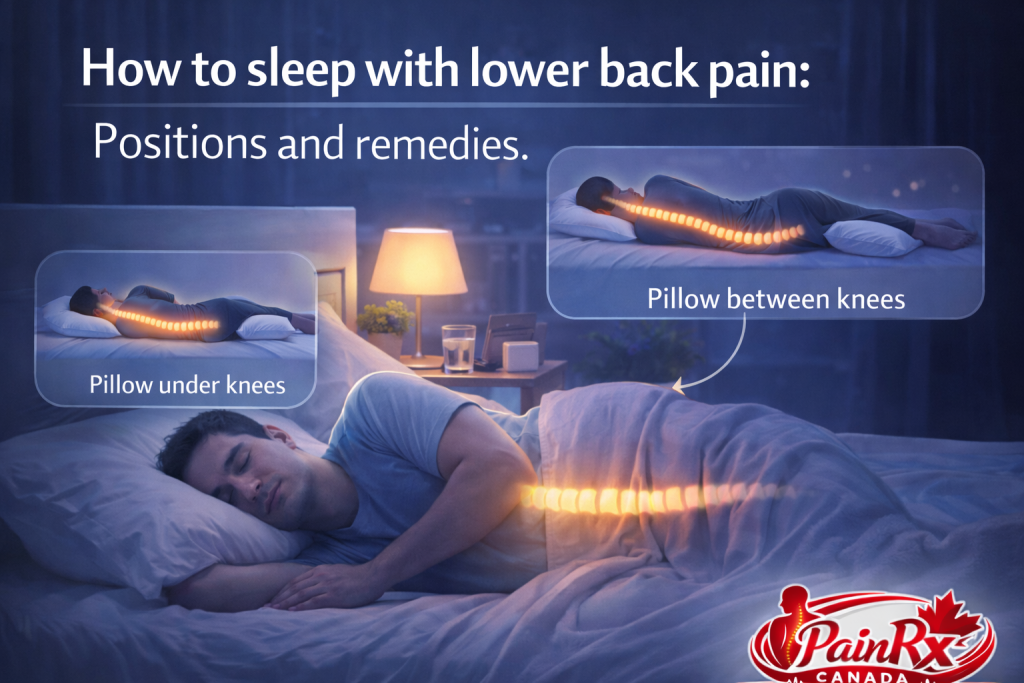
The sun has set. Your head hits the pillow. You are exhausted, both mentally and physically. Yet sleep will not come. Every time you try to get comfortable, your lower back sends a sharp reminder of its presence. You toss. You turn and you fluff the pillow again. Nothing works. This scene plays out in millions of Canadian bedrooms every night. The connection between back pain and sleep loss is powerful and cruel. Pain keeps you awake. Lack of sleep lowers your pain tolerance. It becomes a vicious cycle. Breaking that cycle requires strategy. Learning how to sleep with lower back pain is essential for your healing and your sanity.
The Vicious Cycle of Pain and Sleeplessness
Sleep is when your body repairs itself. Tissues regenerate. Inflammation calms down. Pain signals quiet. However, when pain is present, it acts as an alarm clock. It jolts you awake or prevents you from falling asleep in the first place.
Research shows a bidirectional relationship. Poor sleep increases pain sensitivity. It makes you feel pain more acutely the next day. This creates a feedback loop. The more pain you have, the worse you sleep. The worse you sleep, the more pain you feel. Breaking this loop is a priority. You cannot cure your back pain in one night. However, you can create conditions that promote rest. Understanding how to sleep with lower back pain is the first step toward healing.
Why Your Sleeping Position Matters
During the day, you can consciously adjust your posture. You can sit up straight. You can avoid heavy lifting. At night, you lose that control. You spend hours in positions you do not choose. If those positions stress your spine, you wake up stiff and sore.
The goal of any sleeping position is spinal neutrality. This means maintaining the natural curves of your spine. You want your neck, mid-back, and lower back to hold the same alignment they would if you were standing straight. When you achieve this, muscles can relax. Joints are not compressed. Discs can rehydrate. Finding this neutral position is the essence of how to sleep with lower back pain.
The Best Position: Back Sleeping with Support
For many lower back pain sufferers, sleeping on the back is ideal. This position distributes your weight evenly. It prevents unnatural twisting. However, there is a catch. Lying flat can create a gap between your lower back and the mattress. Your back muscles must work all night to fill that gap.
The solution is strategic pillow placement. Place a pillow under your knees. This slightly elevates your legs. It tilts your pelvis backward. This natural tilt flattens the lower back against the mattress. The gap disappears. Muscles can relax completely. You may also need a small, rolled towel or a cervical pillow under your neck to maintain head support. This combination creates spinal alignment. It is a top recommendation for how to sleep with lower back pain.
The Second Best Position: Side Sleeping with a Pillow
Back sleeping does not work for everyone. Some people snore more on their backs. Others simply find it uncomfortable. The next best option is side sleeping.
However, side sleeping creates its own challenge. Your top leg drops down. This rotates your pelvis and twists your lower spine. Over hours, this twist creates strain. The fix is simple and effective. Place a firm pillow between your knees. This keeps your top leg elevated. It prevents the pelvis from rotating. Your spine stays straight. Choose a pillow thick enough to fill the space between your knees. A body pillow or a specialized knee pillow works well. Also, ensure your head pillow is the right height. It should fill the space between your shoulder and your head, keeping your neck straight. This method is essential knowledge for how to sleep with lower back pain.
Positions to Avoid
Just as some positions help, others hurt. Learning what to avoid is as important as learning what to do.
Stomach sleeping is the worst position for lower back pain. It flattens the natural curve of your spine. You must turn your head to one side for hours, straining your neck. It places pressure on your joints. If you cannot break the stomach sleeping habit, place a thin pillow under your hips. This slightly elevates the pelvis and reduces some strain. However, transitioning away from stomach sleeping is better long term.
Fetal position can also cause problems. Curling up too tightly compresses the front of your spine. It can restrict breathing. If you sleep on your side, keep your legs relatively straight, not curled into your chest. Use the knee pillow to maintain alignment.
The Role of Your Mattress
You can use perfect positioning, but your mattress may sabotage you. A mattress that is too soft allows your hips to sink. This twists your spine. A mattress that is too hard creates pressure points and fails to support natural curves.
The ideal mattress for back pain is medium-firm. It should provide support while contouring to your body. It should keep your spine in a straight line when viewed from the front and maintain its curves when viewed from the side. If you cannot replace your mattress, consider a mattress topper. A medium-firm topper can transform a too-soft or too-hard surface. When learning how to sleep with lower back pain, your mattress is your foundation. Do not ignore it.
Preparing for Sleep: Evening Routine
Your sleep position matters, but so does what you do before bed. An evening routine signals your body that it is time to rest. It also prepares your muscles for sleep.
Heat therapy is excellent before bed. A warm bath or shower relaxes tight muscles. It increases blood flow to sore areas. Add Epsom salts to your bath. The magnesium can absorb through your skin and help muscles relax. If a bath is not possible, use a heating pad on your lower back for 15 to 20 minutes before bed.
Gentle stretching can also help. Avoid intense exercise late at night. However, light, gentle stretches for your lower back, hamstrings, and hips can release tension. Hold stretches gently. Do not bounce. The goal is relaxation, not intensity.
Medication timing matters too. If you take pain medication, discuss timing with your doctor or pharmacist. Taking medication too early may mean it wears off in the middle of the night. Taking it too late may not allow enough time for it to work. Optimizing timing is a key part of how to sleep with lower back pain.
Creating a Sleep Sanctuary
Your environment affects your ability to sleep. A room that is too hot, too bright, or too noisy disrupts rest. This is true for everyone, but especially for those in pain.
Keep your bedroom cool. The ideal sleep temperature is around 18 to 20 degrees Celsius. Use blackout curtains to block light. Consider white noise or a fan to mask disruptive sounds. Remove screens from your bedroom. The blue light from phones and tablets interferes with melatonin production. This hormone regulates sleep. Charge your phone in another room. Create a space dedicated only to rest. This sanctuary mindset supports all your efforts in how to sleep with lower back pain.
The Psychological Aspect: Racing Thoughts
Pain has a psychological component. When you lie in bed hurting, your mind often races. You worry about the next day. You feel frustrated about being awake. This anxiety amplifies pain.
Mindfulness and deep breathing can help. Focus on your breath. Inhale slowly for four counts. Hold for four. Exhale for four. This activates the parasympathetic nervous system, the “rest and digest” mode. It counters the “fight or flight” stress response. There are apps and guided meditations specifically for pain-related insomnia. Do not underestimate the power of calming your mind. It is an essential tool for how to sleep with lower back pain.
When to Seek Help for Sleep
Occasional sleeplessness due to a flare-up is normal. However, chronic sleep loss is harmful. It affects your immune system, your mood, and your pain levels. If you consistently struggle despite good positioning and routines, seek help.
Your doctor may recommend a sleep study. You could have an underlying sleep disorder like sleep apnea, which is more common in people with chronic pain. Your pharmacist can review your medications. Some drugs can interfere with sleep. Others may be optimized for better nighttime coverage. Do not suffer in silence. Sleep is too important.
Natural Remedies and Supplements
Some people find relief with natural sleep aids. Always discuss these with a pharmacist first, as they can interact with medications.
Melatonin is a hormone that regulates sleep-wake cycles. It can be helpful for falling asleep, especially if your routine is disrupted. It is not a strong pain reliever, but better sleep helps pain.
Magnesium supplements may help muscle relaxation. Some research suggests magnesium can improve sleep quality. It is available in various forms. Your pharmacist can recommend the right type and dose.
CBD oil is popular for both pain and sleep. Early research is promising, though more studies are needed. If you consider CBD, buy from a reputable source. Discuss it with your healthcare team. It is part of a comprehensive approach to how to sleep with lower back pain.
PainRx Canada: Your Partner in Restorative Sleep
At PainRx Canada, we understand that pain does not clock out at night. It follows you to bed. That is why we take a holistic approach to your care. We do not just provide medications. We provide guidance.
If sleep eludes you because of back pain, talk to us. We can review your current pain management plan. We can suggest timing adjustments for your medication. Can recommend topical products for nighttime relief. We can advise on supplements and their interactions. Your rest matters to us. We are here to help you find the peace you deserve.
Conclusion: Rest Is Possible
Lower back pain can make bedtime feel like a battleground. However, you have more control than you think. The right sleeping position creates spinal alignment. Strategic pillows support your body. A calming routine prepares your muscles and mind. Your environment can become a sanctuary.
Sleep is not a luxury. It is a biological necessity. It is when your body heals. By applying these strategies, you can break the cycle of pain and sleeplessness. You can wake up feeling restored, not defeated. Now you know how to sleep with lower back pain. Tonight, put that knowledge to work.
Frequently Asked Questions
1. What is the absolute best sleeping position for lower back pain?
For most people, sleeping on your back with a pillow under your knees is best. This maintains spinal alignment. Side sleeping with a pillow between your knees is an excellent alternative.
2. How many pillows do I need for back pain relief?
You typically need two or three. One for your head (proper height). One under your knees if back sleeping. One between your knees if side sleeping. A body pillow can serve multiple purposes.
3. Should I use a heating pad or ice pack before bed?
Heat is usually better before bed. It relaxes muscles and increases blood flow. Ice is more for acute inflammation after activity. A warm bath or shower is also excellent preparation for sleep.
4. Can a new mattress really cure my back pain?
A mattress alone rarely cures back pain. However, a proper mattress combined with good sleeping positions creates the right conditions for healing. It is one part of a comprehensive approach.
5. When should I take my pain medication for best sleep results?
This depends on your specific medication. Some are short-acting, others long-acting. Discuss timing with your pharmacist. They can help you plan doses to cover the night without interrupting your sleep cycle.