
What Is a “Limited Use” Medication n Ontario?

What is a “Limited Use” medication in Ontario?
If you live in Ontario and have ever filled a prescription at a pharmacy, you may have encountered a confusing term. Your pharmacist might have mentioned a “Limited Use” code. Perhaps your doctor wrote something on the prescription that looked like a secret code. For many Ontarians, this is a mystery. Understanding what is a Limited Use medication in Ontario can save you significant money. It can also determine whether your medication is covered at all. This guide will demystify LU codes, explain how they work, and help you navigate the Ontario Drug Benefit system with confidence.
The Ontario Drug Benefit: A Quick Overview
Before diving into Limited Use, we must understand the bigger picture. The Ontario Drug Benefit (ODB) program provides prescription drug coverage for specific groups of people. These groups include seniors aged 65 and older. They include residents of long-term care homes. Include people receiving social assistance. They also include individuals under 24 without private insurance. The program covers thousands of drug products. However, it does not cover everything automatically.
The ODB maintains a formulary. This is a list of all the medications they are willing to cover. Some drugs are listed as “General Benefit.” These are covered for anyone who meets the criteria, no questions asked. Other drugs are listed as “Limited Use.” These require extra justification. Understanding what is a Limited Use medication in Ontario starts with understanding this formulary distinction.
Defining Limited Use Medications
A Limited Use medication is a drug that the Ontario government will cover, but only under specific circumstances. These drugs are often more expensive than alternatives. They may have risks that require careful patient selection. They may be newer and less proven. The government wants to ensure they are used only when appropriate.
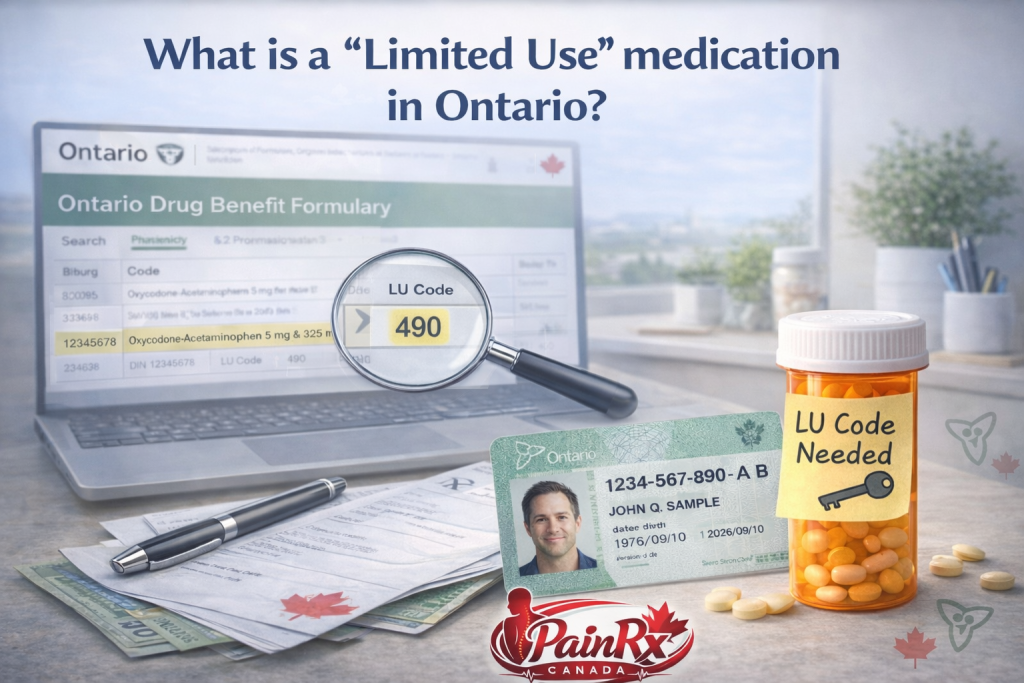
For each Limited Use drug, the ODB publishes specific criteria. These criteria outline exactly which patients should receive the drug. For example, a pain medication might be Limited Use for patients who have failed other treatments first. An antibiotic might be Limited Use for specific resistant infections. When a doctor prescribes one of these drugs, they must confirm that the patient meets the criteria. They do this by including a special code on the prescription. That code is the Limited Use code, or LU code.
How LU Codes Work
The Limited Use system uses three-digit numeric codes. Each code corresponds to a specific set of clinical criteria. When your doctor writes a prescription for a Limited Use drug, they must include the correct code. The code tells the pharmacy and the ODB why you qualify for coverage.
Here is an example. Imagine a pain medication called “PainRelief-X” is on the Limited Use list. The ODB might have criteria that say: “For patients with chronic neuropathic pain who have not responded to two other first-line treatments.” The LU code for this might be 123. Your doctor must write “LU Code 123” on the prescription. If they do not, the pharmacy cannot bill the ODB. You would have to pay full price or the pharmacy would need to contact the doctor for the code. This is why understanding what is a Limited Use medication in Ontario is so practical. It directly affects your wallet.
Why Do Medications Become Limited Use?
Patients often wonder why some drugs are harder to access. The reasons are rooted in responsible healthcare spending and patient safety.
First, cost control is a major factor. Newer medications are often expensive. By limiting them to specific patients, the government ensures they get the best value. Patients who can use cheaper alternatives first must try those. Second, there is a safety component. Some drugs have serious side effects. Limiting their use ensures they go only to patients who truly need them. Third, there is clinical appropriateness. Some drugs work best for specific subtypes of a condition. Limited Use criteria help match the right drug to the right patient.
This system is not meant to be punitive. It is designed to balance access, safety, and sustainability. When you learn what is a Limited Use medication in Ontario, you learn how the province manages its drug budget responsibly.
Common Pain Medications with LU Status
Many pain medications in Ontario fall under Limited Use rules. This is especially true for newer or more expensive options. Here are some examples you might encounter.
- Certain opioids: Some long-acting opioids may require LU codes for specific pain conditions.
- Neuropathic pain agents: Drugs like gabapentinoids or specific nerve pain medications often have LU criteria.
- Topical pain relievers: Prescription-strength patches or creams may be Limited Use.
- Combination products: Newer formulations that combine existing drugs may require justification.
- Specialty pain medications: Drugs for complex regional pain syndrome or specific neuropathies.
If your doctor prescribes a pain medication and mentions a “special approval,” ask about LU status. Knowing what is a Limited Use medication in Ontario helps you ask the right questions.
The Role of Your Pharmacist
Pharmacists play a crucial role in the Limited Use system. When you bring a prescription to the pharmacy, the pharmacist checks the ODB formulary. If the drug is Limited Use, they look for the LU code on the prescription. If the code is missing, they cannot process the claim.
At this point, a good pharmacist will take action. They will contact your doctor’s office to request the code. They will explain why it is needed. This is a common occurrence. Pharmacists do this daily. However, it can delay your prescription. It might take hours or even a day to reach the doctor. If you are in pain, this delay is frustrating. That is why it helps to know in advance. When you understand what is a Limited Use medication in Ontario, you can remind your doctor to include the code. You save yourself time and frustration.
The Exceptional Access Program: A Step Beyond
Limited Use is not the only special approval pathway. Ontario also has the Exceptional Access Program (EAP). This is for drugs that are not on the formulary at all. These are medications the province does not usually cover. However, in exceptional circumstances, a patient might need one.
The EAP requires even more paperwork. Your doctor must submit a request to the government. They must explain why you need this specific drug. They must provide medical evidence. This process can take weeks. It is reserved for rare situations. Limited Use is much simpler. It is a streamlined process for drugs that are covered, but only under certain conditions. Understanding what is a Limited Use medication in Ontario helps you distinguish it from the more complex EAP.
How to Find LU Codes
LU codes are not secret. They are publicly available information. However, finding them requires knowing where to look. The Ontario Drug Benefit Formulary is published online. It is a searchable database. You can look up any drug by name or DIN. The listing will show if it is Limited Use. It will list the specific LU codes and their criteria.
Your doctor has access to this information through their prescribing software. Most modern systems automatically prompt the doctor when they prescribe a Limited Use drug. The system may even suggest the correct code based on the patient’s history. However, technology is not perfect. Doctors sometimes override the prompts or miss them. Being an informed patient helps. When you ask your doctor, “Is this a Limited Use drug? What is the code?” you become a partner in your care. You are demonstrating knowledge about what is a Limited Use medication in Ontario.
What Happens If You Pay Out-of-Pocket?
Sometimes, patients choose not to wait for the LU code. They might pay out-of-pocket for the medication. This is their right. You can always choose to pay cash for any prescription.
However, this is rarely the best financial decision. Limited Use drugs are often expensive. They are on the list precisely because they cost more. Paying out-of-pocket could mean spending hundreds of dollars. Waiting for the LU code means paying only your co-pay or deductible. For Ontario seniors, this could be as little as $2 to $6. The savings are substantial. Understanding what is a Limited Use medication in Ontario helps you avoid unnecessary expenses. Always ask your pharmacist about coverage options before paying cash.
Private Insurance and Limited Use
What if you have private insurance through your employer? Does Limited Use still matter? The answer is: it depends. Private insurers have their own formularies. Some follow the ODB guidelines closely. Others have their own rules.
If your private insurance denies coverage for a drug, it might be because they consider it “limited use” in their own system. They may require prior authorization. This is similar to Ontario’s LU process. Your doctor may need to submit paperwork to your insurer. The good news is that if the ODB covers a drug as Limited Use, many private insurers will follow suit. They recognize the government’s clinical judgment. However, always check with your insurer directly. Understanding what is a Limited Use medication in Ontario also helps you navigate private insurance conversations.
Tips for Patients: Navigating LU Successfully
Here are practical tips for dealing with Limited Use medications in Ontario.
- Ask at the appointment: When your doctor prescribes a new medication, ask: “Is this a Limited Use drug? Do I need a code?”
- Check the prescription: Before leaving the doctor’s office, look at the prescription. Do you see a three-digit code? If not, ask again.
- Inform your pharmacist: When dropping off the prescription, mention that you discussed LU status with your doctor. This alerts the pharmacist.
- Be patient if delays occur: If the code is missing, the pharmacist must call. This takes time. Plan ahead and do not wait until you are out of medication.
- Know your alternatives: If the LU process is too slow, ask if there is a general benefit alternative you can use temporarily.
PainRx Canada: Your Ontario Pharmacy Partner
At PainRx Canada, we serve patients across Ontario every day. We understand the Ontario Drug Benefit inside and out. Our pharmacists are experts in Limited Use medications. When you order from us, we check every prescription for LU requirements. If a code is missing, we handle the legwork. We contact your doctor. We explain what is needed. Do this so you do not have to stress.
We also educate our patients. We want you to understand what is a Limited Use medication in Ontario. Knowledge empowers you. It makes you a better advocate for your health. Whether you are a senior, a disability support recipient, or anyone covered by ODB, we are here to help. Your savings and your health are our priorities.
Conclusion: Demystifying the System
The Ontario drug system can feel complex. Limited Use codes seem like another layer of bureaucracy. However, they serve an important purpose. They ensure expensive medications go to patients who truly need them. Protect the sustainability of our public drug system. They also guide doctors toward appropriate prescribing.
Now you know the truth. Limited Use is not a barrier. It is a pathway. It is how Ontario says, “Yes, we will cover this drug, but let us make sure it is used wisely.” Armed with this knowledge, you can approach your next prescription with confidence. You know what questions to ask. You know what to look for on your prescription. Know that your pharmacist is your ally. Understanding what is a Limited Use medication in Ontario turns confusion into clarity.
Frequently Asked Questions
1. How do I know if my medication is Limited Use?
Ask your doctor or pharmacist. You can also check the online Ontario Drug Benefit Formulary. Search for your medication by name or DIN. The listing will indicate if it is Limited Use and provide the codes.
2. What happens if my doctor forgets the LU code?
The pharmacy will contact your doctor to request the code. This may delay your prescription. To avoid this, remind your doctor to include the code when they write the prescription.
3. Can I get a Limited Use medication without the code?
You can pay for it out-of-pocket. However, the Ontario Drug Benefit will not cover it without the correct code. This could be very expensive. Always try to obtain the code first.
4. Are LU codes the same for all patients?
No. The code depends on your specific clinical situation. Different patients qualify for the same drug under different criteria. Your doctor selects the code that matches your condition.
5. Does private insurance require LU codes?
Private insurers have their own rules. Some accept ODB LU codes as proof of medical necessity. Others require their own prior authorization forms. Check with your insurance provider directly.