
How To Dispose Of Old or Expired Pain Medication Safely.

How to dispose of old or expired pain medication safely.
Open any Canadian medicine cabinet, and you will likely find them. Half-empty bottles of prescription painkillers from a dental surgery years ago. Expired ibuprofen that moved with you three apartments back. Leftover codeine from an old injury you would rather forget. These medications do not just sit there harmlessly. They pose real risks to your family, your community, and the environment. Knowing how to dispose of old or expired pain medication safely is not just a good idea; it is a responsibility. This guide will walk you through the approved Canadian methods, explain why it matters, and help you clean out your medicine cabinet with confidence.
Why Safe Disposal Matters More Than You Think
It is easy to ignore old medications. They are out of sight, tucked away on a high shelf. However, keeping expired or unused pain medication in your home creates several dangers.
First, there is the risk of accidental ingestion. Children, teenagers, or visitors might find the medication and mistake it for something else. Curious toddlers put everything in their mouths. Teenagers facing peer pressure might raid the medicine cabinet. Second, expired medications can lose potency or, in rare cases, change chemical composition and become harmful. Third, there is the environmental factor. When medications are thrown in the trash or flushed down the toilet, they enter our waterways. They can harm aquatic life and eventually contaminate drinking water. Learning how to dispose of old or expired pain medication safely protects your household and the planet.
The Golden Rule: Never Flush Unless Directed
For years, people believed flushing old medication was the safest method. It made the pills disappear instantly. However, we now understand the environmental consequences. Wastewater treatment plants are not designed to remove pharmaceutical compounds. These chemicals pass through and end up in lakes, rivers, and oceans.
There is one exception to this rule. Health Canada and the U.S. FDA maintain a “flush list” of certain powerful opioids that pose such a high risk of accidental overdose that the danger of leaving them in the home outweighs the environmental risk. Medications containing fentanyl, for example, should be flushed immediately if no take-back option is available. For the vast majority of pain medications, however, flushing is not the answer. The safest path is always a pharmacy take-back program.
Option 1: Pharmacy Take-Back Programs (The Best Choice)
The gold standard for medication disposal in Canada is the pharmacy take-back program. Most provincial pharmacies participate in these initiatives. They provide secure bins where you can drop off any unused or expired medication, with no questions asked.
These programs are often free and anonymous. You simply bring your medications in their original containers, walk into the pharmacy, and deposit them into a designated kiosk. The medications are then collected and incinerated at high temperatures, which completely destroys the chemical compounds without harming the environment. Major chains like Shoppers Drug Mart, Rexall, and London Drugs all participate. Independent pharmacies usually do as well. If you are wondering how to dispose of old or expired pain medication safely, this is your answer. It is simple, secure, and environmentally responsible.
Option 2: Municipal Hazardous Waste Events
If you miss the pharmacy hours or prefer a different option, many Canadian cities and towns host hazardous waste collection events. These events accept a wide range of household hazardous waste, including old medications, batteries, paint, and electronics.
Check your municipal government’s website for schedules. Some cities have permanent drop-off depots. Others hold seasonal events in the spring and fall. These programs are regulated by environmental authorities. They ensure your medications are destroyed properly. This option is particularly useful if you are cleaning out the home of a deceased relative or disposing of a large quantity of medication at once.
Option 3: Safe Home Disposal (When You Cannot Get to a Pharmacy)
Sometimes, getting to a pharmacy or waste depot is genuinely difficult. You might live in a remote area. You might have mobility issues. Might need to dispose of medication outside of business hours. In these cases, there is a safe, approved method for home disposal.
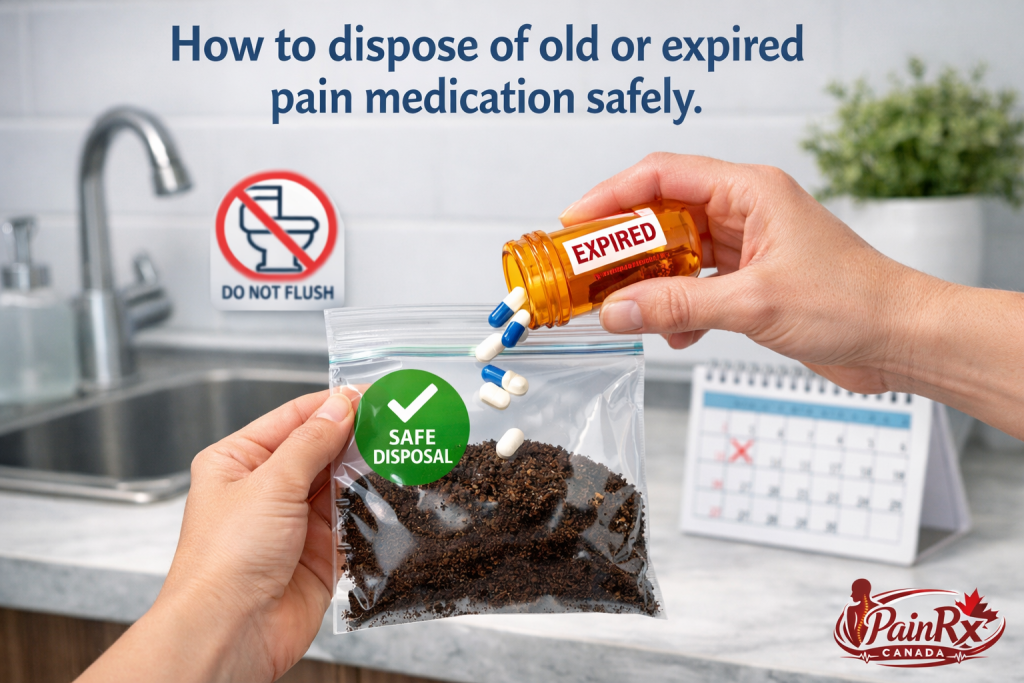
The process is simple but must be followed precisely. First, remove the medication from its original container. Second, mix it with an unappealing substance. Used coffee grounds, cat litter, or dirt work well. This makes the medication less attractive to pets or anyone who might rummage through your trash. Third, place the mixture in a sealed plastic bag or a disposable container with a lid. Fourth, throw the sealed container in your household garbage. Finally, scratch out all personal information on the original prescription bottle and recycle or discard it.
This method is not ideal, but it is far better than flushing or leaving the medication in the cabinet. It is a responsible way to handle the situation when professional disposal is unavailable.
What About Natural Health Products and Vitamins?
The question of how to dispose of old or expired pain medication safely usually focuses on prescription drugs. However, most Canadian households also have expired vitamins, herbal supplements, and natural health products. These require a slightly different approach.
Natural health products are regulated differently than pharmaceuticals. However, they can still pose environmental risks. The same principles apply. Do not flush them. Do not pour liquid supplements down the drain. The best method is to treat them like regular medication. Use a pharmacy take-back program if available. If not, use the mix-with-coffee-grounds method for home disposal. While they may be less potent than opioids, they still introduce foreign compounds into the ecosystem.
The Fentanyl Patch: A Special Warning
Fentanyl patches require special attention. These patches are powerful opioids designed to release medication slowly through the skin. Even after use, significant amounts of active drug remain in the patch. This has led to tragic accidents and intentional misuse.
If you or a family member uses fentanyl patches, safe disposal is critical. The moment a patch is removed, it should be folded in half with the sticky sides together. This traps the remaining medication inside. Then, it should be flushed immediately, according to Health Canada guidelines, unless a pharmacy take-back bin is immediately accessible. The risk of accidental exposure, especially to children and pets, is simply too high. Never throw a used or unused fentanyl patch in the household trash.
Protecting Privacy: Destroying the Label
Many people hesitate to dispose of prescription bottles because the labels contain personal information. Your name, address, prescription number, and doctor’s name are all visible. Identity theft is a valid concern. Fortunately, protecting your privacy is easy when you know how to dispose of old or expired pain medication safely.
After removing the medication for disposal, take a moment to deal with the bottle. Most pharmacy labels are paper-based. You can soak them off, scratch them out with a knife, or use a permanent marker to black out all identifying information. Some people even run the bottle through a shredder if it is made of a certain plastic. Once your information is destroyed, the empty bottle can be recycled with your regular plastics. This simple step prevents your medical history from ending up in the wrong hands.
The Dangers of Sharing or Selling Leftover Meds
A common temptation is to hold onto old pain medication “just in case.” A friend might mention they have a headache. A family member might run out of their own prescription early. You might think you are helping by offering your leftover pills. This is dangerous and illegal.
Prescriptions are written for a specific person, at a specific time, for a specific condition. Your friend might have an allergy you do not know about. They might be taking another medication that interacts badly. They might be pregnant. Sharing prescription medication is a form of drug trafficking under Canadian law. Furthermore, it contributes to the opioid crisis. Many addictions start with leftover pills from a family member’s medicine cabinet. Proper disposal removes this temptation entirely.
How to Conduct a Medicine Cabinet Clean-Out
Ready to tackle your own medicine cabinet? Here is a step-by-step guide to doing it right.
- Gather Everything: Collect all medications from bathrooms, kitchens, and nightstands. Check coat pockets and luggage too.
- Sort by Date: Separate expired medications from current ones. Also separate medications you no longer take.
- Separate Controlled Substances: Put opioids and other controlled drugs in their own pile. These require extra care.
- Choose Your Disposal Method: Locate your nearest pharmacy take-back location. Check their hours.
- Prepare for Transport: Place medications in a bag. Keep them out of reach during transit. Do not leave them in a hot car.
- Dispose and Document: Drop them off. If using home disposal for some items, follow the mixing method exactly.
- Shred Your Privacy: Remove and destroy labels before recycling bottles.
The Environmental Impact: Why It Matters
Canada prides itself on its natural beauty. Our lakes, rivers, and wildlife are part of our national identity. Yet pharmaceutical pollution threatens these resources. Studies have found trace amounts of antibiotics, hormones, and painkillers in Canadian waterways. Fish and other aquatic life are exposed to these compounds. Scientists have observed behavioral changes and reproductive issues in fish exposed to drug residues.
When you learn how to dispose of old or expired pain medication safely, you become part of the solution. Proper disposal through take-back programs ensures these chemicals are incinerated, not washed into the ecosystem. It is a small act with a significant collective impact. Every bottle diverted from the landfill or toilet helps protect the environment for future generations.
Children and Pets: The Immediate Threat
The most immediate reason for safe disposal is the safety of those in your home. Children are naturally curious. They see colorful pills and might think they are candy. Pets, especially dogs, will eat almost anything, including dropped pills.
The consequences can be tragic. A single opioid pill can be fatal to a small child or a dog. Even over-the-counter medications like ibuprofen can cause severe poisoning in pets. By removing unused medications from your home, you eliminate this risk entirely. It is one of the simplest ways to childproof and pet-proof your home.
PainRx Canada: Your Partner in Safe Medication Practices
At PainRx Canada, we care about more than just filling prescriptions. We care about the entire lifecycle of your medication. That is why we educate our patients on how to dispose of old or expired pain medication safely. We want your experience with us to be positive from the first order to the final disposal.
If you have old medications from any pharmacy, not just ours, you can ask us for guidance. We can direct you to the nearest take-back location. We can explain the home disposal method if needed and we can even advise on privacy protection for your labels. Your safety is our mission, and that includes helping you clear out the clutter responsibly.
Conclusion: A Small Action with Big Impact
Cleaning out your medicine cabinet might feel like a minor chore. However, the act of disposing of old pain medication safely carries significant weight. It protects children and pets from accidental poisoning. Prevents unused opioids from fueling addiction. It safeguards our rivers and lakes from pharmaceutical pollution. It also gives you peace of mind.
Take an hour this weekend to go through your medications. Gather what is expired or unneeded. Find your nearest pharmacy take-back depot. Dispose of everything properly. You will feel lighter, and your home will be safer. Now you know exactly how to dispose of old or expired pain medication safely. The next step is up to you.
Frequently Asked Questions
1. Can I throw old pills in the garbage?
Yes, but only if you follow specific safety steps. Mix the pills with something unappealing like coffee grounds or cat litter. Seal them in a bag. Then throw the bag in the trash. This is a last resort when pharmacy take-back is unavailable.
2. Is it safe to flush old medication down the toilet?
Generally, no. Flushing introduces pharmaceuticals into the water supply. It harms aquatic life. Only flush medications that are on the official “flush list,” such as fentanyl patches, and only if immediate disposal is necessary.
3. Does Shoppers Drug Mart take back old medications?
Yes. Most Shoppers Drug Mart locations participate in pharmacy take-back programs. Look for the secure disposal kiosk near the pharmacy counter. You can drop off medications from any pharmacy, no questions asked.
4. How should I dispose of liquid pain medication?
Liquid medications should never be poured down the drain. Mix them with an absorbent material like cat litter or coffee grounds in a sealed bag. Then dispose of the bag in your household garbage. This prevents environmental contamination.
5. What do I do with old needles or syringes?
Needles and syringes require special disposal. They are considered sharps waste. Never put them in the trash or recycling. Many pharmacies offer sharps disposal programs. Some communities have specific hazardous waste sites for sharps. Contact your local pharmacy for guidance.