

Can You Take Naproxen (Aleve) Every Day?

CAN YOU TAKE NAPROXEN (ALEVE) EVERY DAY? RISKS AND BENEFITS
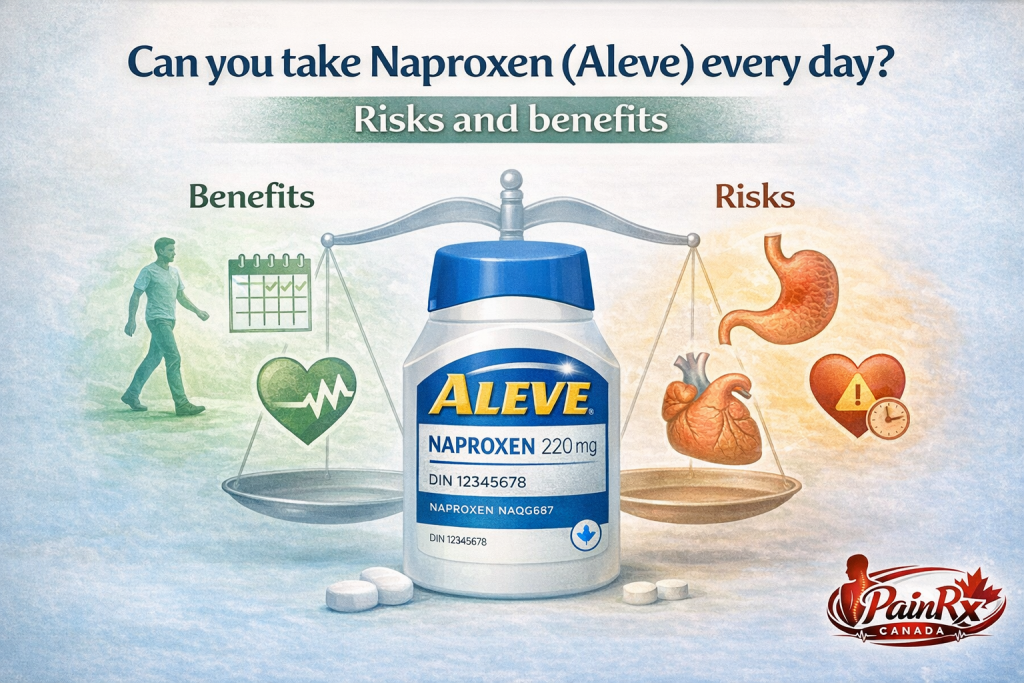
You find a medication that works. Your knee pain quiets. Your back stops throbbing. You can finally move through your day without constantly thinking about your aching joints. Naproxen, sold widely in Canada as Aleve, has become your reliable companion. But then a question nags at you: can you take naproxen every day? Is it safe to use this medication day after day, week after week, for chronic pain? You are right to ask. Naproxen is highly effective, but like all medications, it carries risks—especially with long-term daily use. This guide will give you the complete picture. We will explore how naproxen works, the benefits of daily use for chronic conditions, the risks you need to understand, and how to use it safely if daily use is necessary.
What Is Naproxen and How Does It Work?
Naproxen belongs to a class of medications called nonsteroidal anti-inflammatory drugs, or NSAIDs. You probably know it best by the brand name Aleve, though it is also available as a generic and in prescription-strength formulations.
Unlike acetaminophen (Tylenol), which works in the brain to dull pain signals, naproxen targets the source of pain by reducing inflammation. It blocks enzymes called COX-1 and COX-2, which produce prostaglandins—chemicals that cause inflammation, pain, and fever in your body. By reducing prostaglandin production, naproxen decreases the inflammation that drives much of the pain in conditions like arthritis, tendonitis, and muscle injuries.
Naproxen has one significant advantage over ibuprofen (Advil): it lasts longer. A single dose provides pain relief for up to 12 hours, compared to 4 to 6 hours for ibuprofen. This makes it particularly attractive for people who want consistent, all-day coverage without redosing constantly.
The Benefits of Daily Naproxen Use
For people with certain chronic conditions, daily naproxen can be life-changing.
Consistent Pain Control
When you take naproxen every day, you maintain a steady level of medication in your body. This prevents the “peaks and valleys” of as-needed dosing, where pain returns as the medication wears off. For conditions like osteoarthritis, where pain is present most days, consistent coverage means consistently better function.
Reduced Inflammation
Inflammation does not just cause pain—it also damages tissues over time. In inflammatory conditions like rheumatoid arthritis, daily NSAID use can slow disease progression by keeping inflammation under control. Even in osteoarthritis, reducing inflammation protects joints from further damage.
Improved Quality of Life
When pain decreases, everything improves. You sleep better. You move more. Participate in activities you enjoy. May even reduce your need for stronger medications like opioids. For many people, the quality-of-life benefits of daily naproxen far outweigh the risks.
Proven Track Record
Naproxen has been used for decades and is one of the most studied medications in existence. Doctors have extensive experience with its effects, both good and bad. This means the risks are well understood and can be managed with proper monitoring.
The Risks of Daily Naproxen Use
Now we must address the other side of the equation. Daily naproxuse carries real risks that increase with time and dose. Understanding these risks allows you and your doctor to make informed decisions.
Gastrointestinal Risks
This is the most common concern with daily NSAID use. Naproxen blocks COX-1 enzymes, which normally protect your stomach lining by producing a layer of mucus. Without this protection, stomach acid can irritate the lining, leading to:
- Gastritis: Inflammation of the stomach lining, causing pain and discomfort
- Ulcers: Sores in the stomach or duodenum that can bleed
- Gastrointestinal bleeding: Potentially serious blood loss from ulcers
The risk increases with:
- Longer duration of use
- Higher doses
- Age over 65
- Previous ulcers or bleeding
- Concurrent use of blood thinners, aspirin, or corticosteroids
- Alcohol consumption
Cardiovascular Risks
All NSAIDs except aspirin carry some cardiovascular risk. Naproxen is actually considered the safest NSAID for the heart—some studies suggest it may have a neutral or even slightly protective effect compared to other NSAIDs. However, it is not risk-free.
Potential cardiovascular concerns include:
- Increased blood pressure
- Fluid retention, which can stress the heart
- Small increased risk of heart attack or stroke, particularly with long-term use
People with existing heart disease, high blood pressure, or risk factors for stroke need careful monitoring if using daily naproxen.
Kidney Risks
Your kidneys rely on prostaglandins to maintain proper blood flow. By reducing prostaglandins, naproxen can reduce kidney blood flow, potentially causing:
- Fluid retention and swelling
- Increased blood pressure
- Reduced kidney function
- Acute kidney injury in vulnerable individuals
The risk is highest in people with:
- Pre-existing kidney disease
- Dehydration
- Heart failure
- Diabetes
- Advanced age
- Concurrent use of certain blood pressure medications (ACE inhibitors, ARBs) or diuretics
Other Potential Risks
- Liver effects: Rare but possible, especially with high doses
- Allergic reactions: Particularly in people with aspirin allergy
- Skin reactions: Rare but serious reactions can occur
- Anemia: From chronic, slow gastrointestinal bleeding
Who Should Avoid Daily Naproxen?
Daily naproxen is not safe for everyone. You should avoid it or use it only under close supervision if you:
- Have active stomach ulcers or a history of gastrointestinal bleeding
- Have severe kidney disease
- Have severe, uncontrolled heart failure
- Are planning heart surgery (coronary artery bypass)
- Have a known allergy to aspirin or other NSAIDs
- Are in the third trimester of pregnancy
- Take blood thinners (warfarin, apixaban, rivaroxaban) without close medical supervision
Safe Daily Use: How to Minimize Risks
If you and your doctor decide that daily naproxen is appropriate for your situation, these strategies can help you use it safely.
Use the Lowest Effective Dose
Naproxen is available in several strengths:
| Formulation | Strength | Typical Use |
|---|---|---|
| OTC Aleve | 220 mg | Mild to moderate pain, occasional use |
| Prescription naproxen | 375 mg, 500 mg | Moderate to severe pain, daily use under supervision |
For daily use, your doctor will determine the lowest dose that controls your symptoms. Many people do well with 220 mg twice daily. Others need 375 mg or 500 mg twice daily. Never exceed 1500 mg daily without close medical supervision.
Take with Food
Taking naproxen with food or milk significantly reduces stomach irritation. Food acts as a buffer and slows absorption slightly, which can actually smooth out the medication’s effects.
Protect Your Stomach
If you have risk factors for stomach problems, your doctor may prescribe a protective medication to take alongside naproxen. Options include:
- Proton pump inhibitors (PPIs): Omeprazole, pantoprazole, esomeprazole—these dramatically reduce stomach acid and protect the lining
- H2 blockers: Famotidine (Pepcid)—reduces acid production
- Misoprostol: Protects the stomach lining but can cause diarrhea
Stay Hydrated
Dehydration concentrates naproxen in your kidneys, increasing kidney risk. Drink plenty of water throughout the day, especially if you are active or in hot weather.
Monitor Your Blood Pressure
If you have high blood pressure, check it regularly when starting daily naproxen. The medication can raise blood pressure, and you may need adjustments to your blood pressure medications.
Avoid Alcohol
Alcohol irritates the stomach lining and increases bleeding risk. Combined with daily naproxen, the risk multiplies. If you drink alcohol, discuss safe limits with your doctor. Many experts recommend avoiding alcohol entirely while on daily NSAIDs.
Watch for Warning Signs
Stop taking naproxen and contact your doctor immediately if you experience:
- Black, tarry, or bloody stools
- Vomiting blood or material that looks like coffee grounds
- Severe stomach pain
- Swelling in your legs or ankles
- Unexplained weight gain
- Shortness of breath
- Yellowing of skin or eyes (jaundice)
- Severe skin rash
Regular Monitoring
If you take naproxen daily for months or years, your doctor should monitor:
- Kidney function (blood tests)
- Liver function (blood tests)
- Blood pressure
- Complete blood count (for anemia)
Typically, this means blood tests every 6 to 12 months for long-term users.
The Rebound Question: What Happens If You Stop?
Here is an important consideration many people overlook. If you take naproxen daily for a long time and then stop suddenly, your pain may temporarily worsen. This is called rebound pain.
Your body adapts to the presence of the medication. Inflammation that was suppressed returns, sometimes with a vengeance. This does not mean your condition suddenly worsened—it means your body is readjusting.
If you need to stop daily naproxen, work with your doctor to taper gradually rather than stopping abruptly. This gives your body time to adapt and minimizes rebound pain.
Alternatives to Daily Naproxen
Daily naproxen is not your only option. Depending on your condition, these alternatives may provide relief with different risk profiles.
Topical NSAIDs
For localized conditions like knee arthritis, topical NSAIDs (Voltaren Emulgel) provide anti-inflammatory action directly to the joint with minimal systemic absorption. You get the benefit without the stomach and kidney risks. Many people use topical NSAIDs daily alongside occasional oral NSAIDs for flares.
Acetaminophen (Tylenol)
Acetaminophen is much gentler on the stomach and kidneys but does not reduce inflammation. For mild to moderate pain, it may provide adequate relief without NSAID risks. Some people use acetaminophen most days and reserve naproxen for bad days.
Other NSAIDs
Different NSAIDs have different risk profiles. Your doctor might recommend:
- Ibuprofen: Shorter-acting, slightly less gastrointestinal risk at equivalent doses
- Celecoxib (Celebrex): A COX-2 selective NSAID designed to be gentler on the stomach (prescription only)
- Meloxicam: Long-acting prescription NSAID with once-daily dosing
Non-Drug Approaches
For many chronic pain conditions, non-drug treatments can reduce or eliminate the need for daily medication:
- Physical therapy and exercise
- Weight loss (reduces joint stress)
- Heat and cold therapy
- Acupuncture
- Cognitive behavioral therapy for pain
- Topical CBD products
Disease-Modifying Medications
For inflammatory conditions like rheumatoid arthritis, disease-modifying antirheumatic drugs (DMARDs) or biologics may be more appropriate than long-term NSAIDs. These medications target the underlying disease process rather than just managing symptoms.
Special Populations: Extra Caution Needed
Older Adults (65+)
As we age, our kidneys become less efficient, stomach linings become more vulnerable, and we often take multiple medications that can interact. Older adults should use daily naproxen at the lowest effective dose, with protective medications if needed, and under close medical supervision.
People with Cardiovascular Disease
If you have heart disease, previous heart attack, or stroke, daily naproxen requires careful consideration. While naproxen is the safest NSAID for the heart, it is not risk-free. Discuss the balance of risks and benefits with your cardiologist.
People with Kidney Disease
If you have chronic kidney disease, daily naproxen may accelerate kidney decline. Alternative pain management strategies are often preferred. If NSAIDs are necessary, close monitoring of kidney function is essential.
People Taking Blood Thinners
Combining naproxen with blood thinners (warfarin, apixaban, rivaroxaban, dabigatran) significantly increases bleeding risk. This combination should be avoided or used only with extreme caution and close monitoring.
The Bottom Line: Can You Take Naproxen Every Day?
So, back to the original question: can you take naproxen every day?
The answer is: Yes, but only under specific circumstances and with appropriate safeguards.
Daily naproxen is appropriate when:
- You have a diagnosed condition requiring daily anti-inflammatory treatment
- You have discussed the risks and benefits with your doctor
- You use the lowest effective dose
- You take it with food
- You stay hydrated
- You avoid alcohol
- You watch for warning signs
- You undergo regular monitoring
Daily naproxen is not appropriate when:
- You self-prescribe without medical oversight
- You exceed recommended doses
- You have contraindicated conditions
- You ignore warning signs
- You combine it with high-risk medications without supervision
For many people with chronic arthritis, daily naproxen provides reliable relief that dramatically improves quality of life. The key is using it wisely, with full knowledge of both its benefits and its risks.
How PainRx Canada Supports Your Safe Medication Use
At PainRx Canada, we believe that informed patients make better decisions. We are here to support you whether you use naproxen occasionally or daily.
Our online platform offers:
- Naproxen Products: We carry Aleve (220 mg) and can connect you with prescription-strength naproxen through our licensed pharmacy services when appropriate.
- Pharmacist Consultations: Not sure if daily naproxen is right for you? Our licensed pharmacists can review your situation, discuss risks and benefits, and help you make informed decisions. We can also check for interactions with your other medications.
- Medication Reviews: If you take multiple medications, our pharmacists can conduct a comprehensive review to identify potential issues and optimize your regimen.
- Educational Resources: Our blog and guides help you stay informed about medication safety, chronic pain management, and treatment options.
When you need more than naproxen, we connect you with licensed prescribers and dispense a full range of prescription medications through our provincially regulated pharmacy services.
Conclusion: Knowledge Is Your Best Protection
Naproxen is a powerful tool in the fight against chronic pain. Used wisely, it can restore function and quality of life. Used carelessly, it can cause serious harm. The difference lies in knowledge.
Now you know the full picture. You understand how naproxen works, the benefits of daily use, the risks you must respect, and the safeguards that protect you. You know the warning signs that demand immediate attention. Know the questions to ask your doctor.
The next time you reach for that bottle of Aleve, you will do so with open eyes. You will weigh the relief it brings against the risks it carries. You will use it as a tool, not a crutch. And you will work with healthcare professionals—including the pharmacists at PainRx Canada—to ensure your pain management strategy serves you well for years to come.
Your health is worth that attention. You are worth that care.
Frequently Asked Questions
1. Can you take naproxen every day for arthritis?
Yes, many people with osteoarthritis or rheumatoid arthritis take naproxen daily under medical supervision. It provides consistent anti-inflammatory action and pain relief. However, you should use the lowest effective dose, take it with food, and undergo regular monitoring of kidney function, blood pressure, and for signs of gastrointestinal issues.
2. What is the maximum daily dose of naproxen for long-term use?
For over-the-counter Aleve (220 mg tablets), the maximum daily dose is 660 mg (three tablets). For prescription-strength naproxen, doctors may prescribe up to 1500 mg daily for limited periods, but long-term use typically involves lower doses. Always follow your doctor’s guidance and never exceed recommended doses.
3. Can daily naproxen damage your kidneys?
Yes, long-term daily naproxen can affect kidney function, particularly in people with pre-existing kidney disease, dehydration, heart failure, or advanced age. The risk increases with higher doses and longer duration. Regular kidney function monitoring through blood tests is essential for daily users.
4. How can I protect my stomach while taking naproxen daily?
Take naproxen with food or milk. Avoid alcohol. Ask your doctor about protective medications like proton pump inhibitors (omeprazole, pantoprazole). Use the lowest effective dose. Watch for warning signs like black stools or stomach pain. Report any concerns promptly.
5. Is naproxen safer than ibuprofen for daily use?
Naproxen and ibuprofen have different risk profiles. Naproxen lasts longer, which means fewer daily doses, but it may have slightly higher gastrointestinal risk at equivalent doses. Ibuprofen wears off faster, which can mean higher total daily doses for all-day coverage. Naproxen is generally considered safer for the heart than ibuprofen. The “safer” choice depends on your individual health profile. Discuss with your doctor.
6. Can I take naproxen every day if I have high blood pressure?
It depends on your blood pressure control and other risk factors. Naproxen can raise blood pressure and may interfere with blood pressure medications. If you have well-controlled hypertension and your doctor monitors you closely, daily naproxen may be possible. If your blood pressure is poorly controlled, alternatives may be safer.
7. What should I do if I miss a dose of my daily naproxen?
If you take naproxen daily for a chronic condition and miss a dose, take it as soon as you remember unless it is almost time for your next dose. In that case, skip the missed dose and continue with your regular schedule. Do not double up. If you miss doses frequently, talk to your doctor about strategies to maintain consistent coverage.
8. Can I ever stop taking naproxen after long-term daily use?
Yes, but do not stop abruptly without medical guidance. Your pain may temporarily worsen (rebound pain), and your body needs time to adjust. Work with your doctor to taper gradually if you need to discontinue daily naproxen. They can also help you explore alternative treatments if your condition requires ongoing management.