

Best pain relief for arthritis in knees

Best pain relief for arthritis in knees: What actually works? (A Guide for Canadian Seniors)
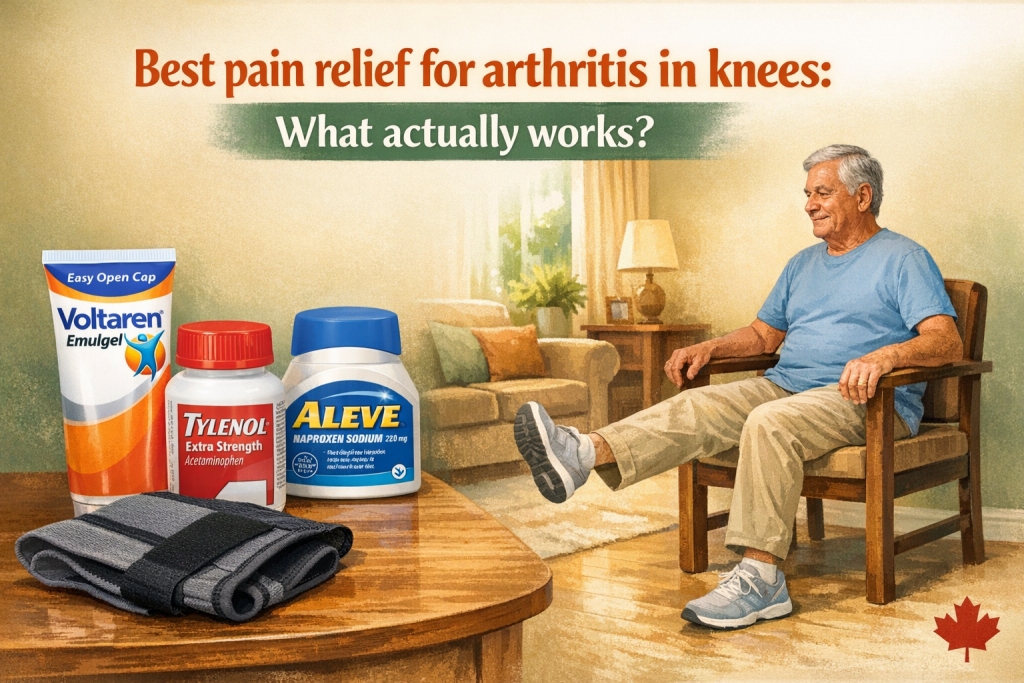
If you are reading this, chances are you know exactly what arthritic knees feel like. You remember a time when you could kneel in the garden without thinking twice, climb stairs with ease, or take a long walk just for the joy of it. Now, those simple pleasures come with a price. Your knees may feel stiff in the morning, ache after sitting too long, or send a sharp reminder when the weather changes. You are not alone. Millions of older Canadians live with knee arthritis, and the search for the best pain relief for arthritis in knees is one of the most common—and most personal—journeys in senior health.
The challenge is that finding relief as an older adult comes with unique considerations. Your body has changed over the years. Medications that worked for you in your forties may not be safe now. Your knees have decades of memories and miles behind them, and they deserve care that honors both your experience and your current needs. This guide cuts through the confusion to deliver evidence-based answers tailored specifically for aging Canadians. We will explore medications that balance effectiveness with safety, gentle exercises that strengthen without straining, and lifestyle adjustments that help you keep doing what you love.
Understanding Your Knees: What Decades of Use Mean
To find the right relief, it helps to understand what is happening inside your knees. Think of the cartilage in your joints as a smooth, cushiony lining that allows bones to glide past each other. Over years of use, that lining naturally wears thin. For some, it happens gradually. For others, genetics, past injuries, or years of physical work accelerate the process.
When cartilage wears away, bones can rub directly against each other. The joint may develop bone spurs. The surrounding tissues can become inflamed. This combination of changes creates the stiffness, swelling, and pain you feel.
This is called osteoarthritis, and it is the most common form of arthritis affecting knees. It is not your fault. It is not a sign that you did something wrong. They are simply what happens to many bodies over time. The goal of treatment is not to reverse the clock—none of us can do that—but to help you move more comfortably within your body as it is today.
The Safety First Rule: Medications and Your Aging Body
When you search for the best pain relief for arthritis in knees, you will find many options. However, what works for a thirty-year-old may not be safe for you. As we age, our bodies process medications differently. Kidneys may filter more slowly. Livers may metabolize drugs less efficiently. Stomach linings become more vulnerable. You may also take medications for blood pressure, heart health, or diabetes that can interact with pain relievers.
This does not mean you cannot take pain medication. It simply means you need to choose wisely and, ideally, with guidance from a healthcare professional who knows your full health picture.
Acetaminophen (Tylenol): The Gentle First Choice
For many older adults, acetaminophen is the safest place to start. It works in the brain to raise your pain threshold, making you less aware of discomfort. It does not reduce inflammation, which means it may not fully address arthritis pain, but it is remarkably gentle on the stomach and kidneys.
The standard dose is 500 mg to 1000 mg every 4 to 6 hours. Do not exceed 4000 mg in 24 hours. This limit is crucial because exceeding it can cause serious liver damage. If you drink alcohol regularly, your safe limit may be lower. Always read labels carefully, as acetaminophen appears in many cold and flu products you might take without thinking.
Topical NSAIDs: Targeted Relief Where You Need It
This category represents a true advance for older adults with knee arthritis. Topical NSAIDs like diclofenac (Voltaren Emulgel) are applied directly to the skin over your painful knee. The medication penetrates through the skin and concentrates in the joint underneath.
Here is why this matters for you: because the medication stays mostly in your knee rather than traveling throughout your body, it causes far fewer stomach and kidney problems than oral versions. You get anti-inflammatory action exactly where you need it, with minimal effects elsewhere.
Multiple studies show that topical diclofenac provides pain relief comparable to oral NSAIDs for knee arthritis. You simply rub it on your knee up to four times daily. It is available without prescription at Canadian pharmacies, including through PainRx Canada’s online service.
Oral NSAIDs: Effective but Require Caution
Oral NSAIDs like ibuprofen (Advil) and naproxen (Aleve) are highly effective for arthritis pain because they reduce inflammation throughout the body. However, they come with increased risks for older adults.
These medications can:
- Irritate the stomach lining, potentially causing bleeding
- Reduce kidney function, especially if you are dehydrated
- Increase blood pressure
- Interfere with blood pressure medications
- Interact with blood thinners like warfarin or apixaban
If you decide to try oral NSAIDs, use the lowest effective dose for the shortest possible time. If you need them regularly, talk to your doctor about protecting your stomach with medications like omeprazole and monitoring your kidney function.
A Word About Aspirin
Some older adults take low-dose aspirin for heart protection. Aspirin is also an NSAID. If you take aspirin daily for your heart, adding another NSAID like ibuprofen increases your risk of stomach bleeding significantly. Always tell your doctor and pharmacist about ALL medications you take, including daily aspirin.
The Supplement Question: What Helps, What Hurts, What’s a Waste
The supplement aisle can feel overwhelming, especially with so many products claiming to be the best pain relief for arthritis in knees. Here is what the evidence actually shows.
Glucosamine and Chondroitin
These are the most famous arthritis supplements. The evidence is mixed. Large, rigorous studies have not shown consistent benefits, but about 20 to 30 percent of people who try them report meaningful improvement.
If you want to try them, here is a sensible approach:
- Buy from a reputable brand to ensure you get what the label claims.
- Take them consistently for three months.
- Keep a simple pain diary to track whether you notice a difference.
- If you feel better after three months, continue. If not, do not waste more money.
These supplements are generally safe, though they can interact with blood thinners. If you take warfarin, check with your doctor before starting glucosamine.
Vitamin D
Many older Canadians are deficient in vitamin D, especially during our long winters. While vitamin D does not directly treat arthritis, correcting a deficiency supports overall bone health. A simple blood test can tell you your levels. Most older adults benefit from a daily supplement of 800 to 2000 IU, especially from October to April.
Omega-3 Fatty Acids (Fish Oil)
Omega-3s have anti-inflammatory properties. While the strongest evidence supports their use for inflammatory arthritis like rheumatoid arthritis, they may also help osteoarthritis. They support heart and brain health too, making them a reasonable choice for overall wellness.
Curcumin (Turmeric)
Curcumin, the active compound in turmeric, has anti-inflammatory effects. Some studies show modest benefits for arthritis pain. The challenge is that curcumin is poorly absorbed on its own. Look for products containing piperine (black pepper extract) to enhance absorption. Be aware that curcumin can interact with blood thinners.
What to Avoid
Be wary of products that promise “miracle cures” or “cartilage regeneration.” No supplement can grow back cartilage you have lost. If a claim sounds too good to be true, it almost certainly is. Stick with products that have some science behind them and are sold by reputable companies.
Gentle Movement: The Exercise That Actually Helps
When your knees hurt, resting them feels like the right thing to do. However, too much rest actually weakens the muscles that support your knees. Stronger muscles act like shock absorbers, taking pressure off the joint. The key is finding the right kind of movement—exercise that strengthens without straining.
Start with Walking
Walking is free, accessible, and one of the best things you can do for arthritic knees. It maintains joint mobility, strengthens supporting muscles, and improves overall health.
Start where you are. If five minutes is all you can manage, walk for five minutes. Do that daily for a week, then try seven minutes. Gradually increase as your knees allow. Flat, even surfaces are best. Many shopping malls open early for walkers, providing a safe, climate-controlled environment year-round.
Water Exercise: The Gentle Giant
If walking on land causes pain, water is your friend. Buoyancy reduces the weight on your knees by up to 75 percent. Many community centers and YMCA locations offer water arthritis classes specifically designed for older adults. The warm water soothes stiff joints while gentle resistance strengthens muscles.
Simple Seated Exercises
You do not need special equipment or a gym membership to strengthen your knees. These exercises can be done at home, safely seated in a sturdy chair.
Seated Knee Extensions:
- Sit in a chair with your back straight and feet flat on the floor.
- Slowly straighten one leg in front of you, lifting your foot until your leg is as straight as comfortable.
- Hold for 5 to 10 seconds, feeling your thigh muscle engage.
- Slowly lower your foot back to the floor.
- Repeat 10 times, then switch to the other leg.
Seated Marching:
- Sit tall in your chair.
- Slowly lift one knee as high as comfortable, as if marching in place.
- Lower slowly and repeat with the other leg.
- Continue alternating for 30 to 60 seconds.
Ankle Pumps:
- While seated, lift your toes while keeping your heels on the floor.
- Then press your toes down while lifting your heels.
- Repeat 20 times. This simple movement keeps blood flowing and maintains ankle mobility.
When to Stop
A little discomfort during exercise is normal. Sharp pain is not. If an exercise causes sharp or increasing pain, stop. You may need to modify the movement or try a different exercise. Listening to your body is not weakness—it is wisdom.
Practical Tools That Make Daily Life Easier
Sometimes the best pain relief comes not from a pill but from changing how you do things. Small adjustments and simple tools can dramatically reduce the strain on your knees throughout the day.
Choose Supportive Shoes
Your shoes connect your body to the ground. Flat, unsupported shoes like flip-flops or worn-out sneakers send shock straight up to your knees. Look for shoes with:
- Good arch support
- Cushioned soles
- A sturdy heel counter (the part that wraps around your heel)
- A slight rocker bottom that helps you roll through steps
Many shoe stores employ staff trained to help older adults find appropriate footwear. This is worth your time and investment.
Use Assistive Devices Without Shame
A cane, walker, or rolling cart is not a symbol of decline. It is a tool that keeps you independent and active. Using a cane on the opposite side of your worst knee reduces the force on that knee by up to 30 percent.
If you feel self-conscious, try reframing your thinking. You are not “giving in” to arthritis. You are using every available tool to keep doing what you love. That takes strength, not weakness.
Consider a Knee Sleeve
A simple elastic knee sleeve provides compression and warmth. This can improve your brain’s awareness of your knee position (proprioception), which often declines with age. Better awareness means better balance and less risk of falling. The light compression also feels comforting to many people.
Make Your Home Safer
Look around your home with fresh eyes. Are there throw rugs that could trip you? Is the path to the bathroom clear at night? Simple changes—removing rugs, adding night lights, installing grab bars in the shower—prevent falls and give you confidence moving through your space.
Use Long-Handled Tools
Long-handled reachers let you pick things up without bending. Long-handled shoehorns and sponge brushes make dressing and bathing easier. These small investments preserve your knees for the activities that truly matter.
When Home Care Is Not Enough: Next Steps
If you have tried medications, supplements, and lifestyle changes but still struggle with daily pain, it may be time for professional help. This is not failure. It is simply the next logical step in your journey.
Physical Therapy
A physical therapist does more than hand you a sheet of exercises. They assess your specific gait, strength, and movement patterns. Identify the exact muscles that need strengthening and the specific movements causing you pain. They can also provide hands-on treatments to mobilize stiff joints.
Many older Canadians find that a few sessions with a skilled therapist provide more benefit than months of self-directed effort. Your provincial health plan may cover some or all of the cost if you have a doctor’s referral.
Corticosteroid Injections
A doctor can inject a powerful anti-inflammatory medication directly into your knee joint. This can provide significant relief for weeks to months. It is especially helpful for getting through a bad flare or for providing a “window” of comfort that allows you to start an exercise program.
Most guidelines recommend limiting injections to three or four per year, as repeated use may accelerate cartilage damage. However, for occasional severe flares, they can be life-changing.
Hyaluronic Acid Injections
These injections aim to supplement the natural lubricating fluid in your knee. The evidence is mixed, but some people find meaningful relief. These injections are covered by some provincial formularies for certain patients.
Surgical Consultation
When pain significantly limits your quality of life despite all other treatments, it may be time to discuss surgery. Knee replacement is one of the most successful surgeries in modern medicine. The vast majority of people who undergo it report dramatically reduced pain and improved function.
The decision to have surgery is deeply personal. Your surgeon will explain the risks and benefits based on your specific health profile. For many older adults, the question is not whether they are “too old” but whether their overall health makes surgery safe. Age alone is rarely a barrier.
The Emotional Side of Arthritis
We have talked about knees, medications, and exercises. But there is another side to arthritis that deserves attention: how it makes you feel.
Living with chronic pain is exhausting. It wears on your mood, your patience, and your spirit. Sometime you may feel frustrated that your body no longer does what you ask. You may feel isolated if pain keeps you from social activities. You may worry about becoming a burden to family.
These feelings are normal and valid. Acknowledging them is not weakness—it is honesty.
Stay Connected
Pain wants to isolate you. Fight back by staying connected. Phone calls with friends count. Coffee with a neighbor counts. Attending community events even when you cannot stay long counts. Connection is medicine for the spirit.
Find Your People
Support groups, both in-person and online, connect you with others who truly understand. The Arthritis Society Canada offers resources and community connections. Hearing how others cope can give you new ideas and remind you that you are not alone.
Be Kind to Yourself
Please You did not choose arthritis. You did not cause it. You are doing your best with the body you have. Some days will be harder than others. On hard days, rest without guilt. On better days, move with gratitude. You are doing enough.
How PainRx Canada Supports You
At PainRx Canada, we built our service with people like you in mind. We understand that finding the best pain relief for arthritis in knees is not just about products—it is about trust, safety, and respect for your experience.
Our online platform offers:
- Senior-Friendly Products: We carry the full range of evidence-based treatments, including Voltaren Emulgel (with easy-open caps), acetaminophen, and NSAIDs. Our website uses clear, readable fonts and simple navigation.
- Pharmacist Consultations: Our licensed pharmacists specialize in medication safety for older adults. We review your full medication profile for interactions and help you choose products that balance effectiveness with safety. No pressure, no judgment—just honest advice.
- Home Delivery: No more driving to the pharmacy in bad weather or struggling with heavy shopping bags. We deliver discreetly to your door across Alberta, British Columbia, Ontario etc with or without prescribtion.
- Educational Resources: Our guides and blog articles are written in plain language, with respect for your intelligence and life experience. We do not talk down to you. We inform you.
When you need prescription medications, we connect you with licensed prescribers and dispense through our provincially regulated pharmacy. You are always in good hands.
Conclusion: You Deserve to Move Comfortably
You have earned the right to comfort. You have spent decades working, caring for others, building communities, and living your life. Your knees may show the miles, but they also carry the memory of all you have done.
The best pain relief for arthritis in knees is not a single magic pill. It is a combination of smart choices: medications that balance effectiveness with safety, gentle movement that strengthens without straining, practical tools that make daily life easier, and professional guidance when you need it. Most of all, it is kindness toward yourself—honoring where you are while gently working toward where you want to be.
You do not have to accept severe pain as normal. You do not have to suffer in silence. Relief is possible, and you deserve to find it.
At PainRx Canada, we are honored to be your partners in this journey. Browse our selection of arthritis relief products, schedule a consultation with our pharmacists, and take one step—however small—toward moving more comfortably today.
Frequently Asked Questions
1. What is the safest pain reliever for an older adult with knee arthritis?
For most older adults, topical NSAIDs like Voltaren Emulgel offer the best safety profile because they deliver medication directly to the knee with minimal absorption into the rest of the body. Acetaminophen (Tylenol) is also very safe when taken at recommended doses. If you need oral NSAIDs, use them cautiously and under medical supervision.
2. I take blood pressure medication. Can I still take ibuprofen?
Ibuprofen and other NSAIDs can raise blood pressure and may interfere with the effectiveness of blood pressure medications. If you take blood pressure medication, talk to your doctor or pharmacist before using NSAIDs regularly. Acetaminophen or topical NSAIDs are often safer alternatives.
3. How much walking is too much for arthritic knees?
Listen to your body. A good rule is to walk until you feel mild discomfort, then rest. Over time, you will learn your limits. Start with short walks—even 5 to 10 minutes—and gradually increase as your knees allow. If pain persists for hours after walking, you likely did too much and should shorten your next walk.
4. Will a knee brace help my arthritis?
For many people, yes. A simple elastic sleeve provides compression and warmth, which can reduce pain and improve your sense of joint stability. More complex “unloader” braces shift weight away from the damaged part of the knee and are typically prescribed for people with arthritis confined to one side of the joint.
5. How do I know if I need a knee replacement?
Consider discussing knee replacement with your doctor if:
- Pain limits your daily activities despite trying other treatments
- Pain keeps you awake at night regularly
- You have trouble walking even short distances
- X-rays show advanced arthritis
- You have tried conservative treatments for at least six months without adequate relief
Your doctor and an orthopedic surgeon can help you weigh the benefits and risks based on your specific situation.
6. Are glucosamine supplements worth trying?
A three-month trial is reasonable. About 20 to 30 percent of people who try glucosamine report meaningful benefit. When you feel better after three months, continue. If not, do not waste more money. If you take blood thinners like warfarin, check with your doctor before starting glucosamine.