

Endometriosis Treatment Options in Canada

What Are the Treatment Options for Endometriosis in Canada?
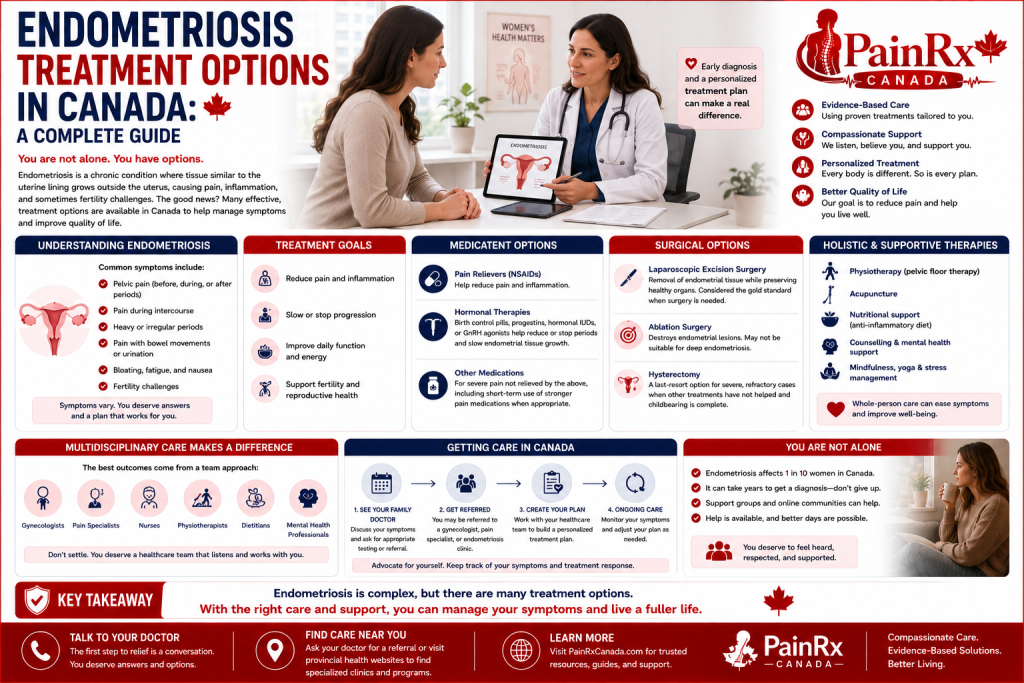
Endometriosis affects a significant number of Canadians, yet many still face years of delayed diagnosis and confusion about their treatment options. Understanding what’s actually available within the Canadian healthcare system can make a real difference in managing this condition effectively. This guide walks through the full range of endometriosis treatment options accessible to Canadians, from initial medical management to surgical intervention and complementary support.
This article provides general information only. It isn’t medical advice. Speak with your doctor or gynaecologist about which treatment options suit your specific situation.
Understanding Endometriosis Before Treatment
Endometriosis occurs when tissue similar to the uterine lining grows outside the uterus, often on the ovaries, fallopian tubes, or pelvic lining. This tissue behaves like the uterine lining does during a menstrual cycle, thickening and breaking down each month. Unlike normal uterine tissue, it has no way to leave the body, which can lead to inflammation, scarring, and significant pain.
Because endometriosis varies enormously between individuals, both in symptom severity and disease location, treatment isn’t one-size-fits-all. Canadian gynaecologists typically tailor treatment based on symptom severity, disease stage, fertility goals, and how a patient responds to initial approaches.
Starting Point: Diagnosis and Assessment
Before discussing treatment specifically, it helps to understand how diagnosis typically unfolds in Canada, since this shapes the treatment pathway. Most patients start with their family doctor, who assesses symptoms and may order initial imaging, such as a pelvic ultrasound, though this can’t always detect endometriosis definitively.
Confirmed diagnosis often requires referral to a gynaecologist, and in some cases, laparoscopic surgery remains the only way to achieve a definitive diagnosis. However, many Canadian doctors now begin treatment based on symptom patterns and imaging findings, without waiting for surgical confirmation, particularly when symptoms significantly affect quality of life.
Pain Management Medications
For many Canadians, initial treatment centres on managing pain symptoms directly. Over-the-counter options, including ibuprofen and other non-steroidal anti-inflammatory drugs, often serve as a first-line approach for mild to moderate symptoms. These medications work by reducing the inflammation associated with endometriosis lesions, alongside their general pain-relieving effects.
For more severe pain, doctors may prescribe stronger pain medications, though these typically address symptoms rather than the underlying condition itself. Because of this, pain medication alone rarely represents a complete treatment strategy, especially for moderate to severe endometriosis.
Hormonal Treatment Options
Hormonal therapy forms a central pillar of endometriosis treatment in Canada, aiming to reduce or eliminate the hormonal fluctuations that drive endometrial tissue growth and the associated pain cycle.
Combined Hormonal Contraceptives
Birth control pills, patches, or vaginal rings containing both estrogen and progestin represent one of the most commonly prescribed first-line hormonal treatments. These options work by suppressing ovulation and thinning the uterine lining, which can reduce the growth and activity of endometrial tissue elsewhere in the body. Many Canadian patients use these continuously, skipping the placebo week, to minimize menstrual cycles altogether and reduce associated pain.
Progestin-Only Options
Progestin-only treatments, including certain pills, the hormonal IUD, and injectable options, offer an alternative for patients who can’t use estrogen-containing contraceptives or who don’t respond well to combined options. The hormonal IUD, in particular, has gained popularity for endometriosis management in Canada, since it delivers progestin directly to the uterus while offering long-term, low-maintenance symptom control.
GnRH Agonists and Antagonists
For more severe cases, doctors may prescribe GnRH agonists or antagonists, medications that significantly reduce estrogen production, essentially inducing a temporary menopause-like state. This approach can provide substantial symptom relief but comes with side effects similar to menopause, including hot flushes and bone density concerns with extended use. Because of these effects, Canadian guidelines typically recommend this approach for limited durations, sometimes alongside “add-back” therapy to offset side effects.
Surgical Treatment Options
When medication alone doesn’t adequately control symptoms, or when fertility concerns make hormonal suppression less suitable, surgery becomes an important consideration.
Laparoscopic Excision Surgery
Laparoscopic surgery remains the gold standard surgical approach for endometriosis in Canada. This minimally invasive procedure allows surgeons to both diagnose and treat endometriosis simultaneously, removing or destroying endometrial tissue found outside the uterus. Excision, meaning cutting out the affected tissue entirely, generally provides more thorough treatment than ablation, which burns or vaporizes the tissue surface instead.
Access to surgeons with specific expertise in excision surgery varies across Canada, with some provinces offering more specialized endometriosis surgical programs than others. Patients seeking this level of expertise sometimes need to travel to larger urban centres or wait longer for access to a specialist with advanced excision training.
Hysterectomy
For patients who’ve completed their families and haven’t found relief through other treatments, hysterectomy, the surgical removal of the uterus, sometimes alongside the ovaries, represents a more definitive option. This isn’t considered a first-line treatment, and it doesn’t guarantee complete symptom resolution if endometrial tissue remains elsewhere in the pelvis. Canadian gynaecologists generally reserve this option for specific circumstances after other approaches haven’t provided adequate relief.
Fertility Considerations and Treatment
Endometriosis can affect fertility for some patients, which adds complexity to treatment decisions for those hoping to conceive. Hormonal treatments that suppress ovulation, while effective for pain management, aren’t suitable for patients actively trying to conceive.
For patients facing fertility challenges related to endometriosis, Canadian fertility clinics offer options including laparoscopic surgery to remove tissue affecting fertility, alongside assisted reproductive technologies like IVF when needed. Fertility treatment costs vary significantly by province, with some provinces offering partial public funding for IVF cycles, while others require patients to cover costs privately or through insurance.
Multidisciplinary and Complementary Approaches
Beyond medication and surgery, many Canadian endometriosis patients benefit from a broader, multidisciplinary approach to symptom management.
Pelvic Floor Physiotherapy
Endometriosis can contribute to pelvic floor muscle tension and dysfunction, which itself can worsen pain. Specialized pelvic floor physiotherapists, increasingly available across Canadian cities, can help address this component through targeted techniques, offering relief that medication or surgery alone might not fully achieve.
Pain Psychology and CBT
Given the chronic nature of endometriosis pain for many patients, psychological support, including cognitive behavioural therapy, can help address the broader impact of living with chronic pain, alongside directly targeting pain-related thought patterns that can amplify symptom severity.
Dietary and Lifestyle Approaches
Some Canadian patients explore dietary modifications, such as anti-inflammatory eating patterns, though evidence for specific dietary interventions remains mixed and individualized. Regular, appropriately paced exercise can also help manage symptoms for some patients, alongside broader benefits for overall wellbeing and stress management.
Accessing Specialized Endometriosis Care in Canada
Canada has seen growing recognition of endometriosis as a condition requiring specialized care, though access still varies considerably by region. Some provinces have established dedicated endometriosis clinics or programs, bringing together gynaecological surgeons, pelvic floor physiotherapists, and pain specialists under a coordinated approach.
For patients in regions without dedicated programs, referral to a general gynaecologist remains the standard starting point, with further referral to a specialist in complex cases or when initial treatments haven’t provided adequate relief. Wait times for specialist gynaecological care vary significantly across provinces, which can extend the overall treatment timeline for many patients.
Provincial Healthcare Coverage Considerations
Basic diagnostic assessments and gynaecologist consultations fall under provincial health coverage across Canada, meaning these core services generally don’t involve direct costs for eligible patients. However, coverage for specific treatments varies. Hormonal medications may require out-of-pocket payment or supplementary insurance, depending on your province and whether you have additional drug coverage.
Surgical treatment, including laparoscopic excision, generally falls under provincial coverage when performed in a public hospital setting, though wait times can be considerable depending on region and surgeon availability. Some patients choose to explore private surgical options for faster access, understanding this involves direct costs not covered by provincial health plans.
Building Your Treatment Plan
Given the range of options available, working closely with your healthcare provider to build a personalized treatment plan matters significantly. This often involves starting with less invasive options, such as hormonal treatment, before considering surgery, though this sequence isn’t universal and depends heavily on individual symptom severity and fertility considerations.
Keeping a detailed symptom diary, tracking pain patterns, menstrual cycle changes, and how symptoms respond to any treatments tried, can provide valuable information that supports more effective treatment planning with your care team.
Final Thoughts
Endometriosis treatment in Canada spans a genuinely wide range of options, from pain medication and hormonal therapy through to surgical intervention and complementary support like pelvic floor physiotherapy. No single treatment works for everyone, and many patients find the most effective relief through a combination of approaches tailored to their specific symptoms and life circumstances. If you’re navigating an endometriosis diagnosis or ongoing symptoms, discussing the full range of options with your gynaecologist, including referral to specialized care where available, remains the best path toward finding what works for you.