

Chronic Pain Disability Claims

Chronic Pain Disability Claims: How to Build a Strong Case
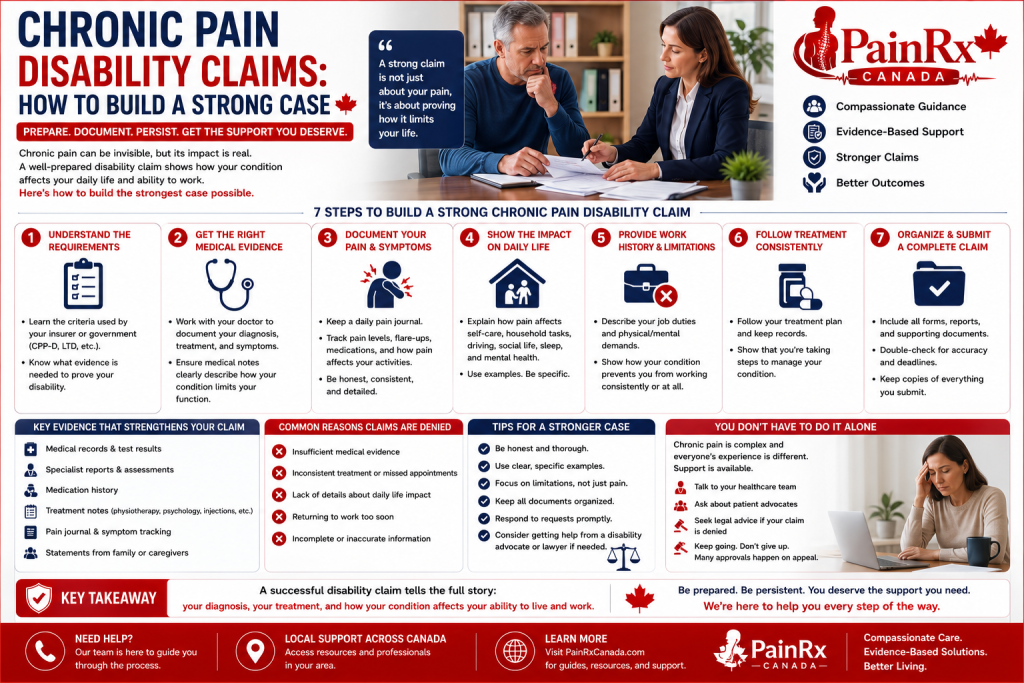
Filing a disability claim for chronic pain presents unique challenges. This differs from claims involving clear structural injuries or diagnosable diseases. Chronic pain often doesn’t show up clearly on scans or blood tests. Because of this, claimants frequently need to build their case around a different type of evidence. This guide covers the core principles behind successful chronic pain disability claims. It applies across insurance policies, workers’ compensation systems, and government disability programs.
This article provides general information only. It isn’t legal or financial advice. Specific requirements vary significantly between insurers, employers, and government programs, and by country and jurisdiction. Consult a qualified advisor or lawyer familiar with your specific claim type and location.
Why Chronic Pain Claims Face Extra Scrutiny
Disability systems, whether insurance-based or government-run, generally rely on objective medical evidence to assess claims. This works reasonably well for conditions with clear diagnostic markers. A fracture visible on X-ray or a confirmed diagnosis through blood work are good examples.
Chronic pain conditions often lack this kind of clear objective marker. This includes fibromyalgia, complex regional pain syndrome, and much chronic back pain. This doesn’t mean these conditions are any less disabling. It means claimants often need to build their case around functional evidence and consistent documentation. They can’t rely on a single definitive test result.
Core Evidence Categories for Any Chronic Pain Claim
Certain categories of evidence tend to matter across most chronic pain disability claims. This holds true regardless of which specific program or policy you’re claiming under.
Medical Documentation and Specialist Input
Consistent medical documentation forms the foundation of nearly every successful claim. Regular visits to your treating doctor create a credible, ongoing record. These visits should include detailed notes about symptom severity, functional limitations, and treatment response over time. Gaps in treatment history or inconsistent symptom reporting can weaken a claim. This holds true even when the underlying condition is genuine.
Specialist involvement often strengthens a claim considerably. Assessment by a relevant specialist adds credibility and expertise to the medical record. This might mean a rheumatologist for fibromyalgia or a pain medicine physician for complex chronic pain. This expertise goes beyond what a general practitioner alone might provide.
Functional and Occupational Evidence
Functional capacity assessments carry particular weight in chronic pain claims specifically. These formal assessments measure concrete, observable limitations. A occupational therapist or physiotherapist typically conducts them. They might measure how long someone can sit, stand, or lift, rather than relying solely on self-reported pain levels. Chronic pain often lacks clear imaging evidence. Because of this, functional documentation frequently becomes the most persuasive part of a claim.
Work history and occupational analysis help establish the specific gap between job demands and current capacity. This matters particularly for claims requiring proof that someone can’t perform their specific job. In some cases, it also requires proof they can’t perform any reasonable job given their skills and experience.
Psychological and Personal Evidence
Psychological assessment often plays a supporting role. Chronic pain frequently coexists with conditions like depression or anxiety. Documenting this connection, where relevant, can provide additional context for the overall impact on someone’s ability to function and work.
Personal statements and witness accounts add valuable texture beyond clinical records. A detailed, specific description of daily challenges and limitations helps paint a fuller picture. Statements from family, employers, or colleagues can support this picture further than medical documentation alone.
Common Reasons Chronic Pain Claims Get Denied
Understanding frequent denial reasons can help claimants prepare stronger applications from the start.
Insufficient objective evidence remains one of the most common issues across jurisdictions. Claims relying heavily on self-reported symptoms often face closer scrutiny. This is especially true without functional assessments or consistent medical documentation.
Inconsistent or sparse treatment history raises questions for many assessors. Long gaps between medical appointments can undermine an otherwise legitimate claim. Significant inconsistencies in how symptoms are described over time cause similar problems.
Not meeting the specific definition required causes many denials. Different programs and policies define “disability” differently. Some require an inability to perform your specific previous occupation. Others require an inability to perform any reasonable occupation given your skills and background. Understanding which definition applies to your specific claim matters significantly for building appropriate evidence.
Limited engagement with recommended treatment sometimes factors into decisions as well. Assessors may view a lack of treatment engagement unfavourably. This happens even when a claimant has legitimate reasons for gaps, such as access barriers, cost, or previous ineffective treatments. Documenting these barriers explicitly can help address this concern proactively.
Building Your Claim: A General Approach
Specific processes vary by program and jurisdiction. Even so, certain general strategies tend to strengthen chronic pain disability claims across most contexts.
Practical Steps to Strengthen Your Case
Start documentation early, ideally well before you formally file a claim. The longer and more consistent your medical record, the stronger the foundation for your case becomes.
Seek a functional capacity assessment if your specific claim type allows or values this kind of evidence. This objective, third-party assessment often carries more weight than self-reported limitations alone.
Maintain active treatment engagement. Clearly document any barriers preventing full engagement with recommended treatments, whether that’s cost, access, or previous adverse experiences.
Keep a detailed symptom and function diary. Track not just pain levels but specific functional impacts, such as tasks you could no longer complete or had to modify. This kind of specific, dated documentation often proves more persuasive than general statements made after the fact.
Understand your specific policy or program’s definition of disability before building your case. This shapes exactly what evidence will prove most relevant and persuasive for your particular claim.
What to Do If Your Claim Is Denied
A denial doesn’t necessarily mean the end of the process. Most disability systems include some form of internal review or reconsideration process. This applies whether the system is insurance-based or government-run. It allows claimants to submit additional evidence or address specific concerns raised in the initial decision.
External dispute resolution mechanisms often exist beyond internal review. These vary by jurisdiction and claim type. Options might include an ombudsman service, a tribunal, or, in some cases, formal legal action. Many disability lawyers work on a contingency or “no win, no fee” basis specifically for these claims. This structure can make legal support more financially accessible for claimants pursuing an appeal.
The Role of Professional Support
Many claimants benefit from professional guidance, particularly for complex or previously denied claims. Disability lawyers or advocates experienced in chronic pain claims specifically understand how to present functional and medical evidence. They know how to align this evidence with specific program or policy definitions.
Professional support isn’t mandatory. Straightforward claims sometimes succeed without it. However, complex chronic pain cases often benefit from this kind of specialized guidance. This is particularly true when significant financial support is at stake, or when a claim has already been denied once.
Final Thoughts
Chronic pain disability claims present genuine challenges. These conditions often lack the objective medical evidence that simplifies claims involving clearer structural injuries or diagnoses. Building a strong case generally means combining consistent medical documentation with functional capacity evidence. It also requires a clear connection between your condition and your inability to work or function as required by your specific claim type. Whether you’re pursuing an insurance claim, workers’ compensation, or a government disability program, thorough preparation makes a real difference. Professional guidance, where needed, can make a meaningful difference to your outcome too.