

CBD Oil vs. Ibuprofen for Inflammation: What Does Science Say?

CBD Oil vs. Ibuprofen for inflammation: What does science say?
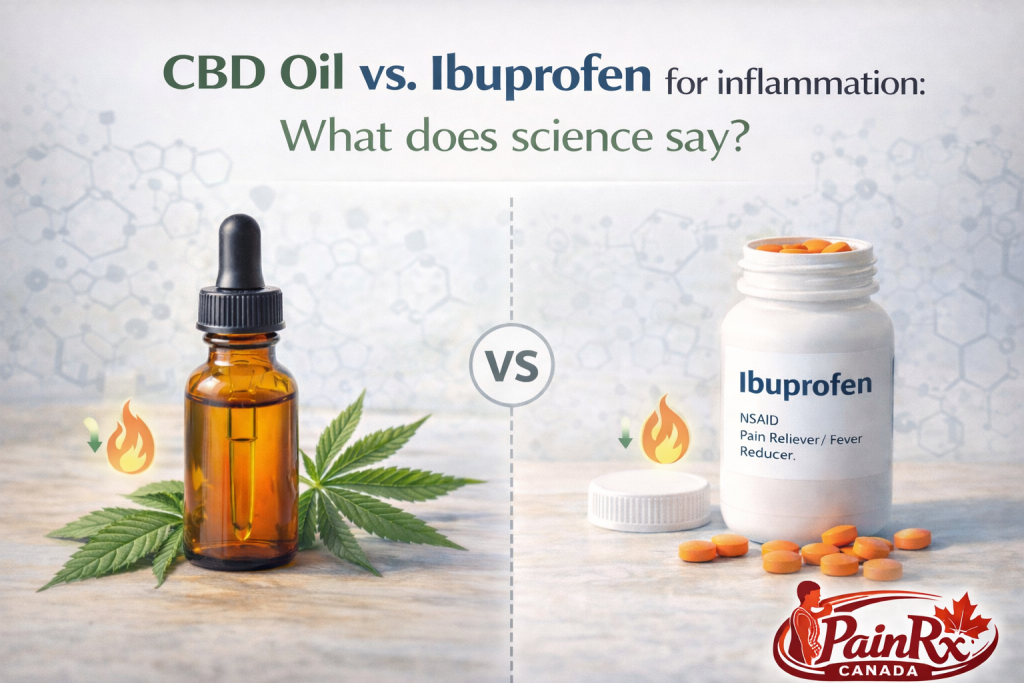
Inflammation sits at the root of countless health problems. Arthritic joints, muscle strains, autoimmune conditions, and even heart disease involve inflammatory processes. For decades, ibuprofen and similar NSAIDs have served as the go-to solution. These medications are effective, affordable, and widely available. However, a new contender has entered the scene. CBD oil has exploded in popularity, with many people claiming it offers natural anti-inflammatory effects. Consequently, the question of cbd oil vs ibuprofen for inflammation is on many minds. Which one actually works? Which option is safer? This article examines the scientific evidence behind both approaches.
The Inflammation Basics
Before comparing treatments, we must understand inflammation itself. Inflammation represents your body’s natural response to injury or threat. When tissues become damaged, your immune system sends inflammatory cells and chemicals to protect the area and initiate healing. This process creates redness, heat, swelling, and pain.
Acute inflammation serves a normal and helpful purpose. Chronic inflammation, however, creates significant problems. It persists long after the original threat has disappeared. It contributes to arthritis, autoimmune diseases, and other debilitating conditions. Therefore, treating chronic inflammation requires safe, sustainable approaches.
Both ibuprofen and CBD aim to reduce inflammation, but they operate through fundamentally different mechanisms. To fully understand cbd oil vs ibuprofen for inflammation, we must first understand these distinct mechanisms.
How Ibuprofen Works
Ibuprofen belongs to a class of drugs called nonsteroidal anti-inflammatory drugs (NSAIDs). It functions by blocking enzymes known as COX-1 and COX-2. These enzymes normally produce prostaglandins, which act as chemical messengers that promote inflammation, pain, and fever.
By blocking COX enzymes, ibuprofen effectively reduces prostaglandin levels throughout the body. This action lowers inflammation and relieves pain. The drug works quickly and reliably. Within 30 to 60 minutes of taking ibuprofen, most people experience noticeable relief.
However, this mechanism carries consequences. COX-1 also serves to protect the stomach lining. Consequently, blocking it can lead to stomach irritation, ulcers, and bleeding. This explains why long-term ibuprofen use carries well-documented risks. The trade-off between benefit and harm is firmly established. When comparing cbd oil vs ibuprofen for inflammation, this side effect profile becomes a major consideration.
How CBD Works
CBD, or cannabidiol, represents one of over 100 compounds found in cannabis and hemp plants. Unlike THC, it does not cause any psychoactive “high.” Instead, it interacts with the body’s endocannabinoid system (ECS), a complex network of receptors involved in regulating pain, inflammation, mood, and immune function.
CBD’s anti-inflammatory effects are complex and not yet fully understood by researchers. It appears to work through multiple pathways simultaneously. For instance, it may reduce the production of inflammatory cytokines. It may also influence immune cell activity. Furthermore, it interacts with receptors involved in pain perception. Additionally, CBD possesses antioxidant properties that can protect cells from inflammatory damage.
Importantly, CBD does not block COX enzymes like ibuprofen does. As a result, it does not cause the same stomach irritation. However, this also means its effects may prove more subtle and slower to appear. This mechanistic difference sits at the heart of cbd oil vs ibuprofen for inflammation.
What the Research Says: Ibuprofen
Ibuprofen ranks among the most thoroughly studied drugs in medical history. Thousands of studies have confirmed its effectiveness for inflammation. For conditions like rheumatoid arthritis, osteoarthritis, and acute injuries, ibuprofen consistently reduces inflammation and pain.
A comprehensive meta-analysis of NSAID studies found that ibuprofen significantly reduces pain compared to placebo. Medical guidelines position it as a first-line treatment for inflammatory conditions. Its effects are predictable and dose-dependent. Higher doses produce greater anti-inflammatory effect, but they also increase side effects.
The evidence supporting ibuprofen is both strong and consistent. The drug demonstrably works. The real question is not whether ibuprofen works, but whether the risks justify its use for long-term treatment. This concern drives much of the interest in cbd oil vs ibuprofen for inflammation.
What the Research Says: CBD
CBD research remains less extensive but continues growing rapidly. Most published studies have been preclinical, meaning researchers conducted them in cells or animals. Nevertheless, these studies consistently demonstrate anti-inflammatory effects.
A 2017 review in Bioorganic & Medicinal Chemistry comprehensively summarized CBD’s anti-inflammatory mechanisms. The authors concluded that CBD shows genuine promise for inflammatory conditions. Additionally, numerous animal studies have demonstrated benefits in models of arthritis, colitis, and neuroinflammation.
Human studies remain fewer in number but offer encouraging results. A 2018 study in European Journal of Pain found that topical CBD reduced pain and inflammation in rats with arthritis. More recently, human studies on CBD for arthritis have begun emerging. A 2020 study in Clinical Rheumatology found that CBD use was associated with improved symptoms in arthritis patients.
However, many human studies suffer from small sample sizes or lack proper placebo controls. Clearly, more research remains necessary. The evidence for CBD is promising but has not yet reached the level of certainty established for ibuprofen. This evidence gap matters significantly in the debate over cbd oil vs ibuprofen for inflammation.
Head-to-Head Comparisons
Direct comparisons between CBD and ibuprofen in humans remain surprisingly rare. One 2020 study did compare topical CBD gel to oral ibuprofen in rats with induced inflammation. Both treatments successfully reduced inflammation, but interestingly, CBD produced a longer-lasting effect. While intriguing, this finding remains far from conclusive for human application.
Another study examined CBD and ibuprofen together rather than head-to-head. The researchers found that combining both substances might produce synergistic effects, meaning they could work better together. This finding raises the possibility of using lower doses of each medication to achieve the same therapeutic effect while minimizing side effects.
Without robust human head-to-head trials, we must rely on indirect evidence. Ibuprofen’s effects are exceptionally well-characterized through decades of research. CBD’s effects appear promising but remain less certain. This uncertainty represents a key factor in cbd oil vs ibuprofen for inflammation.
Safety Comparison
Safety represents an area where CBD holds a clear theoretical advantage. Ibuprofen’s risks are thoroughly documented and widely recognized. Long-term use significantly increases the risk of stomach ulcers, kidney damage, and cardiovascular events. These risks increase progressively with age and with higher doses.
CBD, by contrast, is generally well-tolerated by most people. The World Health Organization has officially stated that CBD exhibits no effects indicative of abuse or dependence potential. Common side effects include fatigue, diarrhea, and changes in appetite or weight. These effects are typically mild and temporary.
However, CBD is not entirely without risk. It can interact significantly with other medications. Specifically, it inhibits liver enzymes that process many common drugs, potentially increasing their levels dangerously. This includes important medications like blood thinners, antidepressants, and some pain medications. Therefore, anyone considering CBD must consult a healthcare provider first.
For long-term inflammation management, the safety profile of CBD remains highly attractive. This represents a major point in favor of CBD in the cbd oil vs ibuprofen for inflammation comparison.
Onset and Duration
Ibuprofen works quickly and reliably. Within one hour of taking it, most people experience noticeable relief. The effects typically last four to six hours, depending on the specific dose and formulation used.
CBD’s effects depend heavily on the route of administration chosen. Inhaled CBD works within minutes, but effects are relatively short-lived. Oral CBD, such as oils or edibles, takes considerably longer to work. Onset can range from 30 minutes to two hours. However, effects last longer, typically four to six hours or more. Topical CBD works locally within 30 to 60 minutes and lasts several hours.
For acute, sudden-onset inflammation, ibuprofen may prove faster and more reliable. For chronic, ongoing inflammation, CBD’s longer duration may offer advantages. This timing difference matters considerably in cbd oil vs ibuprofen for inflammation.
Specific Conditions
Different inflammatory conditions may respond better to one option than the other.
Arthritis: Both treatments have their advocates. Ibuprofen is exceptionally well-studied for arthritis and proven effective. CBD also shows promise, especially topical formulations applied directly to painful, swollen joints.
Muscle inflammation: People commonly use ibuprofen for muscle strains and sports injuries. Topical CBD may also help, particularly when combined with menthol or other soothing, cooling ingredients.
Autoimmune inflammation: Ibuprofen can help manage symptoms but does not treat the underlying disease process. CBD’s immune-modulating effects are theoretically interesting for autoimmune conditions, but researchers must conduct more studies.
Neuroinflammation: Ibuprofen has limited effects on nerve-related inflammation. CBD’s direct interactions with the nervous system may prove more relevant for this type of inflammatory pain.
Clearly, matching the treatment to the specific condition proves essential in cbd oil vs ibuprofen for inflammation.
The Entourage Effect
CBD products often contain other cannabinoids and terpenes in addition to CBD itself. Some researchers believe these compounds work together synergistically, creating what they call the entourage effect. Consequently, a full-spectrum CBD product may offer greater anti-inflammatory benefits than CBD alone.
Ibuprofen, by contrast, is a single compound with a single, well-understood mechanism. Its effects remain predictable and isolated from other substances. The complexity of full-spectrum CBD may offer broader therapeutic benefits, but this complexity also makes effects harder to predict reliably.
This complexity represents both a strength and a weakness in cbd oil vs ibuprofen for inflammation. It offers potential benefits but also introduces significant uncertainty.
Quality and Regulation
Ibuprofen is a regulated pharmaceutical product subject to strict government oversight. Every batch remains consistent with every other batch. You know exactly what you are getting with each purchase. Health Canada directly oversees its production and labeling to ensure quality and safety.
CBD exists in a fundamentally different regulatory space. Although legal in Canada, the market remains less strictly regulated than pharmaceuticals. Consequently, product quality varies widely between manufacturers. Some products contain less CBD than their labels claim. Some contain detectable THC. Worst of all, some are contaminated with heavy metals or pesticides from poor growing practices.
Therefore, choosing a reputable brand becomes absolutely essential. Look for third-party testing results. Buy only from licensed producers. Never assume that all CBD products are created equal. This quality gap represents a practical consideration in cbd oil vs ibuprofen for inflammation.
Cost Considerations
Ibuprofen is remarkably inexpensive. A bottle of generic ibuprofen costs just a few dollars and can last for months of regular use.
CBD, in contrast, is considerably more expensive. A bottle of quality CBD oil can cost anywhere from $50 to $150. Depending on your required dose, it may last only weeks rather than months. For long-term daily use, this cost difference becomes significant for most people.
Insurance plans may cover prescription ibuprofen but rarely, if ever, cover CBD products. This financial reality affects the practical choice for many people managing chronic conditions.
Using Both Together
Some people choose to use both CBD and ibuprofen together. The combination may allow them to use lower doses of each medication, potentially reducing side effects while maintaining therapeutic benefits.
However, caution is absolutely necessary here. Both substances are processed by the liver through similar pathways. Importantly, CBD can inhibit the enzymes that normally break down ibuprofen, potentially increasing ibuprofen levels in your blood. This interaction could increase side effects unexpectedly. Therefore, always consult a healthcare provider before combining these substances.
The possibility of synergy remains exciting but requires professional medical guidance. It adds another layer of complexity to cbd oil vs ibuprofen for inflammation.
Practical Considerations
Ibuprofen offers unmatched convenience. Simply swallow a pill with water, and you are done. It is portable, discreet, and easy to use anywhere, anytime.
CBD requires more thought and planning. Oils must be held under the tongue for proper absorption. Topicals must be applied directly to the skin and allowed to absorb. Dosing is less standardized than with pharmaceuticals. Consequently, finding the right dose often takes trial and error over several weeks.
For people seeking simplicity and predictability, ibuprofen clearly wins. For those willing to experiment patiently, CBD offers interesting possibilities.
Talking to Your Doctor
Many people try CBD without ever telling their doctor. This approach carries significant risk. CBD can interact with other medications in unpredictable ways. Your doctor absolutely needs to know about everything you take.
If you are considering CBD for inflammation, have an honest, open conversation. Ask specifically about potential interactions. About appropriate dosing strategies. Ask about what monitoring might be necessary. A good doctor will support your interest in natural options while ensuring your safety remains paramount.
The question of cbd oil vs ibuprofen for inflammation deserves professional input.
PainRx Canada: Your Evidence-Based Partner
At PainRx Canada, we believe firmly in informed choices. We do not push pharmaceuticals over natural products or vice versa. Instead, we present the evidence clearly and help you decide based on your unique situation.
Our pharmacists can discuss CBD research with you in detail. We can review your complete medication list for potential interactions and we can help you identify quality CBD products if appropriate for your situation. We can also advise on safe ibuprofen use. Your personal health goals guide every recommendation we make.
If you are curious about cbd oil vs ibuprofen for inflammation, please start a conversation with us today.
Conclusion: Different Tools for Different Needs
So which option is truly better? The honest answer is that it depends entirely on your specific situation. Ibuprofen is proven, predictable, and powerfully effective. It works quickly and reliably for most people. It represents the right choice for many individuals with acute inflammation or severe flares. However, its side effects significantly limit long-term daily use.
CBD is promising, gentle on the body, and naturally appealing to many people. It avoids most of ibuprofen’s serious risks. It may offer broader therapeutic benefits through the endocannabinoid system. However, the supporting evidence remains less complete. Quality varies dramatically between products. Dosing requires patience and experimentation.
For many people, the best approach may involve using both medications strategically. Use ibuprofen for acute flares when you need rapid relief. CBD for daily maintenance and prevention. Use lower doses of each medication. Always seek professional guidance throughout the process.
The science clearly says both can work effectively. The art lies in matching the treatment to you.
Frequently Asked Questions
1. Is CBD as strong as ibuprofen for inflammation?
For acute, severe inflammation, ibuprofen is likely stronger based on current evidence. For chronic, low-grade inflammation, CBD may prove comparable and better tolerated for long-term use. More head-to-head research remains necessary.
2. Can I take CBD and ibuprofen together?
Possibly, but you must exercise caution. Both substances are processed by the liver through similar pathways. CBD can increase ibuprofen levels in your blood. Start with low doses and monitor carefully for side effects. Always consult a pharmacist or doctor first.
3. How long does CBD take to work for inflammation?
Oral CBD typically takes 30 minutes to two hours to produce noticeable effects. Topical CBD works locally within 30 to 60 minutes. For chronic conditions, effects may require several days of consistent use to reach maximum benefit.
4. Is CBD safe for long-term daily use?
Current evidence suggests CBD is generally well-tolerated for long-term use in most people. Common side effects remain mild when they occur. However, long-term studies are still limited. Regular monitoring by a healthcare provider is always wise.
5. Will CBD show up on a drug test?
Pure CBD should not trigger a positive test for THC. However, full-spectrum products contain trace amounts of THC (up to 0.3%). This could theoretically accumulate in your body and cause a positive result. If drug testing is a concern, use CBD isolate products and inform the testing agency beforehand.