
Is Oxycodone Addictive?

Is Oxycodone Addictive?
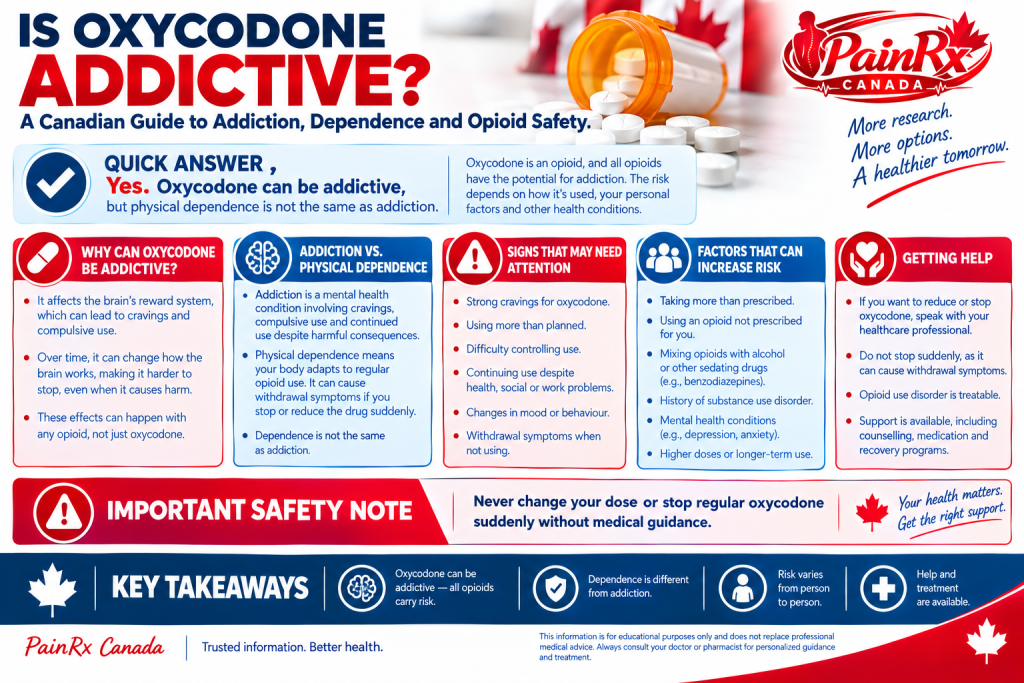
Short answer: Yes, oxycodone carries a real risk of addiction, even when taken exactly as prescribed. This risk isn’t rare or theoretical. Canadian clinical guidelines put the addiction risk for opioids like oxycodone at roughly 5.5%. Doctors and pharmacists take this number seriously when prescribing it. This guide explains why oxycodone carries this risk. It also covers what raises or lowers your personal risk, how to spot early warning signs, and what genuinely helps if you’re worried about your own use.
This article gives general information only. It isn’t medical advice. If you or someone you know struggles with oxycodone use, help exists. Reaching out to a doctor or a Canadian substance use support service is a strong, worthwhile step, not a sign of failure.
The Direct Answer, With Real Numbers
Oxycodone is an opioid, and all opioids carry a genuine potential for addiction. The 2017 Canadian Guideline for Opioid Therapy and Chronic Non-Cancer Pain reports that opioids are associated with a 5.5 percent risk of addiction among patients prescribed these medications for pain.
This number matters for two reasons. First, it confirms the risk is real, not rare or hypothetical. Second, it shows most patients who take oxycodone as prescribed don’t become addicted. Addiction risk depends heavily on individual factors, rather than being inevitable for everyone who takes this medication.
Why Oxycodone Specifically Carries This Risk
Oxycodone binds to opioid receptors in the brain and spinal cord. This blocks pain signals. These same receptors sit within the brain’s reward system. Activating them can release dopamine, a brain chemical tied to pleasure and reward.
Over time, especially with regular use, the brain can adapt to this repeated stimulation. This adaptation drives two related but distinct processes. First, tolerance builds, meaning you need more of the drug to get the same effect. Second, the brain can start linking the medication with reward in ways that push continued or increasing use, separate from your actual pain relief needs.
Dependence Versus Addiction: An Important Distinction
People often use these two terms as if they mean the same thing. But they describe genuinely different experiences. Understanding this distinction matters for anyone taking oxycodone.
What Physical Dependence Means
Physical dependence means your body has adapted to the medication’s presence. Your body needs the drug to function normally, and stopping it abruptly produces withdrawal symptoms. This can happen with other medications too, not just opioids. It doesn’t automatically mean something has gone wrong with how you’re using the drug.
What Addiction Means
Addiction involves something more. It includes compulsive drug-seeking behaviour, continued use despite real negative consequences, and a loss of control over your use. It often disrupts your relationships, work, or daily responsibilities too. Addiction is a diagnosable condition with specific clinical criteria. It involves psychological and behavioural elements beyond the physical adaptation seen in dependence alone.
You can develop physical dependence on oxycodone without developing addiction. This happens especially when you take it exactly as prescribed for a defined period, under your doctor’s supervision. However, dependence can sometimes progress toward addiction for some patients. This is exactly why ongoing monitoring throughout treatment matters so much.
Factors That Raise or Lower Your Personal Risk
Addiction risk isn’t identical for everyone. Several factors genuinely shift an individual’s likelihood of developing problematic use.
Personal and Family History
A personal or family history of substance use disorders significantly raises risk. Genetics play a real role in addiction vulnerability. Patients with a family history of addiction, to opioids or any other substance, generally face higher individual risk.
Mental Health Conditions
Mental health conditions, including depression, anxiety, and trauma-related conditions, can increase vulnerability. This happens partly because some people use opioids to manage emotional pain, beyond their intended purpose of physical pain relief.
Duration of Use, Age, and Environment
How long you’ve been taking the medication matters considerably. Longer treatment periods generally raise the risk of both dependence and addiction, compared to brief use for a short-term, acute injury.
Your age plays a role too. Research suggests younger patients, particularly adolescents and young adults, may face higher vulnerability than older adults starting treatment later in life.
Environmental and social factors matter as well. Significant stress, limited access to support systems, and exposure to substance use within your social circle can all shape your individual risk, beyond purely biological factors alone.
Signs That May Indicate a Developing Problem
Spotting early warning signs can help you or a loved one address concerns before they grow. Needing progressively higher doses to get the same pain relief, beyond what your doctor prescribed, can signal developing tolerance. This sometimes comes before more concerning patterns.
Taking the medication more often or in larger amounts than prescribed represents a real warning sign. So does consistently running out of your prescription before your scheduled refill date. Preoccupation with getting or using oxycodone, beyond what you actually need for pain management, also deserves attention.
Continuing to use oxycodone despite clear negative consequences represents a hallmark sign of addiction specifically. This holds true whether those consequences affect your relationships, your work, or your overall functioning. Seeking the medication from multiple doctors or pharmacies, sometimes called “doctor shopping,” also signals a serious concern that needs immediate attention.
The Bigger Picture: Oxycodone and Canada’s Opioid Crisis
Understanding oxycodone’s addiction risk sits within a much larger Canadian context worth knowing. Between January 2016 and September 2022, Canada recorded more than 34,400 apparent opioid toxicity deaths. Illicit fentanyl fuels much of this crisis. But it has roots partly in prescription opioid use, and the pathways it can create toward problematic substance use.
This context doesn’t mean every person prescribed oxycodone faces this outcome. It does explain why Canadian doctors, pharmacists, and health authorities now approach opioid prescribing with far more caution than a couple of decades ago. Conversations about addiction risk have become a standard, expected part of receiving an oxycodone prescription, rather than an afterthought.
Why Prescribing Practices Have Changed in Canada
Canadian opioid prescribing guidelines have shifted substantially in recent years. Growing understanding of addiction risk directly informed this shift. Doctors increasingly try non-opioid treatments first when clinically appropriate. They reserve opioids like oxycodone for cases where the benefits clearly outweigh the risks. They also prescribe the lowest effective dose for the shortest reasonable duration.
Regular follow-up appointments have become standard practice too, for patients on longer-term oxycodone therapy. These appointments give doctors a chance to spot early signs of tolerance, dependence, or addiction. Doctors can then adjust treatment plans before small concerns grow into larger problems.
Reducing Addiction Risk During Legitimate Treatment
If you genuinely need oxycodone for pain management, several practices can help minimize your addiction risk while still getting effective treatment.
Stick to Your Prescribed Plan
Follow your prescribed dose exactly, without adjusting it on your own, even when your pain feels poorly controlled. Contact your prescriber instead of increasing your own dose or taking it more often than directed.
Use the lowest effective dose for the shortest necessary time, in line with current Canadian prescribing guidelines. Ask your doctor directly about your expected treatment timeline, and what the plan looks like for tapering off once your pain improves.
Stay Connected to Your Care Team
Keep communication open with your prescriber about your pain levels, any cravings or unusual urges to take more medication, and your overall experience with treatment. This openness supports safer, more responsive care throughout your treatment.
Attend regular follow-up appointments too. These let your doctor monitor your response, adjust your plan as needed, and catch early warning signs before they grow into significant problems.
Store your medication securely, even if you don’t personally feel at risk. This prevents accidental exposure to others in your household. It also reduces temptation toward impulsive extra doses during difficult moments.
What to Do If You’re Worried About Your Own Use
Notice signs of developing dependence or addiction in your own oxycodone use? Reaching out for help represents a strong, proactive step, not a failure. Speak honestly with your prescriber about what you’re experiencing. They can help adjust your treatment plan, explore alternative pain management options, or connect you with addiction specialists if needed.
Never stop taking oxycodone abruptly without medical guidance, if you’ve been using it regularly. Sudden discontinuation can cause significant withdrawal symptoms. A doctor can help build a safe tapering plan, if reducing or stopping the medication becomes the right next step for your situation.
Supporting a Loved One
If you’re worried about a family member or friend’s oxycodone use, approach the conversation with compassion rather than judgment. This tends to work better. Share your specific observations and concerns without accusation. Encourage them to speak openly with their prescriber about what you’ve noticed.
Addiction affects entire families, not just the person using the substance. Canadians seeking support for themselves or a loved one can find resources through Health Canada’s overview of substance use services, including regional and national support lines available across the country.
Withdrawal Symptoms Worth Understanding
Physical dependence on oxycodone means your body has adapted to its regular presence. Stopping suddenly can trigger withdrawal symptoms. These commonly include anxiety, muscle aches, sweating, nausea, diarrhea, and intense cravings for the drug.
Opioid withdrawal rarely proves life-threatening on its own. Still, it can feel extremely uncomfortable and genuinely hard to manage without support. This is exactly why medically supervised tapering or withdrawal management offers a far safer, more comfortable path than trying to stop abruptly without guidance.
Oxycodone Addiction Treatment Options in Canada
Canadians facing oxycodone addiction have several evidence-based treatment paths available. Opioid agonist treatments, including methadone and buprenorphine-naloxone, have become the standard of care for opioid use disorder in Canada. These treatments help reduce cravings and withdrawal, while supporting a stable path toward recovery.
CAMH, Canada’s largest addiction teaching hospital, along with regional addiction services across every province, offer assessment, treatment planning, and ongoing support for patients navigating opioid dependence or addiction. Many of these services accept self-referral. You don’t necessarily need a doctor’s referral to start reaching out for help.
Frequently Asked Questions
Will I definitely become addicted if I take oxycodone exactly as prescribed?
No. Canadian clinical guidelines put the addiction risk at roughly 5.5 percent among patients prescribed opioids for pain. This means most people who take oxycodone as directed don’t develop addiction. Risk varies considerably based on individual factors.
How quickly can oxycodone addiction develop?
This varies a great deal between individuals, depending on factors like dose, duration of use, and personal risk factors. Some people could develop concerning patterns within weeks of regular use. Others take the medication for extended periods under careful medical supervision without developing addiction.
Is physical dependence on oxycodone the same as being addicted?
No. Physical dependence means your body has adapted to the medication. This can happen even with entirely appropriate medical use. Addiction involves compulsive use and loss of control. It represents a distinct and more serious condition.
Can genetics really affect my risk of oxycodone addiction?
Yes. Research shows a meaningful genetic component to addiction vulnerability generally. A family history of substance use disorders raises individual risk. Still, it doesn’t guarantee addiction will develop for any specific person.
What should I do if I’m prescribed oxycodone but worried about addiction risk?
Raise your concerns openly with your prescriber before starting treatment. They can help weigh the benefits and risks specific to your situation. They may also suggest additional monitoring, a shorter treatment duration, or alternative approaches, if your risk factors warrant extra caution.
Does everyone who takes oxycodone for a long time become addicted?
No, though longer treatment duration does raise risk compared to short-term use. Many Canadians use oxycodone appropriately for extended periods, including for chronic pain or cancer-related pain, under careful medical supervision, without developing addiction.
Where can I get help in Canada if I think I have a problem with oxycodone?
Start with your family doctor or pharmacist. They can connect you with appropriate resources. CAMH and provincial addiction services across Canada also accept self-referrals. Health Canada maintains a national directory of substance use support services too.
Final Thoughts
Oxycodone carries a genuine, well-documented risk of addiction. Canadian clinical guidelines place this risk at roughly 5.5 percent among patients prescribed opioids for pain. This risk exists even among patients using the medication exactly as directed, though individual risk varies based on factors like personal and family history, duration of use, and dose. Understanding the difference between dependence and addiction matters. So does recognizing warning signs early, and keeping open communication with your healthcare team. All of this supports safer use when oxycodone becomes a necessary part of your pain management. If you’re ever concerned about your own use or a loved one’s, help is available across Canada, and reaching out early makes a genuine difference.