

How to Relieve Pain After Laser Eye Surgery

How to Relieve Pain After Laser Eye Surgery
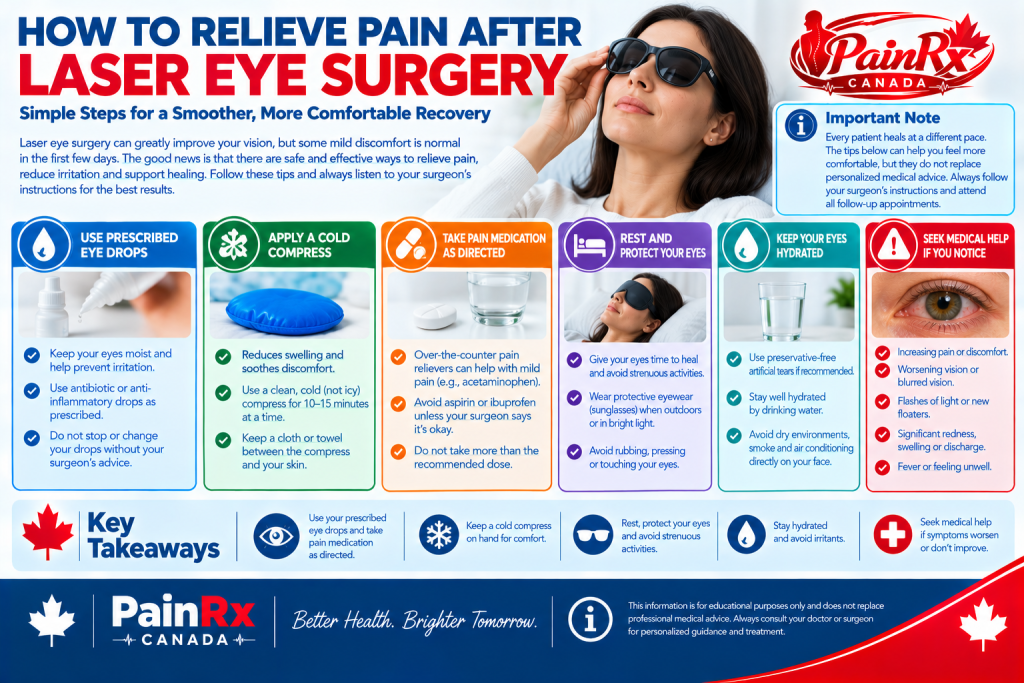
Pain after laser eye surgery looks very different depending on which procedure you had, and knowing what to expect makes a real difference in how you cope with recovery. LASIK typically causes minimal discomfort, while PRK involves a genuinely more uncomfortable healing period due to a key difference in how each procedure works. This guide explains why that difference exists, proven ways to ease discomfort for each procedure type, and when pain signals something worth calling your surgeon about.
This article gives general information only. It isn’t medical advice and doesn’t replace guidance from your eye surgeon. Never use prescription eye drops, including anesthetic drops, more often or for longer than your surgeon directs, since misuse of these specific medications carries serious risk.
Why LASIK and PRK Feel So Different
Both LASIK and PRK use a laser to reshape the cornea and correct vision. But they differ in one key surgical detail that drives a huge difference in post-surgical comfort. During LASIK, surgeons create a thin corneal flap that gets replaced after the laser treatment, while PRK removes the outer layer of corneal cells entirely, which then needs to regrow.
This difference explains why LASIK patients often return to normal activities, including driving, the very next day, while PRK patients face a longer, more uncomfortable healing window while that outer layer regenerates.
Understanding the PRK Pain Timeline
If you had PRK, understanding the expected pain pattern can help you manage it with more confidence. Research shows post-PRK pain typically peaks the day of or the day after surgery, then gradually decreases until the eye’s surface fully re-heals, which for most patients happens within about 96 hours.
Nearly all PRK patients report some pain during this window, and a majority describe it as significant for at least part of the recovery period. This is a normal, expected part of PRK healing, not a sign that something has gone wrong with your surgery.
Comparing LASIK and PRK Recovery
| Feature | LASIK | PRK |
|---|---|---|
| Pain level | Usually mild | Often moderate to significant |
| Pain peak | Rare, if any | Day of surgery through day 1–2 |
| Return to normal activity | Often next day | Several days to a week |
| Why the difference | Corneal flap protects healing surface | Outer cell layer must regrow entirely |
| Standard comfort measure | Lubricating drops | Bandage contact lens plus medication |
This table reflects general, well-documented patterns. Your own experience can vary based on your specific eye health and how your body heals.
Proven Pain Relief Strategies for PRK
Because PRK involves more significant discomfort, several evidence-supported strategies specifically target this recovery period.
Bandage contact lenses represent the standard of care after PRK. Your surgeon places a special soft contact lens directly on the eye immediately after surgery, which protects the healing surface, supports faster re-epithelialization, and meaningfully reduces pain during the critical first few days.
Prescribed topical NSAID drops help reduce inflammation and pain directly at the surgical site. These differ from anesthetic drops and are generally considered safe when used exactly as your surgeon directs.
Oral pain medication, including NSAIDs like ibuprofen, often supports comfort during the peak pain window. Some surgeons recommend taking an oral NSAID before the pain sets in, rather than waiting until discomfort becomes significant.
Cold compresses or cold patches, applied gently around the eye area rather than directly on it, can help ease discomfort for some patients during early recovery, similar to how cold therapy helps with other types of post-surgical pain.
Keeping your eyes closed and resting as much as possible during the first day or two supports healing and can genuinely reduce how much discomfort you notice, since light and eye movement can both aggravate a healing corneal surface.
Why Anesthetic Eye Drops Require Extreme Caution
This point deserves particular emphasis. Topical anesthetic drops can numb corneal pain effectively, but using them beyond what your surgeon specifically prescribes carries serious risk, including delayed healing and potential permanent damage to the cornea. These drops should only be used under direct medical supervision, precisely as directed, never as a self-managed solution for ongoing discomfort.
If your prescribed pain relief isn’t adequately managing your discomfort, contact your surgeon rather than using anesthetic drops more frequently or for longer than instructed.
Pain Relief Strategies for LASIK
LASIK recovery typically involves far less discomfort, though a few strategies still support a comfortable healing process. Use prescribed or recommended lubricating eye drops regularly, since temporary dryness is common and can cause a gritty or scratchy sensation even without significant pain.
Avoid rubbing your eyes at all during the first several days, since this could potentially disturb the healing corneal flap. Wear sunglasses outdoors to reduce light sensitivity, which many patients notice to some degree during the first days of recovery.
Managing Light Sensitivity
Both LASIK and PRK patients commonly experience increased sensitivity to bright light during recovery. Wearing sunglasses, even indoors if lighting feels harsh, and dimming screens or bright lights at home can meaningfully improve comfort during this period.
This sensitivity typically improves within the first week for LASIK patients and may take somewhat longer to fully resolve for PRK patients, given the more extended healing timeline involved.
When Pain Signals Something Beyond Normal Healing
While discomfort is expected, particularly after PRK, certain patterns warrant prompt contact with your surgeon rather than continued home management. Pain that suddenly worsens instead of following the expected improving trend, vision changes beyond what your surgeon described as normal, or signs of infection, including significant redness, discharge, or fever, all deserve immediate attention.
For PRK specifically, pain that hasn’t started improving by the fourth or fifth day, when re-epithelialization is typically complete, is also worth flagging to your surgical team.
Understanding Persistent Pain After Refractive Surgery
While most patients recover fully without lasting discomfort, it’s worth knowing that a small percentage of patients experience persistent eye pain beyond the typical healing window. A study examining pain after refractive surgery found that roughly eleven percent of patients reported ongoing discomfort at both the three- and six-month mark following their procedure.
This doesn’t mean persistent pain is common or expected, but understanding that it can occur in a minority of cases underscores why ongoing communication with your surgeon matters if your discomfort doesn’t follow the typical improving pattern over the following weeks and months.
Building a Comfortable Recovery Routine
Combining several approaches typically works better than relying on any single strategy. For PRK specifically, this often means wearing your bandage contact lens as directed, using prescribed topical and oral medication on schedule, resting with your eyes closed during the peak discomfort window, and protecting your eyes from bright light throughout the process.
For LASIK, a simpler routine of regular lubricating drops, avoiding eye rubbing, and light sensitivity management usually covers most of what you need for a comfortable recovery.
Frequently Asked Questions
Why does PRK hurt more than LASIK?
PRK removes the outer layer of corneal cells entirely, which then needs to regrow, exposing more nerve endings during this process. LASIK instead creates a protective flap that’s replaced immediately, which shields the healing surface and results in significantly less discomfort.
How long does PRK pain typically last?
Pain usually peaks the day of or day after surgery, then steadily decreases as the corneal surface heals, typically resolving significantly within about four days as re-epithelialization completes.
Is it normal to still feel discomfort a week after PRK?
Some residual sensitivity can persist beyond the main healing window, though significant pain should be improving substantially by this point. If discomfort remains significant a week out, contact your surgeon.
Can I use over-the-counter eye drops for pain after laser eye surgery?
Only use drops your surgeon has specifically approved or prescribed. Some over-the-counter products aren’t appropriate for a healing surgical eye, and anesthetic drops in particular should never be used outside direct medical guidance.
Is some pain after LASIK normal, or should I be concerned?
Mild discomfort, grittiness, or light sensitivity can occur, but LASIK generally involves minimal pain. Significant pain after LASIK is less typical than after PRK and is worth discussing with your surgeon.
Does everyone experience the same level of pain after PRK?
No, pain levels vary considerably between individuals, even though the general timeline tends to follow a similar pattern. Your surgeon can help tailor your pain management plan based on how you’re responding during recovery.
Final Thoughts
Pain after laser eye surgery depends heavily on which procedure you had, with PRK involving a genuinely more uncomfortable healing period than LASIK due to how each surgery treats the outer corneal surface. Bandage contact lenses, prescribed medication, rest, and light protection form the core of effective PRK pain management, while LASIK recovery typically needs only simple supportive care. Understanding the expected timeline for your specific procedure, alongside the warning signs that call for prompt medical attention, helps you navigate recovery with far less anxiety about what you’re experiencing.