

How to Relieve Pain After Surgery Naturally

How to Relieve Pain After Surgery Naturally
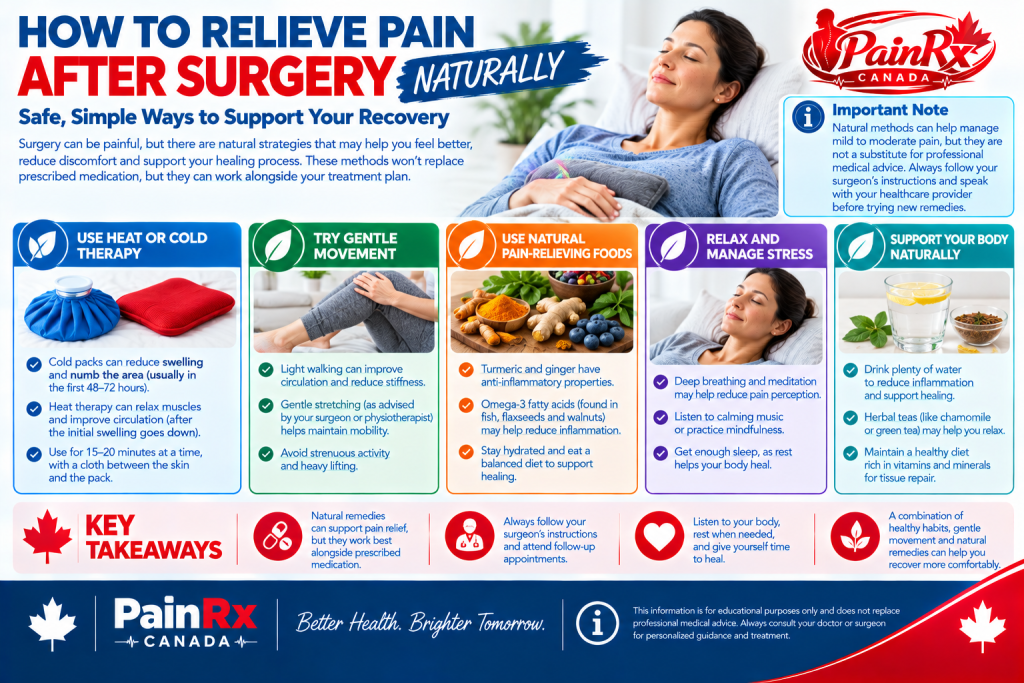
Medication plays a key role in surgical recovery. But it isn’t the only tool that helps. A growing body of research backs several natural, non-drug methods that can ease pain after surgery, often working alongside your prescribed medication rather than replacing it. This guide covers the natural pain relief methods with real evidence behind them, how to use each one safely, and where they fit into your overall recovery plan.
This article gives general information only. It isn’t medical advice. Natural pain relief methods work best alongside your prescribed treatment plan, not as a replacement for it. Always check with your surgeon before trying a new pain relief method during recovery, especially near your incision site.
Why Natural Pain Relief Methods Matter
Opioids and other medications remain important tools after surgery. But they come with real downsides, including side effects and, for opioids specifically, risks around dependence. A comprehensive 2024 review found that non-drug approaches can reduce pain intensity, lower opioid use, and improve overall recovery outcomes when used alongside standard medical care.
This doesn’t mean natural methods can replace medication entirely, especially in the first few days after major surgery. It means they can genuinely add to your comfort and cut down how much medication you need over time. Most surgical teams now support this combined approach, often called multimodal pain management.
Cold Therapy
Applying cold to the surgical area ranks among the best-studied natural pain relief methods. Cold reduces blood flow to the area, which lowers swelling and numbs the nerve endings that send pain signals.
Research on cooling strategies after surgery shows real benefits for reducing pain and swelling during early recovery. Wrap an ice pack or cold compress in a thin towel before applying it. Never place ice directly on your skin or incision, since this can cause tissue damage. Most guidance suggests applying cold for fifteen to twenty minutes at a time, with breaks in between, rather than continuous use.
Always confirm with your surgeon whether cold therapy suits your specific procedure, since some surgical sites need to stay dry or shouldn’t be touched during early healing.
Heat Therapy
While cold works best for fresh swelling, heat often helps more in later recovery stages, once acute swelling has settled. Heat increases blood flow to an area, which can ease muscle tension and stiffness that builds up around a healing surgical site.
A warm compress or heating pad, used for short periods, can offer real comfort for muscle-related soreness. As with cold therapy, check with your surgeon about timing, since heat isn’t appropriate near a fresh incision or during the first days after some procedures.
Relaxation and Mind-Body Techniques
Your mental state genuinely affects how much pain you feel. This isn’t a minor detail. Stress and anxiety can heighten pain perception, while relaxation techniques can measurably reduce it.
Deep breathing exercises, where you focus on slow, controlled breaths, can calm your nervous system and ease tension that often builds around a painful area. Guided imagery, which involves picturing a calm, peaceful scene in detail, has shown real benefit in surgical pain studies too.
Meditation and mindfulness practices work by changing how your brain processes pain signals, rather than blocking them outright. Even short sessions, just ten to fifteen minutes, can meaningfully ease discomfort and improve your overall coping during recovery.
Music Therapy
Listening to calming music during recovery does more than pass the time. Multiple studies on post-surgical pain point to music as a genuinely effective, low-cost tool for easing discomfort and anxiety. It works partly through distraction and partly by triggering a real relaxation response in the body.
Choose music you personally find calming, played at a moderate volume, ideally through headphones to block out hospital or household noise. Many patients use this during the first days after surgery, when discomfort and anxiety often peak together.
Gentle Movement and Positioning
It might feel counterintuitive, but staying completely still often makes post-surgical pain worse, not better. Gentle, surgeon-approved movement supports circulation, reduces stiffness, and can prevent the kind of muscle tension that builds up when you guard a painful area too rigidly.
Proper positioning matters just as much. Elevating a surgical limb, for example, reduces swelling and the pain that comes with it. Using pillows to support your body in a comfortable, surgeon-approved position, rather than staying in whatever position feels easiest in the moment, can meaningfully reduce strain on healing tissue.
Follow your surgeon’s specific movement guidelines closely, since appropriate activity varies enormously depending on your specific procedure.
TENS Therapy
Transcutaneous electrical nerve stimulation, or TENS, uses a small device to send mild electrical pulses through the skin near the painful area. A systematic review of non-drug pain relief after orthopedic surgery found a real benefit from TENS and similar interventions, though the review’s authors noted the overall evidence base remains limited and calls for more research.
TENS units are widely available and generally simple to use, though you should confirm proper placement and settings with your care team before trying one, particularly near a fresh surgical site.
Massage
Gentle massage, applied to areas away from your incision, can help ease muscle tension that often develops as your body compensates for pain or limited movement elsewhere. Massage appears in several major reviews of non-drug post-surgical pain relief as a helpful complementary option.
Massage directly over or very near a fresh incision isn’t appropriate. If you want to include massage in your recovery plan, ask your surgeon or a physical therapist which areas are safe to work on and when it’s appropriate to start.
Nutrition, Hydration, and Sleep
These basics don’t always get the credit they deserve, but they matter enormously for pain and healing. Good nutrition supports tissue repair directly, while dehydration can worsen fatigue and make pain feel more intense than it otherwise would.
Sleep deserves particular attention, given how strongly poor sleep is linked to increased pain sensitivity. Prioritizing rest, keeping a consistent sleep schedule where possible, and creating a comfortable sleep environment can genuinely support your pain management, not just your general recovery.
Comparing Natural Pain Relief Methods
| Method | Best Used For | When to Avoid |
|---|---|---|
| Cold therapy | Fresh swelling, first few days | Directly on skin or open incisions |
| Heat therapy | Muscle tension, later recovery | Fresh incisions, first days after surgery |
| Relaxation/mindfulness | Anxiety, general pain perception | No major restrictions |
| Music therapy | Distraction, anxiety, general comfort | No major restrictions |
| Gentle movement | Stiffness, circulation, swelling | Outside surgeon-approved limits |
| TENS therapy | Localized nerve-related discomfort | Directly over incision without guidance |
| Massage | Muscle tension away from incision | Directly on or near fresh incision |
This table offers general guidance rather than personalized medical advice, since appropriate methods vary by procedure and individual healing progress.
Building These Methods Into Your Recovery Plan
The most effective approach usually combines several of these methods rather than relying on just one. For example, you might use cold therapy for swelling, deep breathing during a particularly uncomfortable moment, and calming music to help you rest, all within the same day, alongside your prescribed medication.
Talk with your surgical team about which natural methods fit your specific procedure and recovery stage. Many surgeons and physical therapists actively support this kind of layered approach, since it often reduces how much medication you need while keeping you more comfortable overall.
When Natural Methods Aren’t Enough
Natural pain relief methods work best as a genuine complement to your prescribed treatment plan, not a replacement for it, especially in the days immediately following surgery. If your pain feels poorly controlled despite using these methods alongside your medication, or if pain suddenly worsens, contact your surgical team rather than relying on natural methods alone.
Severe, sudden, or rapidly worsening pain can sometimes signal a complication that needs prompt medical attention, regardless of which pain relief methods you’ve been using.
Frequently Asked Questions
Can natural pain relief methods replace my prescribed pain medication?
Generally, no, especially in the early recovery period. These methods work best alongside medication, often reducing how much you need over time, rather than replacing it outright. Never stop or reduce prescribed medication without your surgeon’s guidance.
How soon after surgery can I start using these methods?
This depends heavily on your specific procedure. Cold therapy and gentle breathing exercises are often appropriate almost immediately, while methods like massage or heat therapy near the incision may need to wait. Confirm timing with your surgical team.
Is there scientific evidence these methods actually work?
Yes, though the strength of evidence varies by method. Cold therapy, relaxation techniques, and music therapy have fairly solid research support. Other methods, like TENS and massage, show promising but more limited evidence, according to current systematic reviews.
Can I use essential oils or aromatherapy for pain relief after surgery?
Some patients find aromatherapy calming, though scientific evidence for direct pain relief remains weaker than for methods like cold therapy or relaxation techniques. If you want to try this, check with your care team first, since some scents or oils may not suit a hospital or recovery environment.
Will using natural methods slow down my healing?
No, when used appropriately and alongside your prescribed care. In fact, several of these methods, including gentle movement and good sleep, actively support healing rather than working against it.
Final Thoughts
Natural pain relief methods, including cold and heat therapy, relaxation techniques, music, gentle movement, TENS, and massage, offer real, evidence-supported ways to ease discomfort after surgery. These approaches work best as part of a combined plan alongside your prescribed medication, not as a standalone replacement for it. Talk with your surgical team about which methods fit your specific procedure and recovery stage, so you can build a pain management plan that keeps you as comfortable as possible while supporting genuine healing.