

How to Relieve Nerve Pain After Ankle Surgery

How to Relieve Nerve Pain After Ankle Surgery
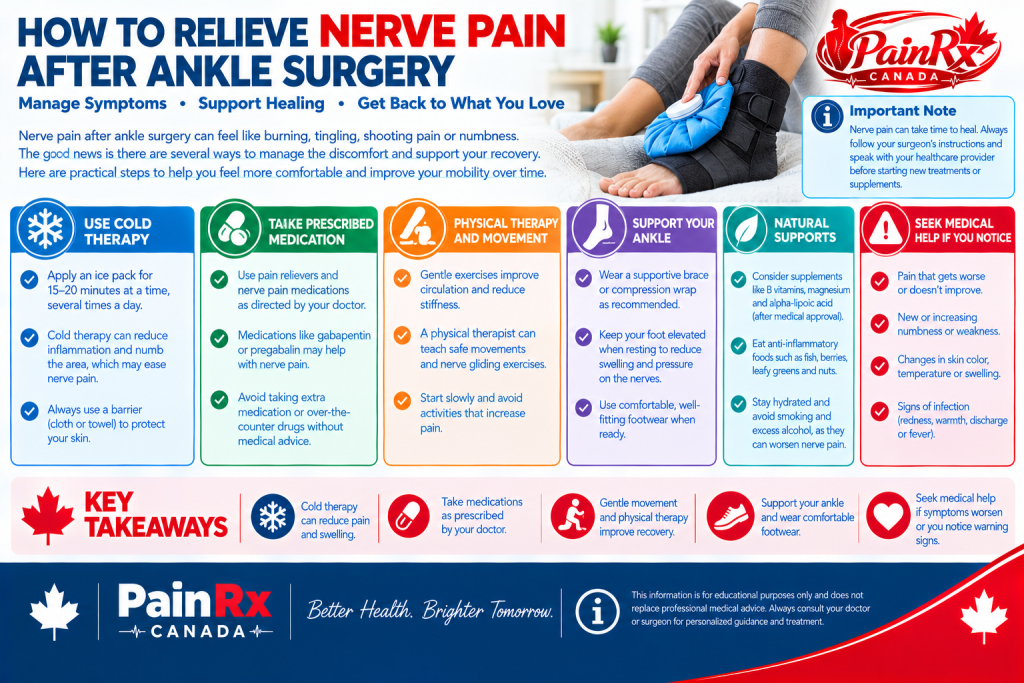
Ankle surgery involves several small nerves that sit close to the skin, which makes nerve-related pain a genuine and fairly common part of recovery. Burning, tingling, or electric-shock sensations around your ankle or foot after surgery often point to nerve involvement rather than ordinary surgical soreness. This guide explains which nerves commonly get affected during ankle surgery, why this procedure carries a higher risk of a specific complication called CRPS, and the treatment approaches that can genuinely help.
This article gives general information only. It isn’t medical advice and doesn’t replace guidance from your surgeon. If you notice new or worsening nerve pain after ankle surgery, contact your surgical team promptly.
Why Ankle Surgery Carries a Real Risk of Nerve Involvement
The ankle and foot contain several sensory nerves that run close to the surface of the skin, right where surgeons need to work. Nerves commonly at risk during foot and ankle procedures include the superficial peroneal nerve, the sural nerve, and the saphenous nerve, each of which provides sensation to a specific area of the lower leg, ankle, or foot.
Because these nerves sit so close to common surgical incision sites, even a carefully performed procedure carries some risk of nerve irritation, stretching, or, less commonly, direct injury. This doesn’t mean your surgery went wrong. It reflects the genuine anatomical reality of operating in this particular area of the body.
The Three Nerves Most Often Involved
Understanding which nerve might be affected can help you describe your symptoms accurately and understand what to expect.
| Nerve | Sensory Area Affected | Surgeries That Carry Higher Risk |
|---|---|---|
| Superficial peroneal nerve | Top of the foot, front/outer ankle | Lateral ankle procedures, ankle fracture repair (ORIF) |
| Sural nerve | Outer side of the foot, outside of the heel | Achilles tendon surgery, peroneal tendon surgery, lateral ankle procedures |
| Saphenous nerve | Inner ankle and inner side of the foot | Medial ankle procedures, ankle fusion |
This table reflects general anatomical patterns. Your surgeon can tell you which nerves sat closest to your specific incision and procedure.
Why CRPS Deserves Special Attention After Ankle Surgery
Complex regional pain syndrome, commonly called CRPS, is a serious nerve-related pain condition that causes pain far out of proportion to the original injury or surgery, often accompanied by swelling, temperature changes, and skin sensitivity in the affected area. Foot and ankle surgery carries a notably elevated risk for this specific complication compared to many other procedures.
Research examining CRPS after foot and ankle surgery found that documented nerve damage during surgery was directly linked to new-onset CRPS in a meaningful share of cases, which underscores why nerve-related symptoms after ankle surgery deserve prompt attention rather than a wait-and-see approach.
Early recognition matters enormously with CRPS, since treatment tends to work better the sooner it starts. This is one of the clearest reasons to report new or unusual nerve symptoms after ankle surgery quickly, rather than assuming they’ll resolve on their own.
Recognizing CRPS Symptoms Specifically
CRPS symptoms go beyond typical nerve pain, and recognizing this specific pattern matters given how much early treatment affects outcomes. Watch for pain that feels dramatically worse than what your surgery or injury would normally cause, along with changes in skin color or temperature in the affected foot or ankle, noticeable swelling that doesn’t match your expected recovery pattern, and skin that becomes extremely sensitive to light touch, sometimes to the point where clothing or bedsheets feel painful.
A documented case of CRPS following an ankle-area nerve injury showed persistent burning pain and heightened sensitivity around the affected site, illustrating how this condition can develop and why distinguishing it from typical post-surgical nerve pain matters for getting the right treatment quickly.
Medications That Target Nerve Pain After Ankle Surgery
The same category of medications used for nerve pain after other types of surgery generally applies here too. Gabapentin and pregabalin calm overactive nerve signaling and represent common first-line choices for ankle-related nerve pain. Duloxetine offers another option, particularly useful when nerve pain overlaps with mood or sleep difficulties during recovery.
For CRPS specifically, treatment often becomes more involved, sometimes combining these medications with additional approaches like nerve blocks, specialized physical therapy, or referral to a pain specialist experienced in this specific condition.
Ankle-Specific Desensitization Techniques
Desensitization, which involves gradually exposing sensitive skin to different textures and sensations, plays a particularly important role after ankle surgery, given how much daily function depends on comfortable contact between your foot, socks, and shoes.
Start with soft, gentle materials, like a cotton ball or soft cloth, lightly touching the sensitive area for brief periods. Gradually progress to different textures, including slightly rougher fabrics, as tolerance improves. This process should move at a pace guided by a physical therapist experienced in post-surgical nerve pain, since moving too quickly can worsen sensitivity rather than improve it.
Footwear and Weight-Bearing Considerations
Footwear choices matter more after ankle surgery involving nerve sensitivity than most patients expect. Tight or stiff shoes can press directly on sensitive nerve pathways, particularly across the top of the foot where the superficial peroneal nerve runs, or along the outer foot where the sural nerve sits.
Choose soft, well-cushioned footwear with minimal pressure points during early recovery, and work with your surgical team on an appropriate weight-bearing progression, since putting weight on the foot too early or too aggressively can aggravate nerve-related pain and slow overall healing.
Elevation and Swelling Management
Swelling around the ankle can directly compress nearby nerves, worsening nerve-related pain. Elevating your foot above heart level for periods throughout the day helps reduce this swelling, which can meaningfully ease nerve-related discomfort alongside your general surgical recovery.
Compression, when approved by your surgeon, can also help manage swelling, though it needs careful application to avoid adding pressure directly over an already sensitive nerve pathway.
Physical Therapy for Ankle Nerve Pain
A physical therapist experienced in post-surgical ankle recovery can guide you through a combination of desensitization, gentle range-of-motion work, and gradual strengthening, all paced appropriately for nerve healing rather than pushing through significant pain.
This specialized guidance matters particularly for ankle surgery, given how much daily walking and weight-bearing depend on a foot and ankle that can tolerate normal sensory input without triggering significant pain.
When to Contact Your Surgeon Immediately
Given the elevated CRPS risk specific to ankle and foot surgery, certain symptoms warrant prompt contact with your surgical team rather than waiting for your next scheduled appointment. Pain that feels dramatically disproportionate to your procedure, new swelling or temperature changes in the foot or ankle, skin color changes, or extreme sensitivity to light touch all deserve quick evaluation.
Because early treatment significantly affects CRPS outcomes, don’t hesitate to reach out between appointments if something feels genuinely different or more severe than expected typical healing.
Frequently Asked Questions
How common is nerve pain after ankle surgery?
Nerve-related symptoms are relatively common given how closely several sensory nerves run to typical ankle surgery incision sites. Most cases involve temporary nerve irritation that improves over weeks to months, though a smaller number of cases involve more persistent nerve pain or CRPS.
How is CRPS diagnosed after ankle surgery?
Doctors diagnose CRPS based on a specific set of clinical criteria, examining symptom patterns like disproportionate pain, temperature and color changes, swelling, and sensitivity, sometimes supported by additional testing like a bone scan or thermal imaging.
Will nerve pain after ankle surgery go away on its own?
Many cases of mild nerve irritation improve gradually as the area heals. However, given the specific CRPS risk associated with ankle surgery, it’s important not to simply assume all nerve-related symptoms will resolve without evaluation, particularly if pain feels severe or is accompanied by swelling and temperature changes.
Can wearing the wrong shoes make nerve pain worse after ankle surgery?
Yes. Tight or poorly cushioned footwear can press directly on sensitive nerve pathways across the foot and ankle, potentially worsening discomfort during recovery. Soft, well-fitted footwear matters more than usual during this period.
Should I be worried if my foot feels numb after ankle surgery?
Some numbness or altered sensation near the incision is common and often temporary because routine surgery can affect small sensory nerve branches. However, report any numbness that’s severe, spreading, or accompanied by other concerning symptoms to your surgical team.
Final Thoughts
Nerve pain after ankle surgery reflects the genuine anatomical reality of operating near several sensory nerves that sit close to the skin’s surface, including the superficial peroneal, sural, and saphenous nerves. While most nerve irritation improves gradually, ankle and foot surgery carries a notably elevated risk of CRPS, a serious condition where early recognition and treatment make a real difference in outcomes. Medications like gabapentin, combined with ankle-specific desensitization, appropriate footwear, swelling management, and physical therapy, form the core of effective treatment. If your nerve pain feels severe, disproportionate, or accompanied by swelling and temperature changes, contact your surgical team promptly rather than waiting to see if it resolves on its own.