

How to Relieve Eye Pain After Cataract Surgery

How to Relieve Eye Pain After Cataract Surgery: A Canadian Guide
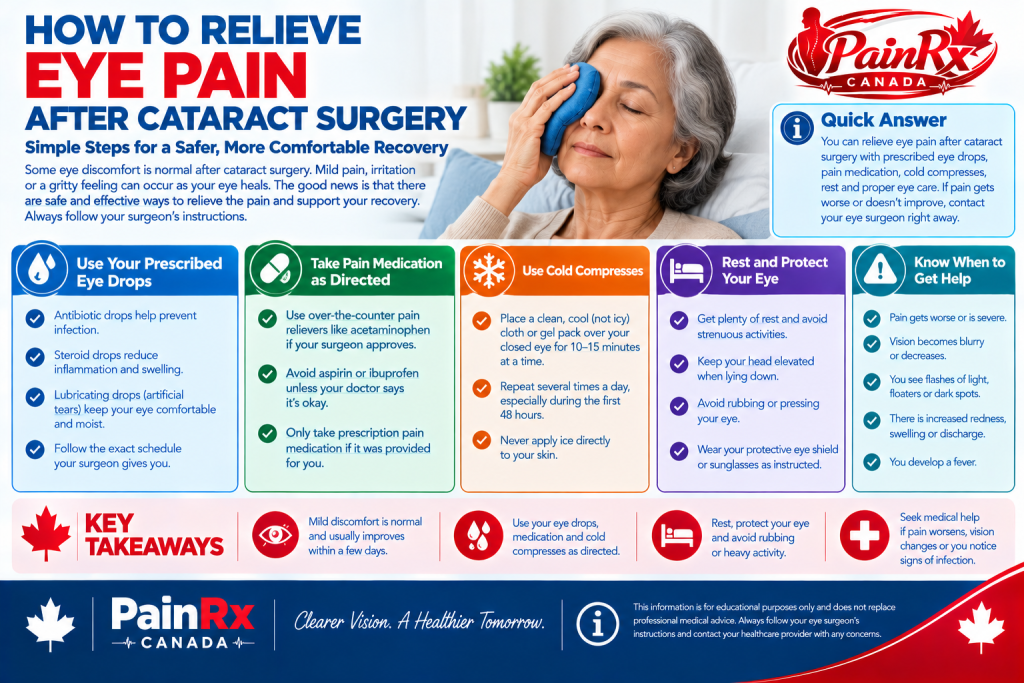
Mild discomfort after cataract surgery is normal. But knowing how to ease it, and when it signals something more serious, makes recovery far less stressful. Most eye pain after cataract surgery responds well to prescribed eye drops, protective care, and simple home steps. Most people see real improvement within the first few days. This guide covers what causes post-cataract eye pain. It also shares proven ways to ease it, and the warning signs that mean you should call your ophthalmologist.
This article gives general information only. It isn’t medical advice and doesn’t replace guidance from your ophthalmologist. If you have severe or worsening eye pain after cataract surgery, contact your eye care provider right away.
Why Eye Pain Happens After Cataract Surgery
During cataract surgery, your surgeon makes a small cut in the front of the eye. Through this cut, they remove the clouded natural lens and place a new artificial lens, called an IOL. This cut is tiny, often just a few millimetres. But the cornea holds a huge number of nerve endings. That’s why even a small cut can cause real discomfort as it heals.
Most pain after surgery comes from this normal healing process. Temporary swelling and dryness add to the mix too. Because the cornea has such a dense concentration of nerve endings, even a small incision can produce real discomfort. Your surgery likely went fine. Knowing this can ease a lot of worry during the first few days.
Common Causes of Discomfort After Cataract Surgery
A few clear factors usually cause discomfort during cataract recovery. Knowing which one fits your case can help you pick the right relief method.
Dry eye stands out as the top cause of discomfort after cataract surgery. Small nerves on the surface of your eye get cut during the procedure. These nerves normally tell your eye to make tears. Until they heal, tear production drops for a while. This can cause a gritty, dry, or scratchy feeling.
Swelling inside the eye shows up as a natural response to surgery itself. Your ophthalmologist will give you anti-inflammatory drops. These help it settle down on a predictable schedule.
Corneal nerve irritation can also add to your discomfort. Sometimes it brings a more noticeable ache or tender feeling beyond plain dryness. This shows up most in the first few days.
Light sensitivity often comes along with the causes above. Bright spaces can feel more uncomfortable than usual during early recovery.
Proven Ways to Relieve Post-Surgery Eye Pain
Several well-tested steps can genuinely ease discomfort while your eye heals.
Use your prescribed eye drops exactly as directed. Your ophthalmologist will give you antibiotic drops to prevent infection. They’ll also give you anti-inflammatory drops to reduce swelling inside the eye. Stick to this schedule closely. Don’t stop early just because you feel better. This supports both comfort and proper healing.
Wear your protective eye shield as instructed, especially at night. This stops accidental rubbing or pressure on the eye during sleep. Either one can worsen irritation or risk disrupting the healing cut.
Avoid touching or rubbing your eye at all. This one habit matters a great deal. Rubbing can irritate the healing surface. It can introduce bacteria. In rare cases, it can even affect the surgical cut itself.
Use preservative-free artificial tears, if your ophthalmologist approves them alongside your prescribed drops. These further ease dryness between scheduled doses of your prescription drops.
Rest and limit strain in the first day or two. Avoid bending deeply from the waist, heavy lifting, or strenuous activity. Extra pressure can worsen discomfort. Doctors don’t recommend it during early healing.
Protect your eye from irritants. Keep soap, water, and shampoo away from the eye area. Wear sunglasses outdoors too. This cuts light sensitivity and shields your eye from wind or dust.
Take over-the-counter pain relief if needed. Follow your ophthalmologist’s specific guidance for this. Use it for mild discomfort that the steps above don’t fully relieve.
What a Normal Recovery Timeline Looks Like
| Timeframe | What’s Typical |
|---|---|
| First 24 hours | Mild discomfort, gritty sensation, and blurry vision are common as the incision begins to seal |
| Days 2–7 | Discomfort and dryness gradually ease; redness may still be present |
| Weeks 2–4 | Continued improvement; most dryness and light sensitivity noticeably decrease |
| Weeks 5–8 | Many patients feel largely recovered, though the eye continues healing internally |
| Up to 1 year | Full, complete healing of deeper tissue can take this long, though significant discomfort isn’t expected this late |
This table shows general patterns, not a guarantee. Your own healing speed depends on your specific eye health and how complex your surgery was.
When Eye Pain Isn’t Normal
Mild discomfort is expected. But certain patterns point to a possible problem. These need prompt attention rather than home care alone.
Call your ophthalmologist right away if you have pain that doesn’t ease with over-the-counter medicine. The same goes for sudden or big vision changes, redness or swelling that gets worse instead of better, or new floaters, flashes of light, or dark shadows in your vision. Severe pain is not considered a typical part of cataract surgery recovery. This specific symptom needs quick evaluation. Don’t just wait to see if it passes.
When Eye Pain Persists Beyond Normal Healing
For most patients, discomfort fades as dry eye and swelling settle over the following weeks. But some patients feel pain that continues well past this expected window. Doctors sometimes need to look beyond dry eye toward nerve-related causes in these cases. The cornea’s dense nerve concentration means even a small cut can occasionally lead to a more lasting type of nerve pain. This kind of pain needs specialized evaluation.
Has your eye pain skipped the expected improving pattern after several weeks? If so, raise this directly with your ophthalmologist. Don’t just assume it will resolve on its own. This step matters for getting the right diagnosis and treatment.
Cataract Surgery Care Within the Canadian Healthcare System
Cataract surgery is covered by provincial health insurance across Canada. This includes the surgery itself and standard follow-up care. Coverage details and premium lens options do vary by province, though. Most Canadian patients attend a follow-up visit with their ophthalmologist within one to two days of surgery. This visit gives you an important chance to flag any concerns about pain or unexpected symptoms early.
Do you have concerning symptoms outside of scheduled appointments? Contact your ophthalmologist’s office directly. In urgent cases, visit an emergency department instead. Either path gets you checked by someone with access to your surgical details, rather than relying on general advice alone.
Frequently Asked Questions
Is it normal to have eye pain the day after cataract surgery?
Yes. Mild discomfort, grittiness, and light sensitivity are common in the first 24 to 48 hours as the eye starts healing. Severe pain, though, isn’t typical. Report it to your ophthalmologist.
How long does discomfort typically last after cataract surgery?
Most patients see real improvement within the first one to two weeks. Gradual improvement continues over the following month. Complete internal healing can take up to a year. Still, significant pain isn’t expected during this later period.
Can I use regular artificial tears for dryness after surgery?
Only if your ophthalmologist approves this alongside your prescribed drops. Preservative-free options work better generally. Some preservatives in standard artificial tears can irritate a healing eye.
Why does bright light bother my eye more after surgery?
Light sensitivity often comes with the dryness and swelling involved in normal post-surgical healing. Wear sunglasses outdoors and in bright indoor settings. This helps manage the issue during recovery.
When should I go to the emergency room instead of waiting for my follow-up?
Seek prompt care for severe pain that over-the-counter medicine doesn’t relieve. The same goes for sudden vision loss or big changes, or new flashes, floaters, or shadows in your vision. Don’t wait for your scheduled follow-up appointment in these cases.
Could my eye pain be something other than normal healing?
Yes, in some cases. Does pain persist well beyond the typical recovery window, despite treating dry eye and swelling? Your ophthalmologist may then look into other causes. This includes nerve-related pain, which sometimes needs more specialized evaluation.
Final Thoughts
Eye pain after cataract surgery is usually mild, expected, and easy to manage. Prescribed eye drops, protective care, and simple home steps handle most cases well. Most discomfort eases significantly within the first couple of weeks. Learn the normal recovery pattern. Learn the specific warning signs that call for prompt medical attention too. Together, these help you handle recovery with real confidence. Does your pain feel severe? Does it worsen instead of improve, or last beyond the expected healing window? If so, reach out to your ophthalmologist. That’s always the right next step.