
Can You Smoke Weed After Surgery for Pain?

Can You Smoke Weed After Surgery for Pain?
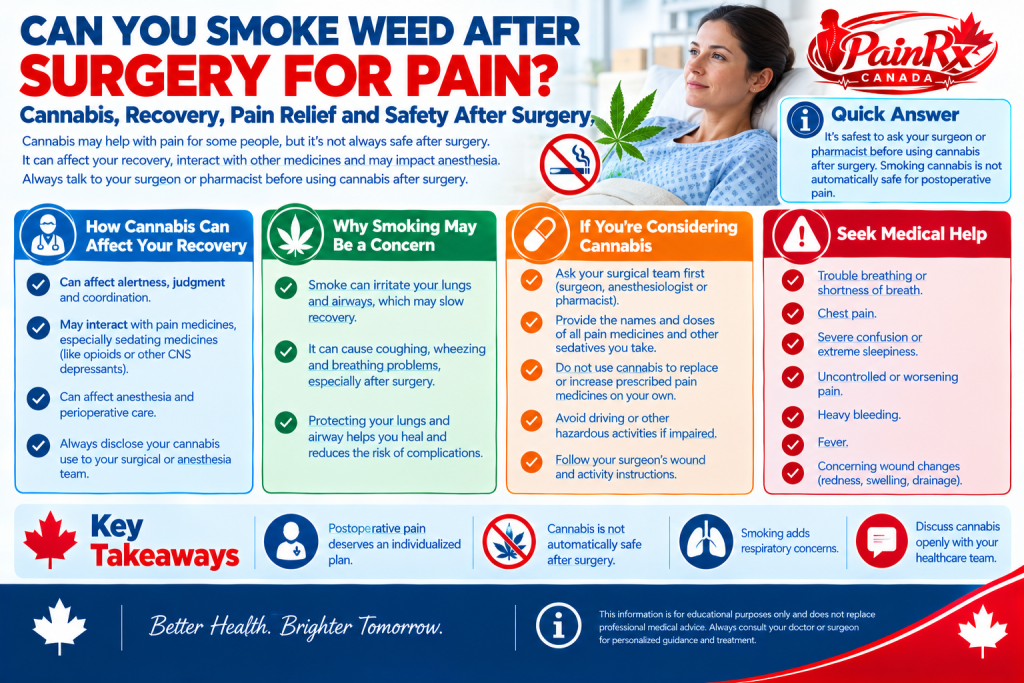
Recovering from surgery often means searching for anything that might ease the pain. For the growing number of people who use cannabis regularly, the question of whether it’s safe to smoke after an operation comes up often. The honest answer isn’t a simple yes or no. It depends on timing, how recently you had surgery, and how you use cannabis. This guide explains what current medical guidelines say. It also covers the specific risks involved and what to ask your surgical team.
This article provides general information only. It isn’t medical advice. Cannabis remains illegal under US federal law, and its legal status varies by state and country. Always tell your surgical and anesthesia team about your cannabis use. Follow their specific guidance for your situation.
Why This Question Matters More Than You Might Think
Cannabis use has grown significantly in recent years. Roughly ten percent of Americans use it at least monthly, according to data cited by the American Society of Regional Anesthesia and Pain Medicine. This rising use led that organization to release the first US clinical guidelines on cannabis and surgery. This reflects real, growing concern among doctors about how cannabis affects surgical recovery.
These guidelines didn’t come from theory alone. Anesthesiologists noticed real differences in how regular cannabis users handle surgical stress and anesthesia. This prompted a formal, evidence-based review of the topic.
Why Smoking Specifically Carries Extra Risk
The method of cannabis use matters for surgical recovery. Smoking specifically adds risks beyond those linked to cannabis itself. Doctors have linked smoking cannabis to airway problems, lung hyperinflation, and airflow blockage. These effects can hurt your breathing both during and after surgery.
Because of these breathing risks, current guidance treats regular cannabis smokers as facing lung complication risks similar to tobacco smokers. Anyone recovering from surgery should take this seriously. This matters most for procedures using general anesthesia, or surgery affecting the chest or belly.
How Cannabis Affects Pain and Nausea After Surgery
This may sound backward, but regular cannabis users may feel more pain and nausea after surgery, not less. Current guidelines back this finding. This may relate to how regular use changes the body’s pain-signaling system over time.
Doctors have also found that regular cannabis users sometimes need higher doses of opioid pain medicine after surgery. This adds another layer of complexity to pain control for people who use cannabis often. This doesn’t mean cannabis never helps with pain in other settings. It simply means its role in post-surgery pain is more complicated than many people expect.
Cardiovascular Risks Specific to Smoking
Smoking cannabis causes real changes to your heart rate and blood pressure. It can raise heart rate and blood pressure noticeably within the first couple of hours after use. This matters during recovery, since your body already carries extra strain from surgery and healing.
This heart-related effect is one reason guidelines warn against smoking cannabis shortly before or right after surgery. Your cardiovascular system already works hard during this period. Adding extra strain isn’t a good idea.
Timing: Before Versus After Surgery
Most formal guidance focuses on the period right before surgery. However, the same reasoning applies to recovery too. Current guidelines recommend waiting at least two hours after smoking before elective surgery. This waiting period exists specifically because of the heart effects that occur soon after use.
Some medical groups suggest an even longer gap. They recommend stopping cannabis products up to seventy-two hours before surgery involving general anesthesia. No formal guideline sets an exact date for resuming smoking after surgery. Still, the same heart, lung, and pain-control concerns apply during early recovery. Your body is still healing. It’s often still affected by anesthesia and pain medicine too.
Interactions With Pain Medication
Many patients take prescribed pain medicine after surgery. Combining this medicine with cannabis raises extra concerns worth discussing with your care team. Both cannabis and many pain medicines, especially opioids, can cause drowsiness. Combining two substances that each cause drowsiness can multiply this effect in unpredictable ways.
This matters for safety around tasks needing alertness, like driving. It can also affect your ability to notice warning signs during recovery. Staying clear-headed enough to notice when something feels wrong matters most during the early, vulnerable recovery period.
Wound Healing Considerations
Some research has raised questions about cannabis and wound healing. This area remains less settled than the breathing and heart concerns above. Since healing well depends on your tissue recovering properly, this stays a fair question to ask your surgeon directly. This matters especially for procedures where wound healing plays a big role in recovery.
What to Tell Your Surgical Team
Given everything above, honesty matters here. Tell your surgical and anesthesia team about your cannabis use, both before surgery and during recovery. Current best-practice guidelines call for asking every patient about cannabis use. This includes how often they use it, how they take it, and how recently they used it.
This conversation isn’t a judgment or a lecture. Anesthesiologists and surgeons ask about cannabis for the same practical reasons they ask about alcohol or other medicines. This information directly shapes how they plan your anesthesia and manage your care afterward.
Non-Smoked Cannabis Products
Much of the specific concern here ties to smoking as a method, given its unique breathing and fast heart-rate effects. Edibles and other non-smoked products skip the breathing risks tied to smoking. However, they bring their own concerns, including delayed and sometimes unpredictable effects, especially at higher doses.
Edibles also involve eating, which means they interact with any fasting instructions your surgical team gives you. Don’t assume an edible is automatically safer just because you don’t smoke it. Talk to your care team about any cannabis product before you use it.
What This Means for Your Recovery
If you use cannabis regularly and you’re recovering from surgery, a few practical points follow from the guidance above. Tell your surgical team about your cannabis use honestly. Do this both before your procedure and during follow-up visits, so they can factor it into your pain plan.
Remember that smoking specifically carries breathing and heart risks that may increase during recovery, especially in the days right after surgery. Regular cannabis use may also change how well standard pain medicines work for you. Your care team can adjust your plan if needed.
If your pain feels poorly controlled during recovery, tell your surgical team directly. Don’t turn to cannabis as an unsupervised fix. Your team can address the real problem with a plan built around your specific situation, cannabis use included.
Frequently Asked Questions
Is it ever okay to smoke cannabis after surgery?
This depends on your specific procedure, your stage of recovery, and your individual health. No universal “safe by this date” answer exists. This is exactly why you should discuss your specific situation with your surgeon, rather than following a generic timeline.
Does cannabis interact dangerously with anesthesia after surgery is already over?
The biggest anesthesia-related risks happen around the time of the procedure itself. However, if you need more procedures, sedation, or pain treatment during recovery, your cannabis use still matters to your care team.
Will using cannabis after surgery affect my pain medication prescription?
It’s possible. Telling your prescriber about your cannabis use helps them make better decisions about your pain plan, rather than working with incomplete information.
Are edibles safer than smoking after surgery?
Edibles skip the specific breathing and fast heart-rate effects tied to smoking. However, they carry their own risks, including delayed and sometimes unpredictable effects. They aren’t automatically “safe” just because you don’t smoke them.
Why do regular cannabis users sometimes need more pain medication after surgery?
Research suggests regular cannabis use may change the body’s pain-processing system. This can raise tolerance to standard pain medicines. However, doctors don’t fully understand this relationship yet, and research continues.
Final Thoughts
Smoking cannabis after surgery carries real risks worth taking seriously. These include breathing problems, extra strain on your heart, possible interactions with pain medicine, and possible effects on wound healing and pain control. Skip the generic online timeline. Instead, talk honestly and directly with your surgical team about your cannabis use, both before your procedure and throughout recovery. They can then help you manage your pain safely, with your specific situation in mind.