

How to Manage Osteoarthritis Pain in the Hands

How to Manage Osteoarthritis Pain in the Hands
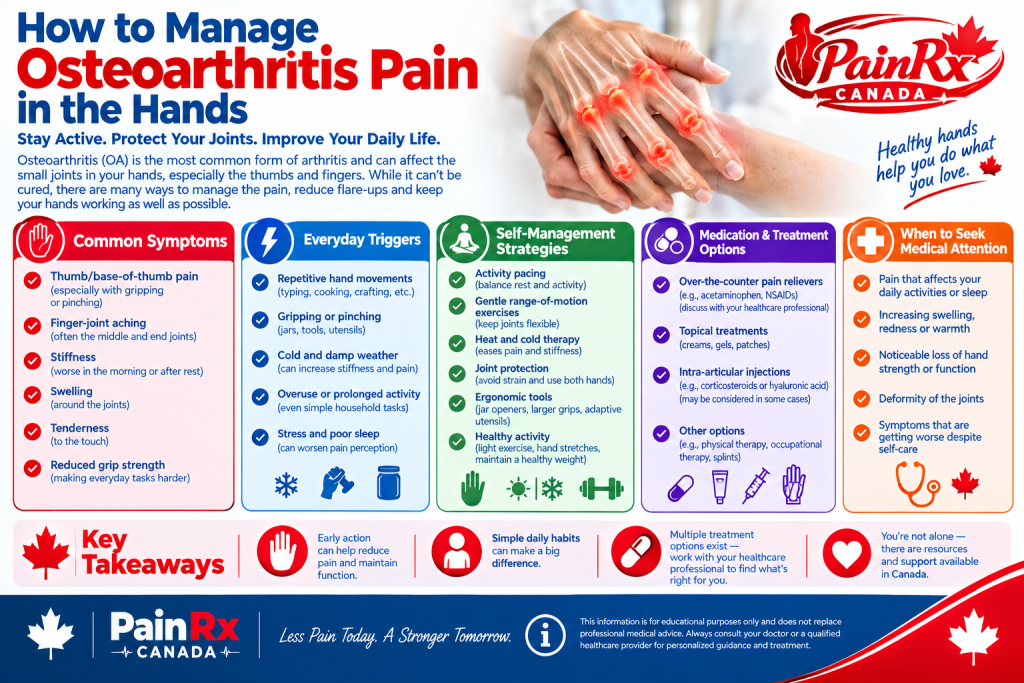
Hand osteoarthritis can turn simple daily tasks, from opening a jar to buttoning a shirt, into genuinely difficult challenges. Unlike knee or hip osteoarthritis, hand osteoarthritis often affects several small joints at once, particularly the base of the thumb and the joints closest to the fingertips. This guide covers the full range of strategies that can help manage hand osteoarthritis pain, from simple daily habits to medical treatments worth discussing with your doctor.
This article provides general information only. It isn’t medical advice and doesn’t replace a proper evaluation from a doctor or occupational therapist. If you’re experiencing new, severe, or worsening hand pain, consult a healthcare provider.
Understanding Hand Osteoarthritis First
Hand osteoarthritis typically develops as the cartilage cushioning the small joints in the fingers and thumb gradually wears down. It most commonly affects the joints closest to the fingertips, known as the distal interphalangeal joints, the middle finger joints, called the proximal interphalangeal joints, and the base of the thumb, known as the carpometacarpal or CMC joint.
This condition often produces pain, stiffness, swelling, and sometimes visible bony enlargements at the affected joints. Non-drug approaches such as hand exercises, splinting, and joint protection should be prioritized before considering oral medications or steroid injections, according to current clinical guidance on hand osteoarthritis management. The thumb base deserves particular mention, since involvement here tends to cause significantly more pain and functional difficulty than involvement in the finger joints alone, given how much daily hand function depends on thumb strength and mobility.
Joint Protection Techniques
One of the most immediately useful strategies for managing hand osteoarthritis involves changing how you use your hands during daily tasks, an approach occupational therapists call joint protection. This doesn’t mean avoiding hand use altogether. It means using your joints more efficiently to reduce unnecessary strain.
Distributing force across larger, stronger joints rather than small finger joints makes a meaningful difference over time. For example, carrying a bag over your forearm rather than gripping it tightly with your fingers reduces stress on the smaller joints. Using your palm or whole hand to push open a door, rather than pushing with individual fingers, applies the same principle.
Avoiding a tight, sustained grip whenever possible also helps, since prolonged gripping tends to aggravate hand osteoarthritis more than brief, varied hand use. Taking regular breaks during repetitive tasks, like typing, knitting, or chopping vegetables, gives joints a chance to rest before discomfort builds significantly.
The Role of Hand Exercises
Despite a common misconception that rest is always best for arthritic joints, regular, gentle hand exercises actually play a valuable role in managing hand osteoarthritis. Appropriate exercise helps maintain flexibility, supports the muscles surrounding affected joints, and can reduce stiffness over time.
Gentle range-of-motion exercises, moving each finger joint and the thumb through its full comfortable range, help maintain mobility without overstressing the joint. Grip and pinch strengthening exercises, often performed with soft therapy putty or a stress ball, can help support joint stability, though these should be introduced gradually and never pushed through significant pain.
Consistency matters more than intensity with hand exercises. Short, regular sessions throughout the day tend to produce better results than occasional, more intense efforts, and many occupational therapists recommend working with a professional at least once to learn the correct technique before continuing independently.
Splinting and Joint Support
Splints represent one of the better-supported non-drug treatments for hand osteoarthritis, particularly for thumb base involvement. A well-fitted splint provides external support to a painful joint, which can reduce pain during activity and help protect the joint from further strain.
Thumb spica splints, designed specifically to support the base of the thumb while still allowing some finger movement, are commonly recommended for CMC joint osteoarthritis. Some people wear splints primarily during specific activities that tend to aggravate their symptoms, while others benefit from nighttime wear to reduce morning stiffness and pain.
Working with an occupational therapist or hand therapist to get properly fitted and positioned splinting can make a significant difference compared to a generic, over-the-counter option, since correct positioning affects how well a splint actually protects the joint during use.
Heat and Cold Therapy
Both heat and cold can offer meaningful relief for hand osteoarthritis, though they work somewhat differently and suit different situations. Heat therapy, such as warm water soaks, heated wax dips, or a warm compress, tends to help loosen stiff joints and can be particularly useful before activities requiring hand dexterity, like cooking or craft work.
Cold therapy, such as a cold pack wrapped in a cloth, can help reduce swelling and pain during flare-ups, particularly after a period of increased hand use. Many people find alternating between the two, or simply using whichever feels more effective for their specific symptoms on a given day, works well as part of a broader management routine.
Topical and Oral Medication Options
Topical anti-inflammatory treatments, applied directly to the skin over affected joints, represent a commonly recommended first-line medication approach for hand osteoarthritis, given their effectiveness combined with fewer systemic side effects compared to oral medications. These products can be applied directly to the small joints of the hand, making them particularly practical for this specific type of osteoarthritis.
Oral pain relievers, including acetaminophen or oral anti-inflammatory medications, may also help, particularly during flare-ups, though long-term use of oral anti-inflammatory medications carries risks worth discussing with your doctor, especially for older adults or those with other health conditions.
In some cases, a doctor may recommend a corticosteroid injection directly into a particularly painful joint, though this approach tends to offer more modest and shorter-lived benefit for hand joints compared to larger joints like the knee.
Assistive Devices for Daily Tasks
Numerous adaptive tools exist specifically to reduce strain on arthritic hand joints during common daily tasks. Jar openers, built-up utility grips that widen the handles of pens, cutlery, and kitchen tools, and key turners that reduce the pinch force needed to unlock a door can all meaningfully reduce daily joint stress.
Electric can openers, lever-style door handles instead of round knobs, and pull-tab clothing fasteners instead of small buttons represent other practical adaptations many people find helpful. An occupational therapist can assess your specific daily challenges and recommend targeted tools suited to your particular activities and level of hand involvement.
Lifestyle Factors That Support Hand Joint Health
Beyond direct hand-focused strategies, several broader lifestyle factors can influence hand osteoarthritis symptoms. Maintaining a healthy body weight reduces overall inflammatory load in the body, which can indirectly benefit joints throughout the body, including the hands, even though hands aren’t weight-bearing joints in the traditional sense.
Staying physically active overall supports general joint health and circulation, which can benefit hand symptoms alongside the rest of the body. Getting adequate, quality sleep also matters, given the well-established relationship between poor sleep and increased pain sensitivity across many chronic pain conditions, hand osteoarthritis included.
When to Consider Professional Support
If joint protection techniques, exercises, and over-the-counter approaches aren’t providing adequate relief, several professional options are worth discussing with your doctor. Referral to an occupational therapist or hand therapist can provide personalized joint protection education, custom splinting, and a tailored exercise program specific to your affected joints and daily activities.
For more severe or persistent cases, a rheumatologist can offer a more detailed assessment and discuss medication options beyond basic pain relief. In cases where conservative treatments haven’t provided adequate relief, particularly for significant thumb base involvement, surgical options exist, though these are generally reserved for more advanced cases that haven’t responded to other approaches.
Managing Flare-Ups
Hand osteoarthritis symptoms often fluctuate, with periods of relatively manageable symptoms interspersed with flares of increased pain and stiffness. During a flare, temporarily reducing repetitive hand activities, increasing use of splints or supportive devices, and applying cold therapy for acute discomfort can help manage the worst of the symptoms until they settle.
Keeping a simple symptom log, noting what seemed to trigger a flare, can help you identify and, where possible, adjust patterns that consistently seem to worsen your symptoms over time.
Frequently Asked Questions
Is it bad to keep using my hands if they hurt from osteoarthritis?
No, complete rest isn’t generally recommended. Gentle, appropriate use combined with joint protection techniques tends to work better than avoiding hand use altogether, which can lead to stiffness and muscle weakness over time.
Will exercises make my hand osteoarthritis worse?
Appropriate, gentle exercises generally help rather than harm hand osteoarthritis, supporting flexibility and joint-supporting muscle strength. Exercises that cause sharp or worsening pain should be adjusted, ideally with guidance from an occupational therapist.
How long should I wear a hand splint each day?
This varies depending on your specific situation and the type of splint. Some people wear splints only during aggravating activities, while others benefit from nighttime wear. An occupational therapist can help determine the right approach for your specific joints and symptoms.
Does cracking my knuckles cause or worsen osteoarthritis?
No credible scientific evidence links knuckle cracking to the development of osteoarthritis. However, if the habit causes pain, it’s reasonable to avoid it regardless.
Can Doctors Cure Osteoarthritis?
No, there’s currently no cure for hand osteoarthritis, and no treatment reverses the underlying joint changes. However, the range of management strategies covered here can meaningfully reduce pain and improve day-to-day function for most people.
Final Thoughts
Managing hand osteoarthritis pain generally works best through a combination of approaches, including joint protection techniques, appropriate exercise, splinting, and targeted medication use, rather than relying on any single strategy alone. Assistive devices and broader lifestyle factors, like maintaining a healthy weight and prioritizing sleep, can further support your hand joint health over time.