

How Bad Is the Pain After Spinal Fusion Surgery?

How Bad Is the Pain After Spinal Fusion Surgery?
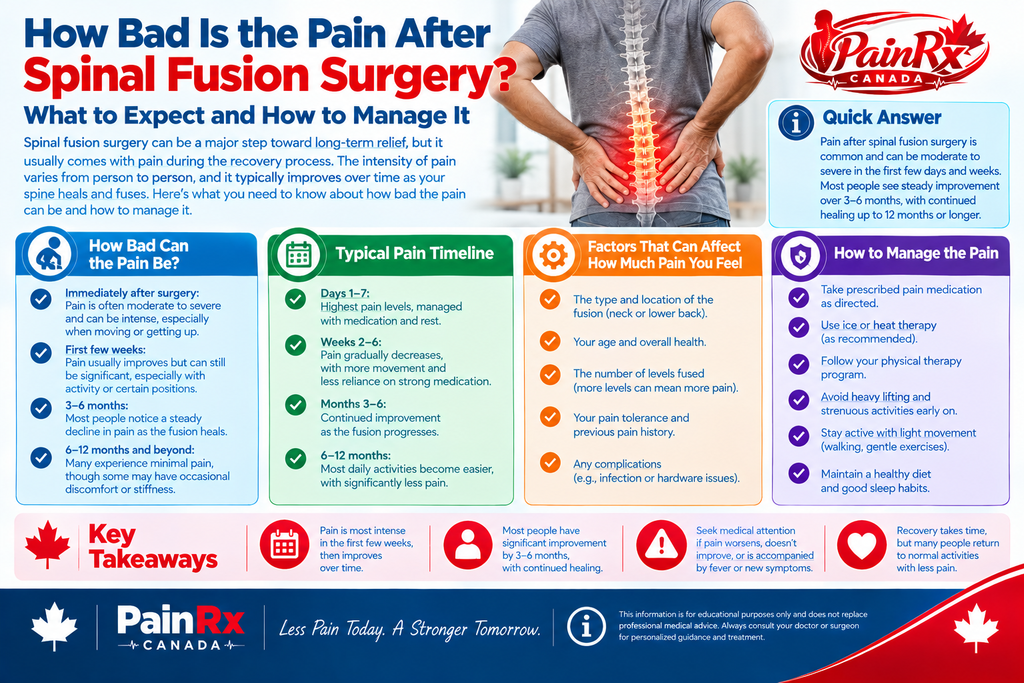
Spinal fusion ranks among the more significant surgeries a person can have on their back, and the honest answer about pain reflects that: it’s genuinely one of the more painful major surgeries during the first days and weeks, though it improves steadily from there. This guide sets realistic expectations for pain intensity, the general timeline, and what’s normal versus what’s worth calling your surgeon about.
Yes, the Early Recovery Genuinely Hurts
There’s little value in downplaying this: pain in the first few days after spinal fusion is typically significant, often described as severe by many patients. The surgery involves cutting through muscle, working directly on bone, and implanting hardware like screws and rods, and the surrounding tissue needs time to settle after that level of disruption.
Days two through four after surgery tend to represent the most difficult stretch for many patients. The first day or so can feel more manageable due to lingering anesthesia and any nerve blocks used during surgery, but as those wear off and post-surgical inflammation peaks, discomfort typically intensifies before it starts improving.
What the Pain Tends to Feel Like
Most patients describe a combination of sensations rather than a single type of pain. Tightness and pressure along the incision is extremely common. Deep muscle soreness, related to the muscle tissue moved or cut during surgery, often accompanies this. Some patients also notice nerve-related sensations, including tingling or occasional sharp, shooting discomfort, particularly if a nerve was involved in the original condition or the surgical approach.
This combination is normal and expected, though the specific mix and intensity varies from person to person.
The General Pain Timeline
The first week. This is typically the most challenging period, spanning the final days in the hospital and the first days at home. Hospital and care teams manage this phase with a combination of strong pain medication and other pain-control techniques.
Weeks two through four. Pain generally starts a clearer downward trend during this stretch, as initial surgical inflammation subsides. Many patients transition off stronger prescription pain medication somewhere within this window, moving toward less intensive pain management.
One to three months. Pain continues gradually easing for most patients during this period, alongside increasing activity and, often, the start of outpatient physical therapy. Sleep quality frequently improves noticeably as pain decreases.
Three to six months. Many patients feel substantially better by this point, with activity levels continuing to expand. Some residual soreness, stiffness after sitting for a while, or mild discomfort with weather changes can still be normal even at this stage.
Six to twelve months and beyond. Bone fusion itself, meaning the vertebrae solidly growing together, generally takes six to twelve months, according to Mayo Clinic, with full recovery and healing sometimes extending toward the one-year mark or slightly beyond. Pain typically becomes minimal well before the bone finishes fusing, since feeling significantly better and being completely healed are two different milestones.
Why Pain Levels Vary So Much Between Patients
Several factors explain why one patient’s experience can differ noticeably from another’s, even after a similar procedure.
Surgical approach. Minimally invasive fusion techniques generally involve less muscle disruption than traditional open surgery, which often translates into somewhat less pain and a faster initial recovery.
Number of levels fused. Fusing more than one or two spinal levels typically means more extensive surgery, more tissue involved, and often more pain along with a longer recovery timeline.
Pre-existing pain and nerve involvement. Patients who had significant nerve-related pain before surgery sometimes experience lingering nerve sensations during recovery, separate from typical surgical soreness.
Overall health factors. Smoking, uncontrolled diabetes, and obesity are all associated with slower healing, which can extend the period of noticeable pain and affect fusion timelines as well.
Pain management approach. Some care teams use enhanced recovery protocols that combine multiple pain-control strategies specifically to manage pain effectively while reducing reliance on opioid medication, which some patients find results in a smoother overall experience.
How Pain Is Typically Managed
Care teams generally combine several strategies rather than relying on one approach alone.
In the hospital. Patient-controlled analgesia, nerve blocks, and multimodal medication combinations are commonly used immediately after surgery to manage the most intense initial pain.
At home in the early weeks. A tapering course of prescribed pain medication, alongside ice therapy, positioning, and gentle movement as guided by your surgical team, typically continues the transition toward less intensive pain control.
As recovery progresses. Physical therapy becomes increasingly central to managing pain and rebuilding function, generally starting somewhere between six weeks and three months after surgery, depending on the surgeon’s specific protocol.
When Pain Signals Something Beyond Normal Recovery
While significant pain is an expected part of this surgery, certain patterns differ from typical healing and warrant prompt attention.
A sudden return of sharp pain after a period of steady improvement, new numbness or weakness, or pain accompanied by fever, redness, or drainage at the incision site should prompt a call to your surgical team. Any new difficulty with bladder or bowel control needs urgent medical attention, since this can indicate a more serious nerve-related complication.
Frequently Asked Questions
What is the most painful day or week after spinal fusion? Days two through four after surgery, and the first week overall, tend to represent the most difficult stretch for most patients, as anesthesia and nerve blocks wear off and inflammation peaks.
How long will I need strong pain medication after spinal fusion? Many patients transition off stronger prescribed medication somewhere between two and four weeks after surgery, though this varies based on the extent of the fusion and individual recovery.
Does having more vertebrae fused mean more pain? Generally, yes. Fusing multiple levels typically involves more extensive surgery and tissue disruption, which often means more pain and a longer recovery than a single-level fusion.
Is it normal to still have some discomfort six months after spinal fusion? Yes, for many patients. Occasional stiffness or mild soreness, especially after prolonged sitting or with weather changes, can remain normal even at this stage, even as overall pain has substantially improved.
How do I know if my pain means something is wrong with the fusion? A sudden return of sharp pain after steady improvement, new weakness or numbness, or changes in bladder or bowel control differ from typical recovery and should prompt immediate contact with your surgical team.
The Bottom Line
Pain after spinal fusion surgery is genuinely significant, particularly during the first week and especially days two through four, given the extent of tissue and bone involved in this surgery. From there, pain generally improves steadily over the following weeks and months, with many patients feeling substantially better by three to six months, even though full bone fusion continues for six to twelve months or longer.
Surgical approach, the number of levels fused, and individual health factors all influence how intense and how long this recovery feels. A sudden worsening of pain, new weakness or numbness, or signs of infection differ from the expected pattern and deserve prompt attention from your surgical team.
This article is for general informational purposes only and is not a substitute for professional medical advice. Recovery experiences vary significantly between individuals. Always follow your surgeon’s specific post-operative instructions, and contact your surgical team promptly with any concerns about pain, healing, or possible complications.